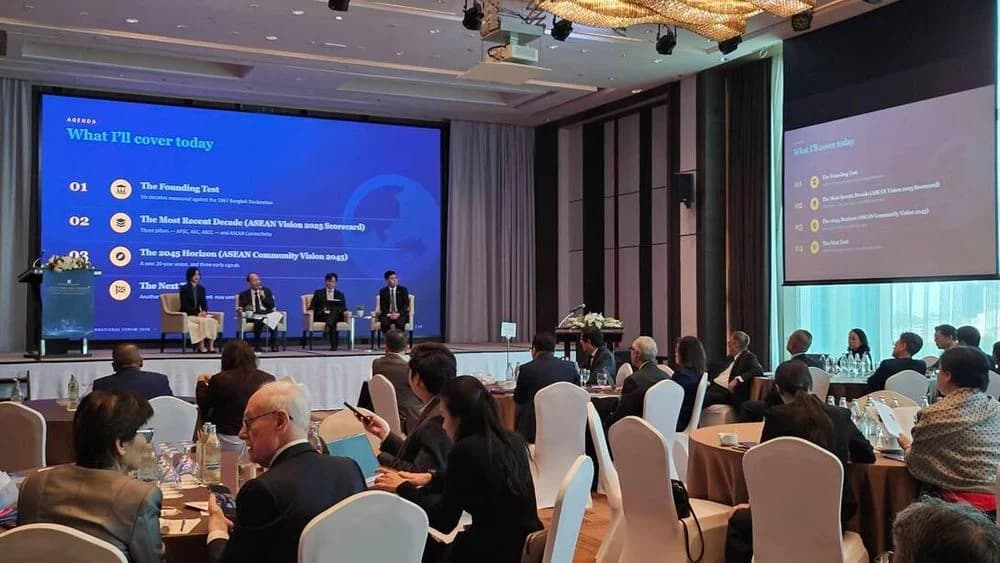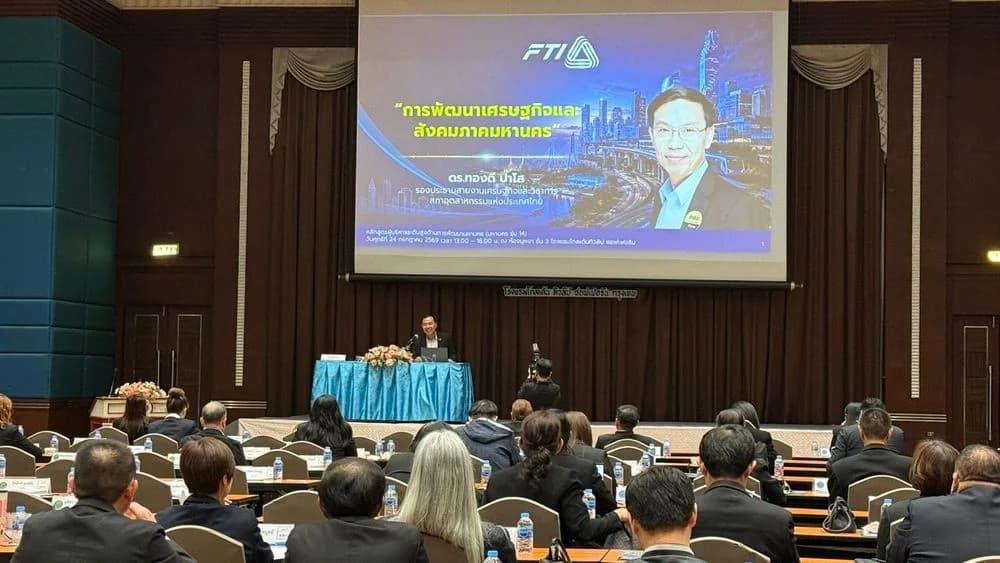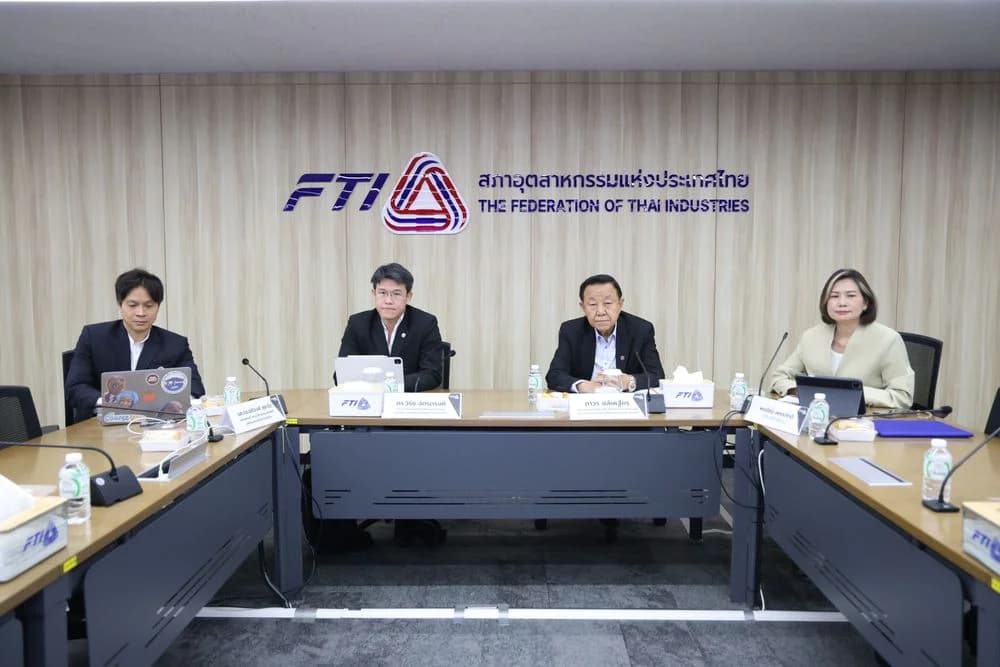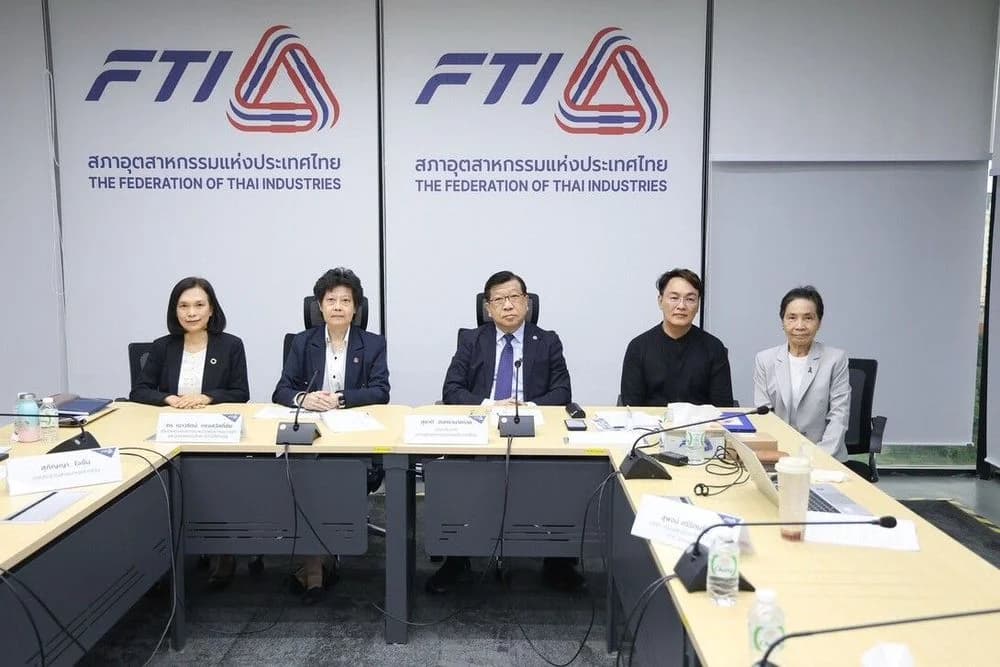
เมื่อวันจันทร์ที่ 3 มกราคม 2568 นายเกรียงไกร เธียรนุกุล ประธานสภาอุตสาหกรรมแห่งประเทศไทย (ส.อ.ท.) ได้เข้าร่วมเป็นวิทยากรเสวนาในงานสัมมนาเศรษฐกิจประจำปี 2568 TEA Annual Forum 2025 จัดโดย สมาคมเศรษฐศาสตร์ธรรมศาสตร์ ในหัวข้อ “ทิศทาง Trump 2.0 และภูมิรัฐศาสตร์โลก: ผลกระทบต่อไทย” ร่วมกับ นายอภิสิทธิ์ เวชชาชีวะ อดีตนายกรัฐมนตรี และ ดร.อาร์ม ตั้งนิรันดร รองคณบดี คณะนิติศาสตร์ จุฬาลงกรณ์มหาวิทยาลัย และผู้อำนวยการศูนย์จีนศึกษา จุฬาลงกรณ์มหาวิทยาลัย ณ ห้องประชุม 110 ชั้น 1 ศูนย์การประชุมแห่งชาติสิริกิติ์
ในการเสวนาครั้งนี้ นายเกรียงไกร ได้กล่าวถึงสถานการณ์การค้าระหว่างไทยและสหรัฐฯ โดยในปี 2562 ไทยได้ดุลการค้ากับสหรัฐฯ อยู่ในอันดับที่ 14 ขณะที่จีนเป็นคู่ค้ารายใหญ่ที่สุดของสหรัฐฯ ตลอดมา แต่ในปี 2566 ซึ่งเป็นยุคของประธานาธิบดีโจ ไบเดน ไทยสามารถขยับขึ้นมาอยู่ในอันดับที่ 12 ขณะเดียวกันก็เป็นปีแรกที่จีนไม่ได้เป็นคู่ค้ารายใหญ่ที่สุดของสหรัฐฯ อีกต่อไป โดยจีนยังคงโดดเด่นในด้านการผลิตจากจำนวนประชากรและแรงงานที่มาก ในขณะที่ประธานาธิบดีสีจิ้นผิง ตั้งเป้าการขยายตัวของเศรษฐกิจจีนที่ 5% พร้อมทั้งเมื่อประธานาธิบดีทรัมป์มีการออกมาตรการภาษีกับจีน ส่งผลให้จีนต้องหันไปส่งออกสินค้าผ่านอาเซียน รวมถึงประเทศไทยด้วย
ดังนั้น ประเทศไทยจำเป็นต้องเร่งส่งเสริมและปรับโครงสร้างภาคอุตสาหกรรมให้ก้าวสู่อุตสาหกรรมแห่งอนาคต (Next-Gen Industry) หรืออุตสาหกรรมเป้าหมาย S-Curve ในอนาคต โดยสนับสนุนผู้ประกอบการให้สามารถปรับโมเดลธุรกิจและเข้าไปมีส่วนร่วมในห่วงโซ่อุปทาน (Supply Chain) ของอุตสาหกรรม S-Curve ได้
นอกจากนี้ ควรมีมาตรการส่งเสริมการลงทุนและกำหนดสัดส่วน Local Content ที่เพิ่มขึ้น พร้อมกับการรักษาความมั่นคงในห่วงโซ่อุปทาน (Supply Chain Security) รวมถึงสนับสนุนสินค้าที่ผลิตในประเทศ (Made in Thailand: MiT) นอกจากนี้ ยังต้องมีการปรับปรุงกฎหมายและกฎระเบียบให้มีความสะดวก ไม่ซับซ้อน และโปร่งใส (Ease of Doing Business) ซึ่งจะช่วยกระตุ้นการเติบโตทางเศรษฐกิจ โดยสามารถดำเนินการผ่านการแก้ไขกฎหมายกลาง (Omnibus Laws) และ Regulatory Guillotine รวมถึงผลักดันการแก้ไขกฎหมาย เพื่อขจัดอุปสรรคในการดำเนินธุรกิจ
On Monday, January 3, 2025, Mr. Kriengsak Thiennukul, President of the Federation of Thai Industries (FTI), participated as a speaker at the seminar TEA Annual Forum 2025 organized by the Thammasat Economics Association on the topic “The Direction of Trump 2.0 and Global Geopolitics: Impact on Thailand,” alongside Mr. Abhisit Vejjajiva, former Prime Minister, and Dr. Arm Tangniyaranon, Deputy Dean of the Faculty of Law at Chulalongkorn University and Director of the China Studies Center at Chulalongkorn University, held at Meeting Room 110, 1st Floor, Queen Sirikit National Convention Center.
During this forum, Mr. Kriengsak discussed the trade situation between Thailand and the United States. In 2019, Thailand ranked 14th in terms of trade surplus with the United States, while China has consistently been the largest trade partner of the U.S. However, in 2026, during President Joe Biden's term, Thailand managed to move up to 12th place, marking the first year that China was no longer the largest trading partner of the U.S. China continues to excel in production due to its large population and workforce, while President Xi Jinping has set a target for China’s economic growth at 5%. Furthermore, when President Trump imposed tariffs on China, it led China to shift its exports through ASEAN, including Thailand.
Therefore, Thailand must expedite efforts to promote and restructure the industrial sector to advance into the Next-Gen Industry or targeted S-Curve industries of the future, by supporting entrepreneurs to adapt their business models and engage in the supply chains of S-Curve industries.
Additionally, measures should be taken to promote investment and increase the Local Content ratio, while maintaining security in the supply chain (Supply Chain Security), along with supporting domestically produced goods (Made in Thailand: MiT). Furthermore, there is a need to improve laws and regulations to make them more convenient, less complex, and transparent (Ease of Doing Business), which will stimulate economic growth through the amendment of omnibus laws and regulatory guillotine, as well as pushing for legal reforms to eliminate business operation obstacles.