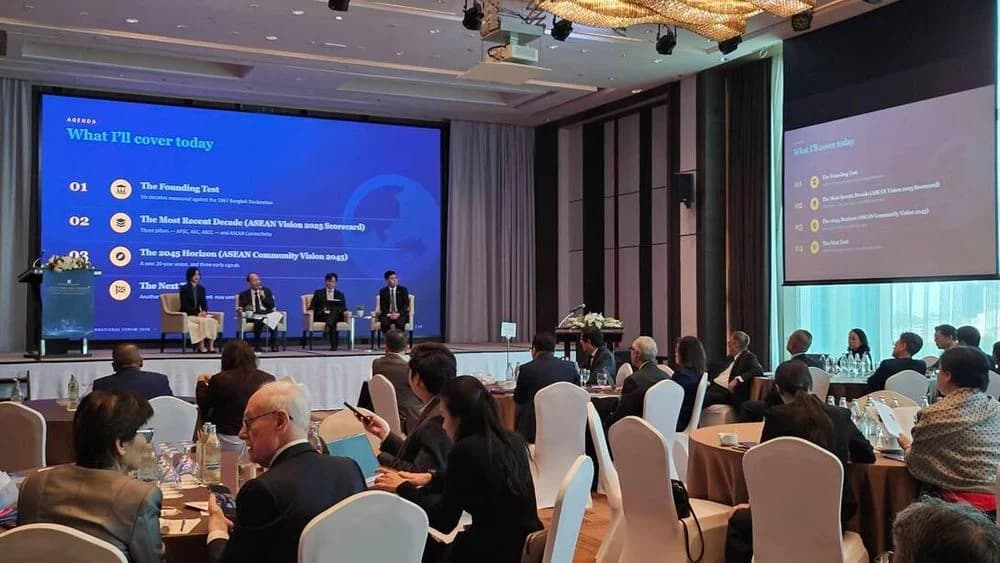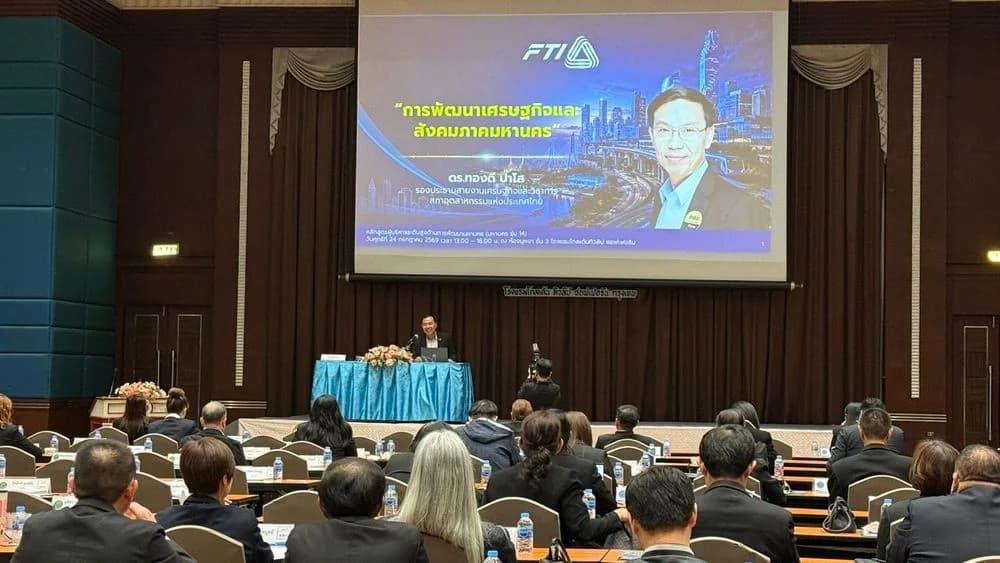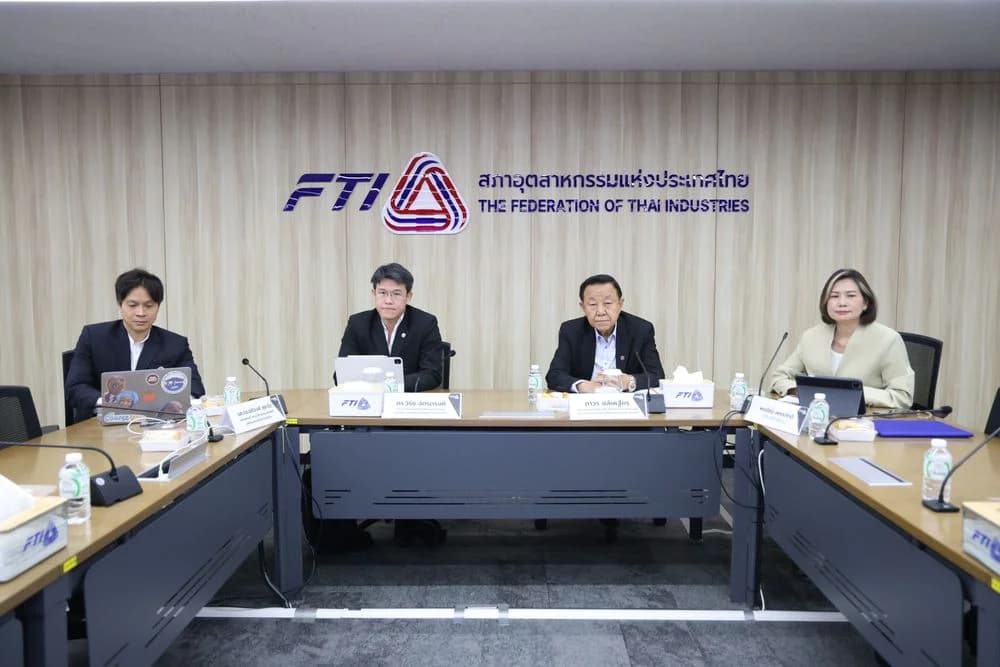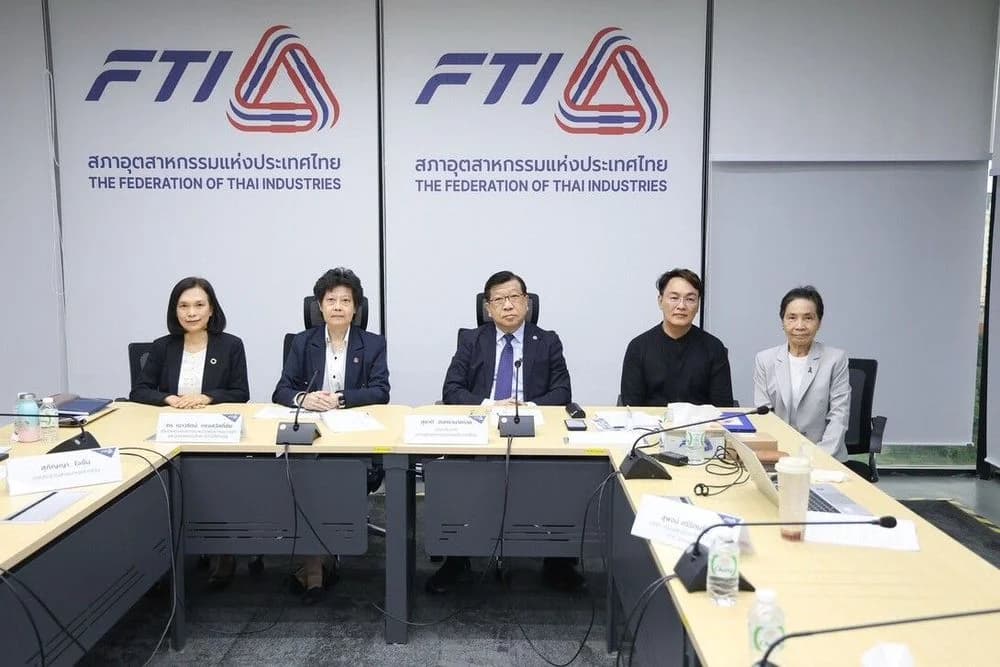

เมื่อวันศุกร์ที่ 6 มิถุนายน 2568 นายอิศเรศ รัตนดิลก ณ ภูเก็ต รองประธานสภาอุตสาหกรรมแห่งประเทศไทย (ส.อ.ท.) ได้ร่วมเป็นวิทยากรในเวทีอภิปรายหัวข้อ “ประเด็นร่วมสมัยอภิปราย: บทบาทภาคเอกชนและการกำหนดนโยบายเศรษฐกิจ” โดยเน้นบทบาทของคณะกรรมการร่วม 3 สถาบัน (กกร.) ในการเป็นกลไกเชื่อมโยงระหว่างภาคเอกชนกับภาครัฐ เสนอข้อคิดเห็นเชิงนโยบาย ตลอดจนเข้าร่วมเวทีหารือด้านเศรษฐกิจทั้งในระดับประเทศและระหว่างประเทศ เพื่อให้การขับเคลื่อนเศรษฐกิจเป็นไปอย่างมีประสิทธิภาพและเป็นรูปธรรม ณ ห้องสุโขทัยธรรมราชา สถาบันพระปกเกล้า
สำหรับการพัฒนาอุตสาหกรรมไทย ส.อ.ท. ได้นำเสนอแนวทางการยกระดับภาคอุตสาหกรรมสู่อุตสาหกรรมแห่งอนาคต (Next-Gen Industry) โดยเน้นการนำเทคโนโลยีดิจิทัลและนวัตกรรมมาใช้ควบคู่กับการขับเคลื่อนโมเดลเศรษฐกิจ BCG และตั้งเป้าหมายสู่การปล่อยก๊าซคาร์บอนไดออกไซด์สุทธิเป็นศูนย์ (Net Zero) ภายในปี 2065 พร้อมทั้งเร่งเพิ่มขีดความสามารถในการแข่งขันผ่านนโยบาย 4GO ได้แก่ GO Digital & AI, GO Innovation, GO Global และ GO Green
นอกจากนี้ ยังมีการดำเนินงานผ่าน 12 Pillars เช่น Part Transformation, ระบบโลจิสติกส์, Soft Power และการยกระดับมาตรฐานและส่งเสริม Made in Thailand (MiT) รวมถึงการปรับปรุงกฎหมายที่ล้าสมัย ผ่านกลไก Omnibus Law และ Regulatory Guillotine เพื่อเอื้อต่อการลงทุนในอุตสาหกรรมใหม่ในอนาคต
ทั้งนี้ ภาคเอกชนมีบทบาทสำคัญอย่างยิ่งในการกำหนดทิศทางนโยบายเศรษฐกิจของประเทศ ทั้งในระดับนโยบายและระดับพื้นที่ โดยเฉพาะผ่านกลไกของ กกร. และ ส.อ.ท. ที่ไม่เพียงเสนอแนวทางเชิงยุทธศาสตร์ แต่ยังผลักดันให้เกิดการเปลี่ยนแปลงอย่างเป็นรูปธรรม ทั้งด้านกฎหมาย นวัตกรรม และความร่วมมือรัฐ-เอกชน เพื่อสร้าง “เครื่องยนต์เศรษฐกิจใหม่” ที่จะขับเคลื่อนประเทศไทยไปสู่การเติบโตอย่างยั่งยืนและแข่งขันได้ในเวทีโลก
On Friday, June 6, 2025, Mr. Isares Rattanadilok Na Phuket, Vice Chairman of the Federation of Thai Industries (FTI), participated as a speaker in the discussion forum on the topic “Contemporary Issues Discussion: The Role of the Private Sector and Economic Policy Formulation,” emphasizing the role of the Joint Public-Private Consultative Committee of three institutions (JPC) as a mechanism to link the private sector with the government, providing policy recommendations and participating in economic discussions at both national and international levels to ensure effective and tangible economic drive at Sukhothai Thammaracha Room, King Prajadhipok's Institute.
Regarding the development of the Thai industry, FTI presented a strategy to elevate the industrial sector towards the Next-Gen Industry, emphasizing the incorporation of digital technology and innovation alongside driving the BCG economic model, aiming for net-zero carbon dioxide emissions by 2065, while accelerating competitive capabilities through the 4GO policy: GO Digital & AI, GO Innovation, GO Global, and GO Green.
Additionally, operational initiatives are being conducted through 12 Pillars, including Part Transformation, logistics systems, Soft Power, and upgrading standards to promote Made in Thailand (MiT), alongside the revision of outdated laws through the Omnibus Law and Regulatory Guillotine mechanisms to facilitate investment in new industries in the future.
Importantly, the private sector plays a significant role in shaping the economic policy direction of the country at both policy and local levels, particularly through the mechanisms of JPC and FTI, which not only propose strategic approaches but also drive tangible changes, in terms of laws, innovation, and public-private cooperation, to create a “new economic engine” that will propel Thailand towards sustainable growth and competitiveness on the global stage.