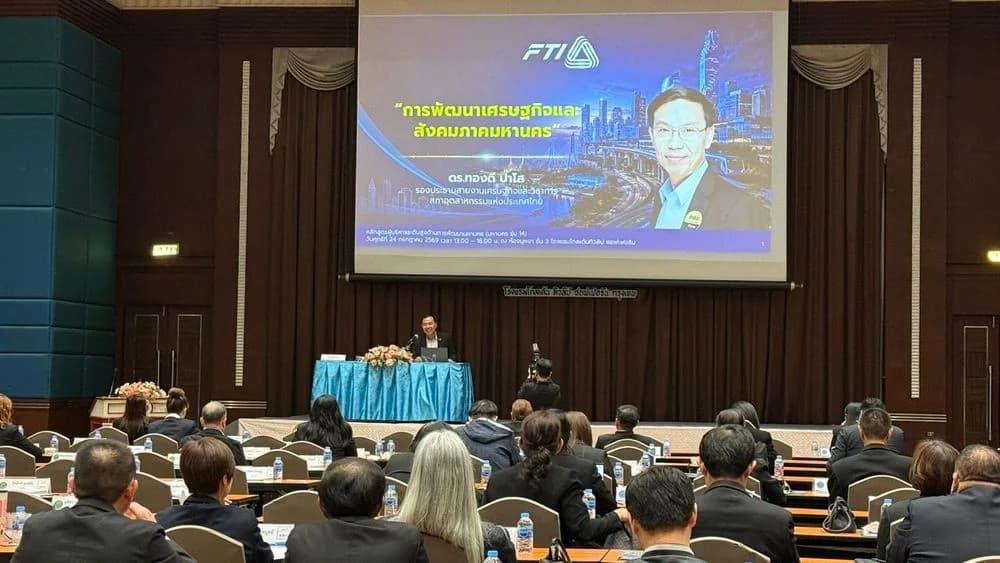

เมื่อวันอาทิตย์ที่ 15 มิถุนายน 2568 นายเกรียงไกร เธียรนุกุล ประธานสภาอุตสาหกรรมแห่งประเทศไทย (ส.อ.ท.) ได้รับเกียรติเป็นเป็นวิทยากรหลักสูตรผู้นำ นำการเปลี่ยนแปลง (Leadership for Change : LFC) รุ่นที่ 15 ในหัวข้อ "อนาคตอุตสาหกรรมไทย: เปลี่ยนผ่านสู่ความยั่งยืนด้วย ESG" โดย มีผู้เข้ารับฟังบรรยายกว่า 80 ท่าน ณ ห้องแกรนด์บอลรูม 1 โรงแรมรามาการ์เด้นส์
การบรรยายดังกล่าว นายเกรียงไกร ได้กล่าวถึงอนาคตอุตสาหกรรมไทยสู่ความยั่งยืน ว่าโลกกำลังเผชิญวิกฤตโลกร้อนอย่างรุนแรง โดยในปี 2567 มีอุณหภูมิเพิ่มขึ้นถึง 1.57°C ซึ่งสูงเกินข้อตกลงปารีสที่กำหนดไว้ไม่เกิน 1.5°C ขณะเดียวกัน ความขัดแย้งทางภูมิรัฐศาสตร์ การเข้ามาของเทคโนโลยี เช่น AI และนโยบายด้านสิ่งแวดล้อมของประเทศมหาอำนาจ ยิ่งเพิ่มความท้าทายต่อเศรษฐกิจโลก แม้ว่าภาคอุตสาหกรรมไทยตั้งเป้าการปล่อยก๊าซคาร์บอนไดออกไซด์สุทธิเป็นศูนย์ (Net Zero) ภายในปี 2608 (ปี ค.ศ. 2065) แต่ยังล่าช้ากว่าประเทศอื่นๆ ในอาเซียน และเสี่ยงต่อการเสียเปรียบในการแข่งขันและถูกเก็บภาษีคาร์บอน (CBAM) จากประเทศคู่ค้า องค์กรโลกและภูมิภาคต่างๆ เช่น EU สหรัฐฯ หรือเกาหลีใต้ ต่างเดินหน้ากำหนดมาตรการควบคุมคาร์บอนและส่งเสริมพลังงานสะอาดอย่างจริงจัง
ดังนั้น ประเทศไทยจึงต้องเร่งเปลี่ยนผ่านสู่เศรษฐกิจ BCG (Bio-Circular-Green) ส่งเสริมนวัตกรรม เช่น การเกษตรอัจฉริยะ (Smart Agriculture) การนำของเก่ามาใช้ใหม่โดยเพิ่มมูลค่า (Upcycling) การเงินเพื่อสิ่งแวดล้อม (Green Finance) และอุตสาหกรรมเชิงนิเวศ (Eco Industry) เพื่อยกระดับมาตรฐานโรงงานสีเขียว มุ่งสู่เป้าหมายแห่งความยั่งยืน ควบคู่กับการพัฒนาอุตสาหกรรมใหม่และรักษาความสามารถในการแข่งขันในตลาดโลก
On Sunday, June 15, 2025, Mr. Kriangkrai Tiannukul, President of the Federation of Thai Industries (FTI), was honored to be a speaker in the Leadership for Change (LFC) Program, Class 15, addressing the topic "The Future of Thai Industry: Transitioning to Sustainability through ESG." More than 80 participants attended the lecture at Grand Ballroom 1, Ramada Garden Hotel.
In his lecture, Mr. Kriangkrai discussed the future of Thai industry toward sustainability, stating that the world is currently facing a severe global warming crisis, with temperatures rising by 1.57°C in 2024, exceeding the Paris Agreement limit of 1.5°C. At the same time, geopolitical conflicts and the emergence of technologies such as AI, along with the environmental policies of major nations, pose increased challenges to the global economy. Although the Thai industrial sector aims for net-zero carbon dioxide emissions by 2065, it still lags behind other ASEAN countries and risks competitive disadvantage due to carbon taxes (CBAM) imposed by trading partners. Global and regional organizations, such as the EU, the United States, and South Korea, are actively establishing carbon control measures and promoting clean energy.
Therefore, Thailand must accelerate its transition to a BCG (Bio-Circular-Green) economy, promoting innovations such as smart agriculture, upcycling of materials, green finance, and eco-industries to enhance the standards of green factories, aiming for sustainability while developing new industries and maintaining competitiveness in the global market.