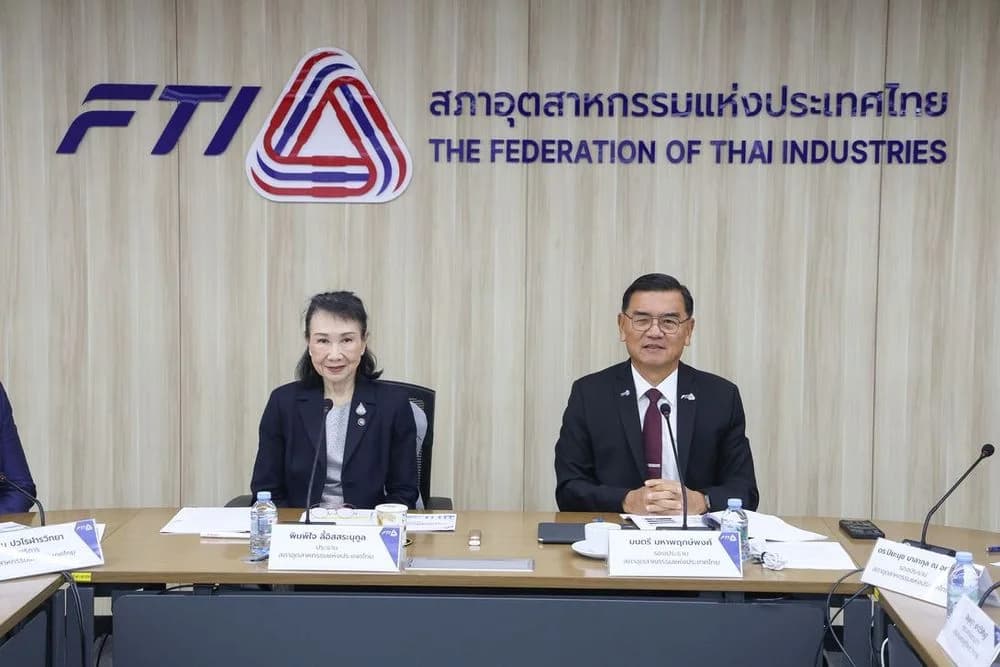

วันพุธที่ 16 กรกฎาคม 2568 นายนาวา จันทนสุรคน รองประธานสภาอุตสาหกรรมแห่งประเทศไทย (ส.อ.ท.) พร้อมด้วย ม.ล.ปีกทอง ทองใหญ่ รองประธาน ส.อ.ท. และประธานสายงานเศรษฐกิจและวิชาการ ส.อ.ท. ร่วมแถลงผลการสำรวจดัชนีความเชื่อมั่นภาคอุตสาหกรรมเดือนมิถุนายน 2568 ซึ่งอยู่ที่ระดับ 87.7 ปรับตัวลดลงจาก 88.1 ในเดือนพฤษภาคม ณ ห้อง 802 ชั้น 8 ส.อ.ท.
นายนาวา จันทนสุรคน รองประธานสภาอุตสาหกรรมแห่งประเทศไทย (ส.อ.ท.) พร้อมด้วย ม.ล.ปีกทอง ทองใหญ่ รองประธานสภาอุตสาหกรรมแห่งประเทศไทย และประธานสายงานเศรษฐกิจและวิชาการ ส.อ.ท. ร่วมเปิดเผยผลการสำรวจดัชนีความเชื่อมั่นภาคอุตสาหกรรมในเดือนมิถุนายน 2568 อยู่ที่ระดับ 87.7 ปรับตัวลดลง จาก 88.1 ในเดือนพฤษภาคม 2568 ซึ่งเป็นผลจากการปิดด่านชายแดนไทย–กัมพูชา และการระงับการนำเข้าน้ำมันและก๊าซ LNG จากไทย ส่งผลกระทบต่อการค้าชายแดนและผ่านแดน ด้านสหรัฐฯ ปรับขึ้นภาษี Sectoral Tariff ในกลุ่มสินค้าเหล็กและอะลูมิเนียมจาก 25% เป็น 50% กระทบต่อขีดความสามารถในการแข่งขันของผู้ประกอบการไทย ความขัดแย้งระหว่างอิสราเอลและอิหร่าน ส่งผลกระทบทำให้ราคาพลังงานผันผวน การส่งออกและจำนวนนักท่องเที่ยวชะลอตัว อีกทั้งการทะลักเข้ามาของสินค้าจากต่างประเทศกดดันผู้ประกอบการ การผลิตเพื่อส่งออกเริ่มถูกแทนที่ด้วยสินค้านำเข้า ราคาสินค้าเกษตรหดตัวรุนแรง ส่งผลกระทบต่อรายได้เกษตรกร และทำให้กำลังซื้อในภูมิภาคลดลง รวมถึงความขัดแย้งและความไม่แน่นอนทางการเมือง ส่งผลกระทบต่อความเชื่อมั่นของนักลงทุนและภาคเอกชนและเงินบาทแข็งค่าพร้อมสกุลเงินอื่น จากเงินทุนไหลเข้าภูมิภาค และการอ่อนค่าของดัชนีเงินดอลลาร์สหรัฐ อย่างไรก็ตาม ในเดือนมิถุนายน ยังคงมีปัจจัยบวกจากการเร่งส่งออกก่อนสิ้นสุดมาตรการชะลอการเก็บภาษีแบบตอบโต้ (Reciprocal Tariff) ในเดือนกรกฎาคม 2568 ขณะเดียวกัน สัญญาณการเจรจาการค้าระหว่างไทย–สหรัฐฯ ยังมีทิศทางเชิงบวก และการจัดกิจกรรมส่งเสริมการขายของผู้ประกอบการช่วงกลางปี ช่วยกระตุ้นการบริโภคภายในประเทศ
จากการสำรวจผู้ประกอบการ 1,342 ราย ครอบคลุม 47 กลุ่มอุตสาหกรรมของสภาอุตสาหกรรมแห่งประเทศไทย (ส.อ.ท.) ในเดือนมิถุนายน 2568 พบว่าปัจจัยที่ผู้ประกอบการมีความกังวลเพิ่มขึ้น ได้แก่ การเข้าถึงสินเชื่อ 51.7% อัตราแลกเปลี่ยน (มุมมองผู้ส่งออก) 39.9% ราคาพลังงาน 31.3% และอัตราดอกเบี้ยเงินกู้ 24.7% ส่วนปัจจัยที่มีความกังวลลดลง ได้แก่ เศรษฐกิจภายในประเทศ 61.0% เศรษฐกิจโลก 57.7% นโยบายภาครัฐ 47.5%
ขณะที่ดัชนีฯ คาดการณ์ 3 เดือนข้างหน้า ปรับตัวลดลงเช่นกัน อยู่ที่ระดับ 90.8 ลดลงจาก 91.7 ในเดือนพฤษภาคม 2568 เนื่องจากความไม่แน่นอนจากปัญหาบริเวณชายแดนไทย–กัมพูชา รวมถึงการปิดด่านอย่างต่อเนื่องเป็นเวลานาน อาจส่งผลกระทบต่อมูลค่าการค้าชายแดนและการค้าผ่านแดนของไทย ด้านคณะกรรมการค่าจ้างมีมติปรับขึ้นค่าจ้างขั้นต่ำ 400 บาท ในพื้นที่ กทม. และต่างจังหวัดในบางกิจการ มีผลวันที่ 1 กรกฎาคม 2568 กระทบต่อต้นทุนการจ้างงานของผู้ประกอบการ SMEs รวมถึงความไม่แน่นอนของมาตรการภาษีแบบตอบโต้ (Reciprocal Tariff) ส่งผลกระทบต่อสถานการณ์ทางการค้า
อย่างไรก็ตาม ยังมีปัจจัยสนับสนุนที่คาดว่าจะมาจากการอนุมัติงบกระตุ้นเศรษฐกิจ 1.15 แสนล้านบาท คาดว่าจะช่วยให้เศรษฐกิจขยายตัวเพิ่มขึ้น 0.4% และโครงการเที่ยวไทยคนละครึ่ง 2568 คาดว่าจะช่วยกระจายรายได้สู่ท้องถิ่นและกระตุ้นเศรษฐกิจชุมชนอย่างทั่วถึง
ข้อเสนอแนะต่อภาครัฐ
1.ขอให้ภาครัฐออกมาตรการช่วยเหลือผู้ประกอบการที่ได้รับผลกระทบจากการปิดด่านการค้าชายแดนไทย - กัมพูชา เช่น ช่วยรับซื้อสินค้าและกระจายสินค้าไปยังตลาดอื่น จัดสินเชื่อดอกเบี้ยต่ำ พักชำระหนี้ชั่วคราวสำหรับ SMEs ชดเชยค่าจ้างให้แรงงานกรณีปิดกิจการชั่วคราว อุดหนุนส่วนต่างราคาวัตถุดิบหากต้องนำเข้าจากแหล่งอื่น และสนับสนุนการขนส่งสินค้าทางเรือหรือทางอากาศ เป็นต้น
2.ขอให้ภาครัฐเร่งรัดการใช้จ่ายงบกระตุ้นเศรษฐกิจ มูลค่า 1.15 แสนล้านบาท ให้ดำเนินการได้ทันตามกรอบระยะเวลาที่กำหนด และให้ความสำคัญกับการกำกับดูแล ติดตาม ตรวจสอบโครงการอย่างเคร่งครัดและโปร่งใส
3.ขอให้ภาครัฐเร่งเจรจาปรับลดอัตราภาษีนำเข้าสหรัฐฯ (Reciprocal Tariff) ให้ลดลงสู่ระดับที่สามารถแข่งขันได้ ก่อนจะมีผลบังคับใช้วันที่ 1 สิงหาคม 2568
ทั้งนี้ ส.อ.ท. ได้ทำการรวบรวมข้อมูลผลการสำรวจดัชนีความเชื่อมั่นภาคอุตสาหกรรมและข้อมูลตัวชี้วัดทางเศรษฐกิจและอุตสาหกรรมจากหน่วยงานต่างๆ ย้อนหลัง 3 ปี จัดทำเป็น Dashboard เผยแพร่ในเว็บไซต์ศูนย์ข้อมูลภาคเศรษฐกิจและอุตสาหกรรม Industry Data Space (iDS) ของ ส.อ.ท. เพื่ออำนวยความสะดวกให้แก่ผู้ประกอบการและบุคคลทั่วไปให้สามารถเข้าถึงข้อมูลที่เป็นประโยชน์ในการดำเนินธุรกิจ โดยสามารถเข้าไปใช้บริการข้อมูลดังกล่าวได้ที่ https://fti.or.th/ids
ส.อ.ท. มุ่ง “เสริมสร้างความเข้มแข็งให้อุตสาหกรรมไทย เพื่อประเทศไทยที่เข้มแข็งกว่าเดิม (Strengthen Thai Industries for Stronger Thailand)”
เผยแพร่โดย ฝ่ายสื่อสารองค์กร สภาอุตสาหกรรมแห่งประเทศไทย (โทร. 0-2345-1051)
จัดทำข้อมูลโดย ฝ่ายเศรษฐกิจและวิชาการ สภาอุตสาหกรรมแห่งประเทศไทย (โทร. 0-2345-1111)
On Wednesday, July 16, 2025, Mr. Nava Jantanamongkhon, Vice Chairman of the Federation of Thai Industries (FTI), along with M.L. Pikthong Tongyai, Vice Chairman of the FTI and Chairman of the Economic and Academic Bureau of the FTI, announced the results of the industrial confidence index survey for June 2025, which stood at 87.7, a decrease from 88.1 in May, at room 802 on the 8th floor of FTI.
Mr. Nava Jantanamongkhon, Vice Chairman of the Federation of Thai Industries (FTI), together with M.L. Pikthong Tongyai, Vice Chairman of the Federation of Thai Industries and Chairman of the Economic and Academic Bureau of the FTI, revealed that the industrial confidence index in June 2025 was at 87.7, down from 88.1 in May 2025. This decline was attributed to the closure of the Thailand-Cambodia border and the suspension of oil and LNG imports from Thailand, affecting cross-border trade characterized by an increase in the U.S. Sectoral Tariff on steel and aluminum from 25% to 50%, which impacts the competitive capabilities of Thai operators. Furthermore, the conflict between Israel and Iran has caused energy prices to fluctuate, leading to a slowdown in exports and tourism numbers. Additionally, the influx of foreign goods has pressured domestic producers, with production for export being replaced by imports. Agricultural product prices have sharply decreased, impacting farmers' incomes and leading to reduced purchasing power in the region, along with political conflicts and uncertainties that negatively influence investor and private sector confidence. The Thai Baht has appreciated along with other currencies due to capital inflows into the region and the depreciation of the U.S. dollar index. However, in June, there remained positive factors from expedited exports before the end of the Reciprocal Tariff suspension measures in July 2025. At the same time, trade negotiation signals between Thailand and the U.S. are showing positive trends, and mid-year promotional activities by operators are helping to stimulate domestic consumption.
From a survey of 1,342 operators covering 47 industrial groups of the Federation of Thai Industries (FTI) in June 2025, the factors of increasing concern among operators included access to credit at 51.7%, exchange rates (exporters' perspective) at 39.9%, energy prices at 31.3%, and loan interest rates at 24.7%. Meanwhile, concerns about domestic economic conditions decreased to 61.0%, global economic conditions to 57.7%, and government policy to 47.5%.
The three-month ahead index is also forecasted to decline, standing at 90.8, down from 91.7 in May 2025, due to uncertainties arising from issues along the Thailand-Cambodia border, including prolonged border closures that may impact the value of cross-border trade. The Wage Committee has resolved to increase the minimum wage to 400 Baht in Bangkok and some businesses in other provinces, effective July 1, 2025, affecting the employment cost of SMEs, as well as uncertainties regarding Reciprocal Tariff measures impacting trade conditions.
Nevertheless, there are supportive factors expected from the approval of an economic stimulus budget of 115 billion Baht, which is anticipated to facilitate a 0.4% increase in economic growth, and the “Tour Thailand Half Payment” project 2025 is expected to distribute income to local communities and stimulate extensive community economies.
Recommendations for the Government:
1. The government is requested to implement measures to assist operators affected by the closure of Thailand-Cambodia cross-border trade, such as purchasing goods to redistribute to other markets, providing low-interest loans, temporarily suspending debt payments for SMEs, compensating wages for workers in cases of temporary business closures, subsidizing raw material price differences when imported from other sources, and supporting the transportation of goods by sea or air.
2. The government is urged to expedite the use of the economic stimulus budget of 115 billion Baht to proceed according to the defined timeframe and to prioritize strict and transparent oversight, monitoring, and evaluation of projects.
3. The government is requested to accelerate negotiations to reduce U.S. import tariffs (Reciprocal Tariff) to competitive levels before it comes into effect on August 1, 2025.
FTI has compiled survey data on the industrial confidence index and economic and industrial indicators from various agencies over the past 3 years, creating a Dashboard published on the Industry Data Space (iDS) website of FTI to facilitate operators and the general public in accessing useful business information. This information can be accessed at https://fti.or.th/ids
FTI aims to “Strengthen Thai Industries for a Stronger Thailand.”
Published by the Corporate Communications Department of the Federation of Thai Industries (Tel. 0-2345-1051)
Compiled by the Economic and Academic Department of the Federation of Thai Industries (Tel. 0-2345-1111)