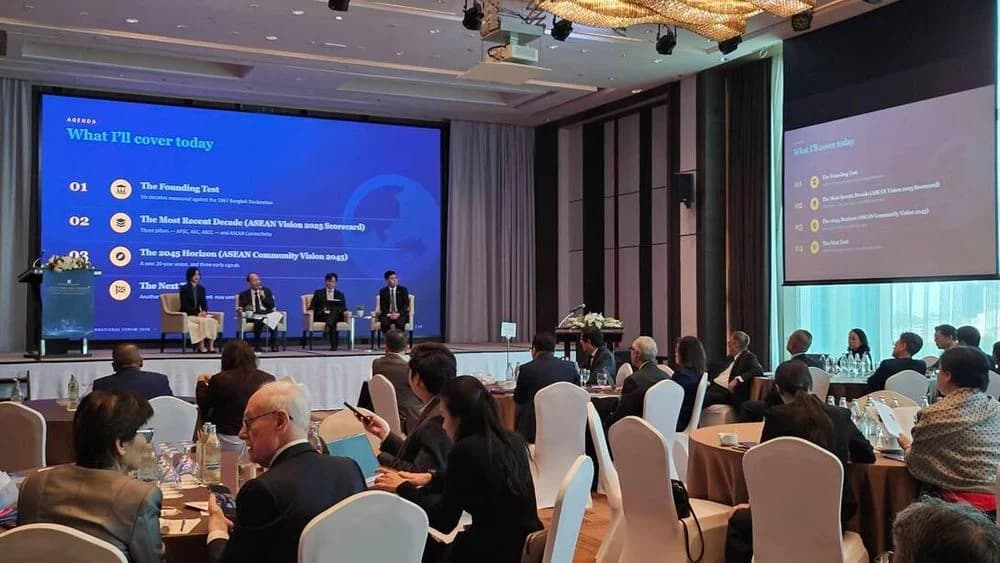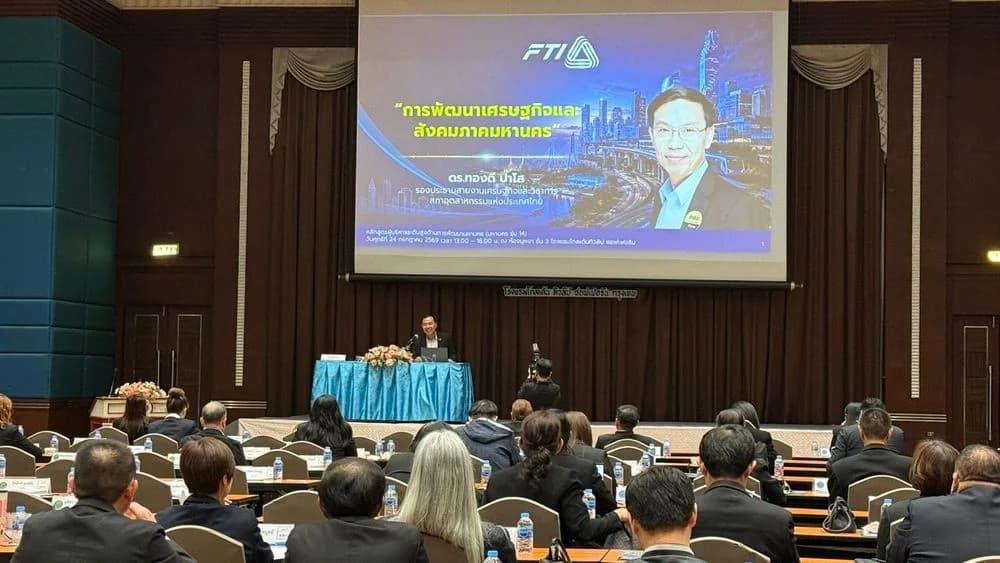

วันศุกร์ที่ 29 สิงหาคม 2568 ดร.สัมพันธ์ ศิลปนาฎ รองประธานสายงาน FTI Academy ผู้แทนสภาอุตสาหกรรมแห่งประเทศไทย (ส.อ.ท.) ร่วมเสวนาในการประชุมวิชาการระดับชาติและนานาชาติ เนื่องในโอกาสครบรอบ 59 ปี แห่งการสถาปนาสถาบันบัณฑิตพัฒนบริหารศาสตร์ (นิด้า) ณ สถาบันบัณฑิตพัฒนบริหารศาสตร์ กรุงเทพฯ
เวทีเสวนาครั้งนี้ จัดขึ้นภายใต้หัวข้อ “Social Innovation and Cross Sectors Collaboration for Inclusive Growth” โดยมีผู้นำจากภาครัฐ เอกชน และภาคประชาสังคม ร่วมแลกเปลี่ยนแนวคิดเพื่อขับเคลื่อนนวัตกรรมทางสังคมและการประสานพลังทุกภาคส่วน เพื่อการเติบโตอย่างทั่วถึงและยั่งยืน
ดร.สัมพันธ์ กล่าวว่า องค์กรต้องขับเคลื่อนจากความรับผิดขององค์กรหรือบริษัทที่มีต่อสังคม (CSR) ไปสู่ การปรับเปลี่ยนของ ‘การดำเนินธุรกิจ’ โดยการสร้างกระบวนการใหม่ๆ ให้สามารถสร้างคุณค่าจากสินค้าหรือการบริการของธุรกิจให้กับสังคม (CSV) โดยเน้นการสร้างคุณค่าร่วมทั้งทางธุรกิจและสังคม ไม่ใช่เพียงกิจกรรมชั่วครั้งชั่วคราว แต่ต้องพัฒนาเป็นกระบวนการที่ต่อเนื่องและขยายผลได้จริง การมีนวัตกรรมทางสังคม ถือเป็นหัวใจสำคัญในการอยู่ในห่วงโซ่มูลค่าโลก และ “Soft Power” จะเป็นกลไกขับเคลื่อนในระดับประเทศผ่านความร่วมมือร่วมสร้าง (Co-creation)
On Friday, August 29, 2025, Dr. Samphan Silpanath, Vice President of FTI Academy, representing the Federation of Thai Industries (FTI), participated in a seminar during the national and international academic conference commemorating the 59th anniversary of the establishment of the National Institute of Development Administration (NIDA) at NIDA, Bangkok.
This seminar was held under the theme “Social Innovation and Cross Sectors Collaboration for Inclusive Growth,” featuring leaders from the public sector, private sector, and civil society who exchanged ideas to promote social innovation and collaborate across sectors for inclusive and sustainable growth.
Dr. Samphan stated that organizations must shift from corporate social responsibility (CSR) to a change in ‘business operations’ by creating new processes that can generate value from the products or services of the business for society (CSV). Emphasis should be placed on creating shared value both in business and society—not merely as temporary activities but as processes that are continuous and scalable. Having social innovation is crucial to remain in the global value chain, and “Soft Power” will drive mechanisms at the national level through collaborative co-creation.