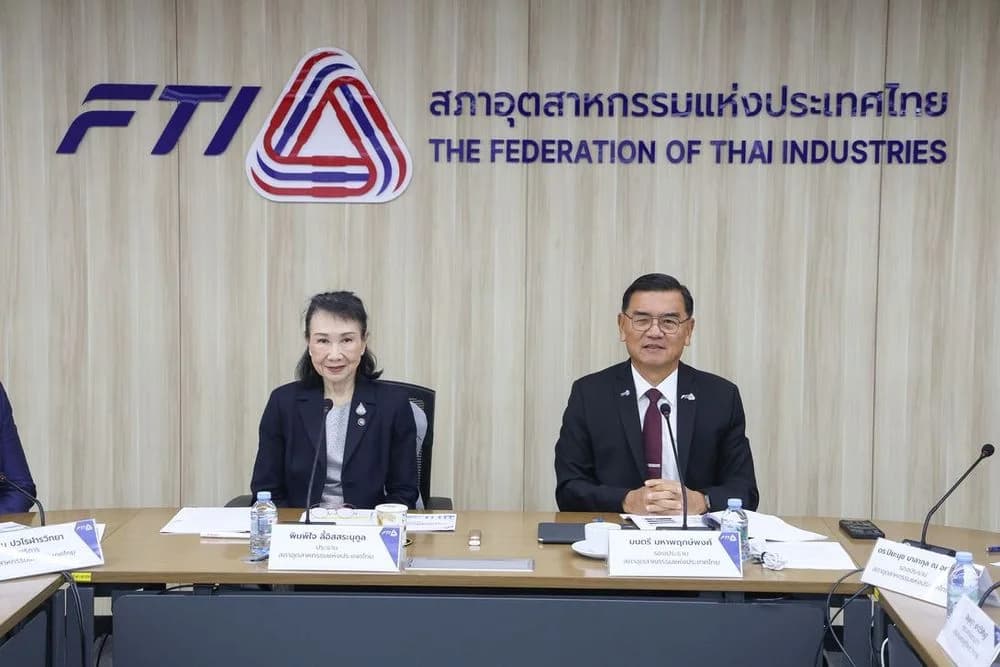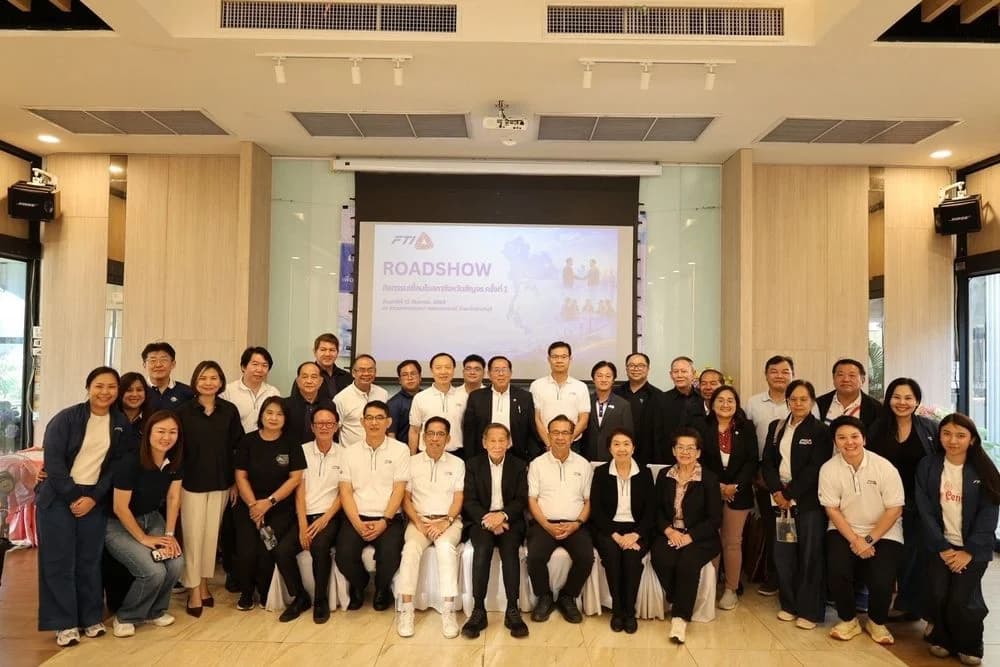

วันพุธที่ 19 พฤศจิกายน 2568 สภาอุตสาหกรรมแห่งประเทศไทย (ส.อ.ท.) จัดงานสัมมนาวิชาการประจำปี FTI Outlook 2026 ภายใต้หัวข้อ “DECODING THAILAND’S INDUSTRY FOR THE UPCOMING FUTURE ถอดรหัสอุตสาหกรรมไทย อ่านเกมอนาคต” เพื่อเป็นเวทีแลกเปลี่ยนข้อมูลเชิงลึกและฉากทัศน์เศรษฐกิจ–อุตสาหกรรมไทย ปี 2569 โดยผู้ทรงคุณวุฒิ นักเศรษฐศาสตร์ และผู้นำภาคธุรกิจ ร่วมถอดรหัสปัจจัยเสี่ยงและโอกาส พร้อมแลกเปลี่ยนมุมมองต่อทิศทางเศรษฐกิจโลกและไทย รวมถึงแนวโน้มอุตสาหกรรมรายสาขา เพื่อใช้เป็นข้อมูลสำคัญในการวางแผนธุรกิจ และเตรียมความพร้อมรับมือกับความท้าทายในอนาคต ณ ห้อง Auditorium อาคาร 3 ชั้น 2 ปตท. สำนักงานใหญ่
ภายในงาน ได้รับเกียรติจาก ดร.เอกนิติ นิติทัณฑ์ประภาศ รองนายกรัฐมนตรีและรัฐมนตรีว่าการกระทรวงการคลัง กล่าวเปิดงานและปาฐกถาพิเศษในหัวข้อ “Policy Vision for Thailand’s Economic Transformation นโยบายใหม่สู่การพลิกโฉมเศรษฐกิจไทย” โดยมีตัวแทนจากทั้งภาครัฐและภาคเอกชน เข้าร่วมงาน
ดร.เอกนิติ นิติทัณฑ์ประภาศ รองนายกรัฐมนตรีและรัฐมนตรีว่าการกระทรวงการคลัง กล่าวว่า “เศรษฐกิจไทยวันนี้กำลังเผชิญจุดเปลี่ยนสำคัญ เรามีข้อจำกัดมากกว่าทุกยุคที่ผ่านมา ทั้งสังคมสูงวัย แรงงานขาดแคลน ความไม่แน่นอนของเศรษฐกิจโลก และคอขวดเชิงโครงสร้างที่สะสมมานาน ข้อมูลเศรษฐกิจล่าสุดสะท้อนชัดเจนว่าไทยไม่สามารถพึ่งการเติบโตแบบเดิมได้อีกต่อไป เราจึงต้องลงมืออย่างเร่งด่วน ทั้งเพื่อประคองเศรษฐกิจระยะสั้น และเพื่อปฏิรูปโครงสร้างเศรษฐกิจระยะยาวอย่างเป็นระบบ”
รัฐบาลตัดสินใจทำมาตรการกระตุ้นเศรษฐกิจแบบเฉพาะหน้าแต่ตรงจุด เพื่อพยุงกำลังซื้อและประคองเศรษฐกิจให้เดินต่อได้ หนึ่งในมาตรการที่สำคัญที่สุดคือ คนละครึ่งพลัส ซึ่งให้รัฐบาลร่วมจ่าย 50% เพื่อกระตุ้นการใช้จ่ายฐานราก ผลลัพธ์ในระยะสั้นนั้นชัดเจนมาก ปัจจุบัน มีร้านค้าเข้าร่วมกว่า 913,000 ราย เกิดการใช้จ่ายแล้วกว่า 33,898 ล้านบาท เม็ดเงินไหลเวียนลงสู่เศรษฐกิจระดับพื้นที่ทั่วประเทศ
พร้อมกันนี้ ยังเร่งรัดการเบิกจ่ายภาครัฐ โดยเฉพาะงบลงทุน ซึ่งสามารถเร่งเบิกจ่ายได้ถึง 12.7% สูงกว่าเป้าหมาย 8% อย่างมีนัยสำคัญ นั่นหมายความว่า รัฐได้ผลักเม็ดเงินใหม่เข้าสู่ระบบเศรษฐกิจในช่วงเวลาที่จำเป็นที่สุดอย่างเป็นรูปธรรม ภายใต้เวลาที่จำกัด ด้วยหลักการว่า “รัฐบาลมีเวลาเพียง 4 เดือน ซึ่งตอนนี้เหลือ 2 เดือน จึงเป็นข้อจำกัดให้ไม่สามารถทำทุกอย่างได้ หากมัวแต่คิดหาโมเดลใหม่คงไม่ทัน เลยต้อง Action เพื่อส่งสัญญาณให้เห็น” รัฐบาลจึงเดินสองทางคู่กัน คือ ประคองเศรษฐกิจระยะสั้นเพื่อรับมือสถานการณ์ และวางรากฐานระยะยาวเพื่อเปลี่ยนโมเดลเศรษฐกิจไทยให้ยั่งยืน โดยทุกอย่างต้องตั้งอยู่บนวินัยการคลังและความโปร่งใสอย่างเคร่งครัด
หัวใจต่อจากนี้คือ ‘การลงทุน’ เพราะการเติบโตระยะยาวต้องเริ่มต้นจากการปลดล็อกศักยภาพการผลิต จึงผลักดัน BOI FastPass และ PPP Fast Track เพื่อแก้คอขวดที่ทำให้นักลงทุนติดค้างกว่า 4.7 แสนล้านบาท โดยยึดเส้นทางจริงของนักลงทุนเป็นตัวตั้ง และใช้พลังของความร่วมมือระหว่างหน่วยงานให้เกิดผลลัพธ์อย่างเป็นรูปธรรม โดยไม่ต้องพึ่งการกู้เงินเพิ่มเติม นี่คือจุดเริ่มต้นสำคัญของโมเดลเศรษฐกิจใหม่ที่ขับเคลื่อนด้วยการลงทุนคุณภาพสูง ไม่ใช่งบประมาณรัฐเพียงอย่างเดียว
นอกจากนี้ การเปลี่ยนผ่านเศรษฐกิจไทยจะเกิดขึ้นไม่ได้ หากคนไทยไม่ถูกยกระดับทักษะให้ทันต่อความต้องการของอุตสาหกรรมยุคใหม่ รัฐบาลจึงร่วมกับภาคเอกชนปรับระบบพัฒนาทักษะเป็นแบบ Demand Driven ให้เอกชนสะท้อนความต้องการจริง แล้วรัฐจัดหลักสูตรตอบโจทย์โดยตรง ทั้งในอุตสาหกรรมยานยนต์สมัยใหม่ อิเล็กทรอนิกส์ พลังงานสะอาด และเทคโนโลยีดิจิทัล พร้อมผลักดัน TH-AI Passport เพื่อยกระดับความสามารถด้าน AI ให้คนไทยในวงกว้าง ต่อยอดสู่กำลังแรงงานคุณภาพที่พร้อมรองรับการลงทุนยุคใหม่ของโลก
ในอีกด้านหนึ่ง SMEs คือฐานรากสำคัญของเศรษฐกิจไทย จึงเตรียมมาตรการยกระดับตั้งแต่เงินทุน การปรับระบบสินเชื่อเชิงซัพพลายเชน ไปจนถึงการพัฒนาทักษะผู้ประกอบการรายย่อยเพื่อให้สามารถเข้าสู่เศรษฐกิจดิจิทัลได้จริง ทั้งหมดนี้คือการปฏิรูปเชิงโครงสร้างเพื่อให้ธุรกิจไทยทุกระดับเติบโตไปพร้อมกับการเปลี่ยนผ่านของเศรษฐกิจใหญ่
และเพื่อให้การยกระดับ SME เกิดผลจริง รัฐบาลได้ขยายมาตรการ Upskill ไปสู่ร้านค้าคนละครึ่งพลัส โดยเปิดโครงการพัฒนาทักษะให้ร้านค้ามากที่สุด 400,000 ร้านค้า เริ่มตั้งแต่วันนี้ 19 พฤศจิกายน ถึง 19 ธันวาคม 2568 ไม่ว่าจะเป็นการเข้าร่วมแพลตฟอร์ม Food Delivery หรือการผ่านหลักสูตรออนไลน์ของธนาคารออมสินและกรมพัฒนาธุรกิจการค้า โดยร้านค้าที่พัฒนาทักษะสำเร็จตามเกณฑ์จะได้รับเงินสนับสนุนจากรัฐ 20% ของยอดขายในส่วนที่รัฐร่วมจ่าย สูงสุดไม่เกิน 2,000 บาท ซึ่งจะประกาศผลผ่านแอป ถุงเงิน มาตรการนี้คือการช่วยร้านค้ารายย่อยก้าวสู่เศรษฐกิจดิจิทัล เพิ่มยอดขายจริง และพร้อมเติบโตไปกับโอกาสทางธุรกิจในอนาคต
วันนี้ รัฐบาลและภาคอุตสาหกรรมต่างมีบทบาทสำคัญที่ต้องทำร่วมกัน รัฐบาลจะทำหน้าที่ปลดล็อกอุปสรรค รักษาเสถียรภาพ และสร้างกติกาที่เอื้อต่อการแข่งขัน ขณะที่ภาคธุรกิจเป็นกำลังสำคัญในการสร้างนวัตกรรม การผลิต และการลงทุนใหม่ หากเรายืนเคียงข้างกัน ประเทศไทยจะสามารถก้าวข้ามข้อจำกัดเดิม ๆ ไปสู่จุดที่สูงกว่าเดิมได้ ในเวลาไม่นาน ประเทศไทยจะไม่ใช่เพียงฐานการผลิต แต่จะเป็นศูนย์กลางอุตสาหกรรมสมัยใหม่ของภูมิภาค ทั้งในด้านดิจิทัล อิเล็กทรอนิกส์ พลังงานสะอาด ยานยนต์สมัยใหม่ และอาหารแห่งอนาคต และสามารถส่งต่อเศรษฐกิจที่แข็งแรง ยั่งยืน และแข่งขันได้ให้กับคนไทยรุ่นต่อไป
ด้านนายเกรียงไกร เธียรนุกุล ประธานสภาอุตสาหกรรมแห่งประเทศไทย (ส.อ.ท.) กล่าวว่า ปัจจุบันเศรษฐกิจโลกกำลังเผชิญความเปลี่ยนแปลงอย่างรวดเร็ว ทั้งจากความก้าวหน้าทางเทคโนโลยีที่ส่งผลกระทบต่อธุรกิจ แรงกดดันจากสงครามการค้า และสงครามเทคโนโลยี ความขัดแย้งด้านภูมิรัฐศาสตร์ที่ยังยืดเยื้อ ตลอดจนการเปลี่ยนแปลงสภาพภูมิอากาศ ซึ่งเป็นโจทย์สำคัญที่ทุกประเทศ รวมถึงประเทศไทยต้องเผชิญ โดยกองทุนการเงินระหว่างประเทศ (IMF) ประเมินว่า GDP โลก ปี 2568 จะขยายตัวที่ 3.2% และปี 2569 GDP โลกจะชะลอตัวลงเหลือขยายตัวเพียง 3.1% ซึ่งยังต่ำกว่าค่าเฉลี่ยย้อนหลัง 10 ปี ที่ 3.7% สะท้อนให้เห็นถึงเศรษฐกิจโลกที่ฟื้นตัวช้ากว่าที่คาดการณ์ไว้
นอกจากนี้ เศรษฐกิจไทยยังคงเผชิญกับปัญหาเชิงโครงสร้างและปัจจัยเสี่ยงรอบด้าน ที่สะท้อนผ่านเครื่องชี้อย่างดัชนีความเชื่อมั่นภาคอุตสาหกรรม (TISI) ที่จัดทำโดย ส.อ.ท. ซึ่งจะเห็นว่าย้อนหลังไป 13 ปี ระดับความเชื่อมั่นยังไม่สามารถกลับมายืนเหนือค่ากลางที่ระดับ 100 ได้ สะท้อนถึงความกังวลของสมาชิก ส.อ.ท. กว่า 16,000 ราย ที่มีต่อภาวะเศรษฐกิจในช่วงที่ผ่านมา โดยมีหลายปัจจัยที่กดดันเศรษฐกิจไทย ทั้งจากมาตรการทางภาษีของสหรัฐฯ ที่ยังไม่มีความชัดเจน ปัญหาสินค้าราคาถูกทุ่มตลาด ค่าเงินบาทที่แข็งค่าและภาระต้นทุนการผลิตที่สูงกว่าคู่แข่งในภูมิภาค ตลอดจนภาระหนี้ครัวเรือนที่ส่งผลต่อกำลังซื้อภายในประเทศ
ขณะที่คณะกรรมการร่วมภาคเอกชน 3 สถาบัน (กกร.) ประมาณการ GDP ไทยปี 2568 คาดว่าจะขยายตัวในกรอบ 1.8 - 2.2% แม้การส่งออกอาจโตได้ประมาณ 9.5%-10.5% แต่ส่วนใหญ่เป็นสินค้าที่มี local content ต่ำมาก และทองคำซึ่งไม่ได้สร้างมูลค่าเพิ่มให้เศรษฐกิจจริง ประกอบกับการนำเข้าที่ขยายตัวสูงถึง 10.2% ทำให้ GDP ยังคงขยายตัวในกรอบที่จำกัด แต่อย่างไรก็ตาม กกร. คาดหวังว่านโยบาย Quick Big Win ของรัฐบาล จะเป็นแรงสนับสนุนสำคัญของเศรษฐกิจไทยให้ GDP สามารถขยายตัวได้มากกว่ากรอบประมาณการในปีนี้ และช่วยสร้างแรงขับเคลื่อนทางเศรษฐกิจในปี 2569
ส.อ.ท.ในฐานะองค์กรตัวแทนภาคเอกชนด้านการผลิต เล็งเห็นถึงความเปลี่ยนแปลงทางเศรษฐกิจและอุตสาหกรรมที่เกิดขึ้นอย่างต่อเนื่อง จึงได้จัดงานสัมมนาวิชาการประจำปี FTI Outlook 2026 เพื่อเป็นเวทีแลกเปลี่ยนวิสัยทัศน์จากผู้บริหารภาครัฐ ผู้ทรงคุณวุฒิ และผู้นำภาคธุรกิจ โดยมุ่งนำเสนอฉากทัศน์เศรษฐกิจและอุตสาหกรรมไทยในปี 2569 พร้อมถอดรหัสปัจจัยเสี่ยง โอกาส และแนวโน้มการเปลี่ยนแปลงสำคัญจากทั้งเศรษฐกิจโลกและเศรษฐกิจไทย เพื่อสร้างความเข้าใจร่วมกันต่อทิศทางการพัฒนาอุตสาหกรรมไทย และใช้เป็นข้อมูลเชิงลึกประกอบการ กำหนดทิศทางเชิงนโยบายของภาครัฐ เพื่อยกระดับขีดความสามารถในการแข่งขันและสร้างโอกาสทางธุรกิจใหม่ในอนาคต
และในปีนี้ ยังนับเป็นโอกาสพิเศษเนื่องในวาระครบรอบ 22 ปีของดัชนีความเชื่อมั่นภาคอุตสาหกรรม (TISI) ซึ่งได้ทำหน้าที่เป็น “เข็มทิศทางเศรษฐกิจและอุตสาหกรรม” สะท้อนมุมมองและภาวะของภาคการผลิตไทยอย่างต่อเนื่องยาวนาน ตลอดสองทศวรรษที่ผ่านมา โดยริเริ่มจัดทำดัชนีฯ ตั้งแต่ปี 2546 ในวาระของนายประพัฒน์ โพธิวรคุณ ประธานสภาอุตสาหกรรมแห่งประเทศไทย คนที่ 12 ดัชนีฯ จึงเปรียบเสมือนหลักไมล์สำคัญที่ช่วยให้ทั้งภาครัฐและภาคเอกชนสามารถติดตามการเปลี่ยนแปลง วางแผนกลยุทธ์ และเตรียมความพร้อมรับความท้าทายและโอกาสใหม่ ๆ ได้
การจัดงาน FTI Outlook 2026 ครั้งนี้ นับเป็นอีกก้าวสำคัญของ ส.อ.ท. ในการร่วมขับเคลื่อนเศรษฐกิจไทยท่ามกลางความเปลี่ยนแปลงของโลกยุคใหม่ ด้วยความร่วมมือจากภาครัฐ ภาคเอกชน และผู้เชี่ยวชาญหลากหลายสาขา ซึ่งเชื่อว่าจะช่วยเสริมสร้างความเข้าใจเชิงลึกต่อทิศทางเศรษฐกิจและอุตสาหกรรมไทย พร้อมเป็นพลังสนับสนุนให้ทุกภาคส่วนสามารถปรับตัว เพิ่มขีดความสามารถการแข่งขัน และร่วมกันผลักดันเศรษฐกิจไทยให้เติบโตอย่างยั่งยืนในปี 2569 และอนาคตข้างหน้า
...............................................................................
เผยแพร่โดย ฝ่ายสื่อสารองค์กร สภาอุตสาหกรรมแห่งประเทศไทย (โทร. 0-2345-1051)
On Wednesday, November 19, 2025, the Federation of Thai Industries (FTI) organized the annual academic seminar FTI Outlook 2026 under the theme “DECODING THAILAND’S INDUSTRY FOR THE UPCOMING FUTURE” as a platform to exchange in-depth insights and economic–industrial scenarios of Thailand for the year 2026. The event brought together experts, economists, and business leaders to decode the risk factors and opportunities while sharing perspectives on the global and Thai economic directions, along with industry-specific trends, to serve as crucial information for business planning and preparation for future challenges. The event was held at Auditorium, Building 3, PTT Headquarters.
The event was honored with the presence of Dr. Ekniti Nitithanprapas, Deputy Prime Minister and Minister of Finance, who delivered the opening speech and special lecture on the topic “Policy Vision for Thailand’s Economic Transformation.” Representatives from both the public and private sectors attended the event.
Dr. Ekniti Nitithanprapas stated, “The Thai economy today is facing a critical turning point. We have more constraints than ever before, including an aging society, labor shortages, global economic uncertainties, and long-standing structural bottlenecks. The latest economic data clearly reflects that Thailand can no longer rely on traditional growth models. Hence, we must act urgently, both to stabilize the short-term economy and to systematically reform the long-term economic structure.”
The government has decided to implement targeted short-term economic stimulus measures to sustain purchasing power and keep the economy moving. One of the most important measures is the initiative, which involves the government co-financing 50% to stimulate grassroots spending. The short-term results are already evident, with more than 913,000 participating shops and a spending of over 33.898 billion THB, circulating funds throughout local economies across the country.
Additionally, the government is accelerating public spending, particularly investment budgets, with disbursement reaching 12.7%, significantly surpassing the target of 8%. This indicates that the government is injecting new funds into the economy at a crucial time under constrained timelines. The principle is that "the government only has 4 months, of which 2 months are left, thus limiting the ability to achieve everything; if we continue to seek new models, we will not be timely—action must happen to signal change." Therefore, the government is pursuing two concurrent pathways: stabilizing the short-term economy to handle the situation while laying down a long-term foundation to transform the Thai economic model into a sustainable one, based on strict fiscal discipline and transparency.
The core focus going forward is ‘investment’ since long-term growth must begin with unlocking production potential, thus driving BOI FastPass and PPP Fast Track initiatives to resolve bottlenecks that have left investors waiting for over 470 billion THB. This approach prioritizes genuine investor pathways and leverages cooperation among agencies to yield tangible results without reliance on additional borrowing. This marks a significant starting point for a new economic model driven by high-quality investments, not merely by government budgets.
Moreover, the transition of the Thai economy cannot occur without upgrading the skills of the Thai workforce to meet the demands of modern industries. The government is collaborating with the private sector to revise the skill development system to become Demand Driven, allowing the private sector to reflect actual needs, followed by the government organizing directly responsive curricula in the modern automotive, electronics, clean energy, and digital technology sectors. The TH-AI Passport will also be promoted to enhance AI capabilities among a wide spectrum of Thai people, leading to a qualified workforce ready to accommodate the new investment era.
On another front, SMEs constitute an essential foundation of the Thai economy. Therefore, measures are being prepared to elevate them, including capital funding, adjustments to supply chain financing, and the development of entrepreneurial skills to effectively enter the digital economy. All these initiatives represent structural reforms to enable businesses at all levels to grow alongside the transitions of major economies.
To ensure the effectiveness of SME uplift programs, the government has expanded the Upskill initiative to cover participating stores under the " 0, 0 " program, offering skill development projects for up to 400,000 stores starting today, November 19, 2025, to December 19, 2025. This includes participation in Food Delivery platforms or online courses provided by the Government Savings Bank and the Department of Business Development, with stores meeting the success criteria receiving a state subsidy of 20% of the government-supported sales, capped at 2,000 THB. Results will be announced via the 'Digital Wallet' app, and this measure aims to help small retail stores transition into the digital economy, increase actual sales, and prepare to grow alongside future business opportunities.
Today, both the government and the industrial sector play vital roles that must work together. The government will remove barriers, maintain stability, and create favorable competition rules, while the business sector is a key force in creating innovation, production, and new investments. If we stand side by side, Thailand can overcome its traditional limitations and reach higher grounds. In the near future, Thailand will not only serve as a manufacturing base but will become a center of modern industries in the region, excelling in digital technology, electronics, clean energy, modern automotive, and future foods, ultimately passing on a robust, sustainable, and competitive economy to future generations of Thais.
Mr. Kriangkrai Thiennukul, President of the Federation of Thai Industries (FTI), stated that the global economy is currently facing rapid changes due to technological advancements impacting businesses, pressures from trade wars, ongoing geopolitical conflicts, and climate change, which are significant challenges that all countries, including Thailand, must confront. According to the International Monetary Fund (IMF), the global GDP for 2025 is projected to expand by 3.2%, while in 2026, it will slow down to 3.1%, still below the 10-year average of 3.7%, indicating a slower-than-expected global economic recovery.
Additionally, the Thai economy continues to face structural issues and risks from various factors reflected through indicators such as the Industrial Confidence Index (TISI) prepared by FTI, which shows that confidence levels have not returned above the neutral mark of 100 for the past 13 years, reflecting the concerns of over 16,000 FTI members regarding the economic conditions of the past. Numerous factors pressuring the Thai economy include unclear U.S. tax policies, the influx of cheap goods, a strengthening Thai baht, production costs exceeding regional competitors, and household debt burdens affecting domestic purchasing power.
Meanwhile, the Joint Standing Committee on Commerce, Industry and Banking (JSCCIB) estimates that Thailand’s GDP for 2025 will expand within the range of 1.8 - 2.2%. Although exports may grow by approximately 9.5%-10.5%, they largely comprise products with very low local content and gold, which does not generate additional value for the real economy. In conjunction with imports expanding by as much as 10.2%, GDP will continue to grow within limited constraints. Nevertheless, JSCCIB anticipates that the government’s Quick Big Win policy will significantly support the Thai economy, enabling GDP to grow beyond this year’s estimated range and help drive economic momentum in 2026.
The FTI, as the representative organization for the private manufacturing sector, recognizes the ongoing economic and industrial transformations. Therefore, it organized the annual FTI Outlook 2026 seminar to facilitate the exchange of vision among government executives, experts, and business leaders, aiming to present the economic and industrial scenarios of Thailand in 2026 while decoding the risk factors, opportunities, and important changes from the global and Thai economies. The goal is to foster mutual understanding regarding the direction of Thai industry development and to provide insightful data to assist in formulating governmental policy directions to enhance competitiveness and create new business opportunities in the future.
Additionally, this year marks a special opportunity to celebrate the 22nd anniversary of the Industrial Confidence Index (TISI), serving as a “economic and industrial compass” that reflects perspectives and conditions of the Thai manufacturing sector. The index has been successfully developed since 2003 under the leadership of Mr. Prabath Pothiwirakun, the 12th President of the Federation of Thai Industries. This index is a crucial milestone that aids both the government and private sectors in tracking changes, planning strategies, and preparing to tackle new challenges and opportunities effectively.
The FTI Outlook 2026 event represents an important step for FTI in driving the Thai economy amidst the changes of the new world through collaboration with the government, private sector, and experts from various fields. This initiative is expected to deepen the understanding of the economic and industrial directions of Thailand and support all sectors in adapting, enhancing competitive capacity, and collaboratively driving the Thai economy towards sustainable growth in 2026 and the years to come.
...............................................................................
Published by Corporate Communications Department, Federation of Thai Industries (Tel. 0-2345-1051)