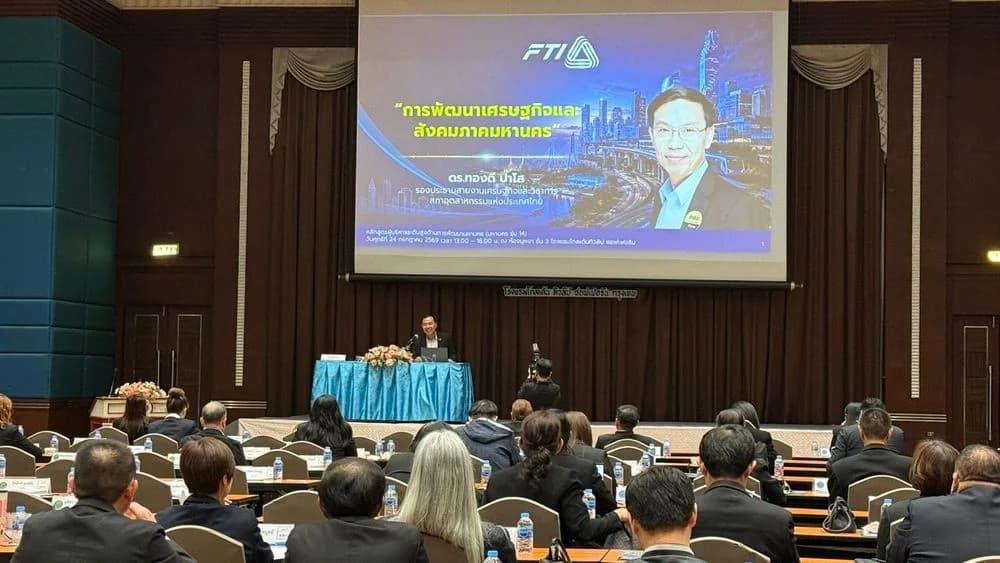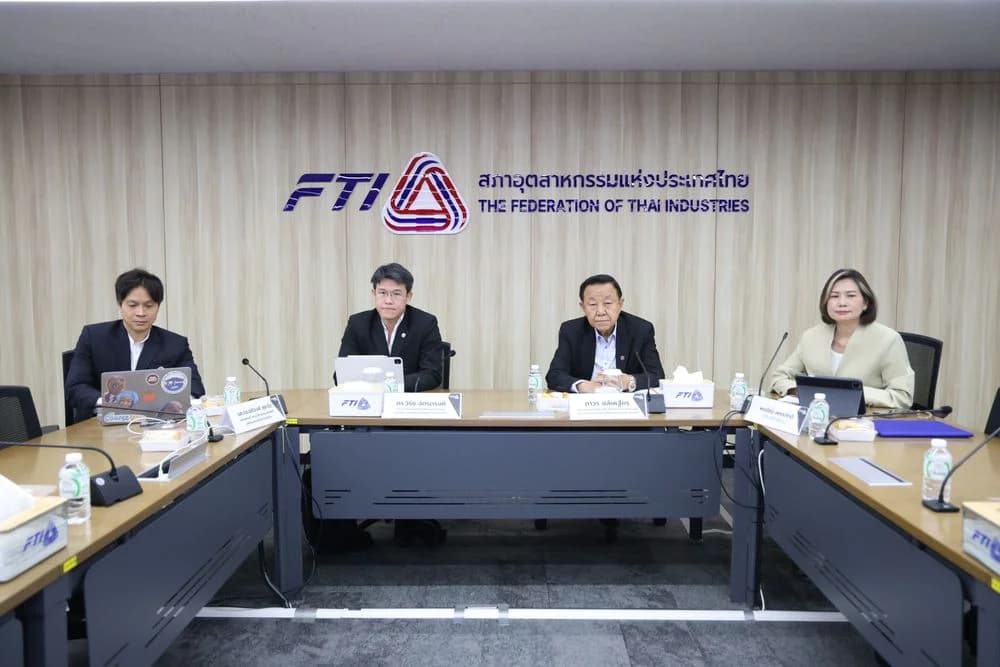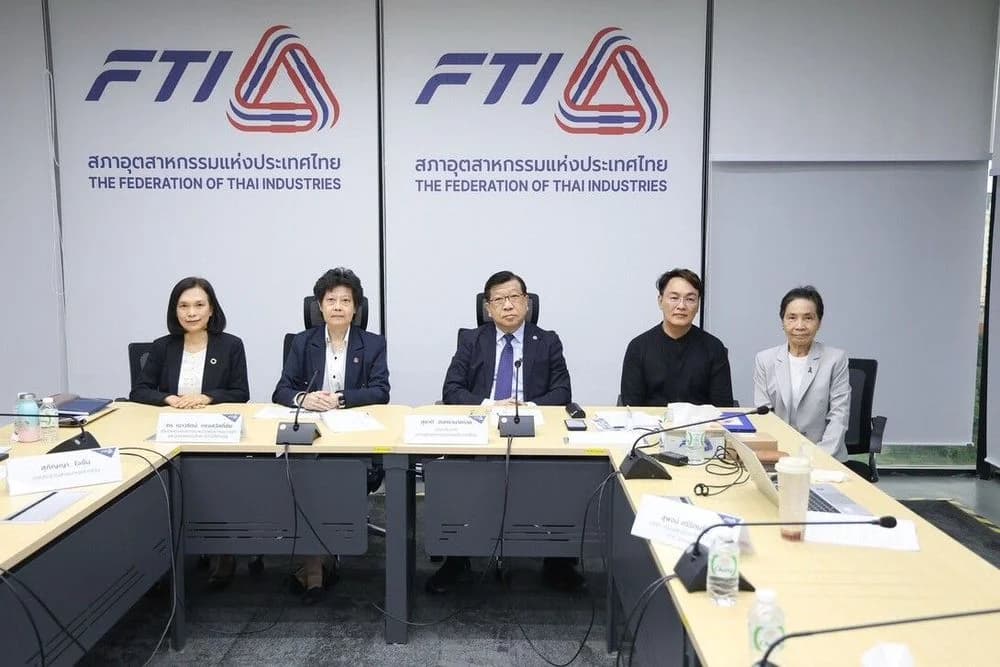
วันที่ 10 กุมภาพันธ์ 2569 นายนาวา จันทนสุรคน รองประธานสภาอุตสาหกรรมแห่งประเทศไทย (ส.อ.ท.) และประธานสายงานสื่อสารองค์กร ได้รับเกียรติเข้าร่วมเป็นวิทยากรในหัวข้อ “ทิศทางอุตสาหกรรมไทยในเวทีโลกปี 2026” ภายในงาน Future Trends Ahead Summit 2026 ณ พารากอน ฮอลล์ ชั้น 5 สยามพารากอน โดยได้นำเสนอภาพรวมแนวโน้มเศรษฐกิจโลก เทคโนโลยี และทิศทางการปรับตัวของภาคอุตสาหกรรมไทยในระยะต่อไป
นายนาวา กล่าวว่าปัจจุบันโลกกำลังเผชิญความท้าทายหลายด้าน ทั้งภาวะเศรษฐกิจเติบโตต่ำ หนี้สูง ความตึงเครียดทางภูมิรัฐศาสตร์ การแข่งขันทางเทคโนโลยี การเปลี่ยนแปลงสภาพภูมิอากาศ รวมถึงการเปลี่ยนผ่านด้านพลังงาน ซึ่งส่งผลต่อโครงสร้างการค้าและห่วงโซ่อุปทานโลก ขณะเดียวกัน เทคโนโลยีดิจิทัลและปัญญาประดิษฐ์ (AI) กำลังกลายเป็นโครงสร้างพื้นฐานสำคัญของเศรษฐกิจโลก และเป็นแรงขับเคลื่อนการเปลี่ยนแปลงในทุกอุตสาหกรรม
จากข้อมูลที่นำเสนอ พบว่าเศรษฐกิจดิจิทัลของไทยยังคงเติบโตต่อเนื่อง และการส่งออกสินค้าดิจิทัลเพิ่มขึ้นอย่างมีนัยสำคัญ สะท้อนบทบาทของเทคโนโลยีดิจิทัลที่เข้ามาขับเคลื่อนภาคเศรษฐกิจไทย ทั้งในด้านคอนเทนต์ดิจิทัล โทรคมนาคม บริการดิจิทัล และซอฟต์แวร์
นายนาวา ระบุว่า AI ได้เข้ามามีบทบาทในหลากหลายอุตสาหกรรม เช่น การแพทย์และสาธารณสุข การเงิน การผลิต โลจิสติกส์ ยานยนต์ ค้าปลีก พลังงาน และสื่อสารบันเทิง โดยช่วยเพิ่มประสิทธิภาพ ลดต้นทุน และสร้างโอกาสทางธุรกิจใหม่ ๆ ขณะเดียวกันหลายประเทศได้เร่งลงทุนด้าน AI อย่างต่อเนื่อง ส่งผลให้การแข่งขันด้านเทคโนโลยีมีความเข้มข้นมากขึ้น
สำหรับแนวทางการปรับตัวของอุตสาหกรรมไทย ส.อ.ท. เสนอให้ภาคอุตสาหกรรมมุ่งสู่อุตสาหกรรมแห่งอนาคต (Next-Gen Industries) โดยยกระดับขีดความสามารถผ่าน 4 แนวทางหลัก ได้แก่ 1) การใช้ Digital และ AI 2) การขับเคลื่อนนวัตกรรม 3) การขยายตลาดสู่ระดับโลก และ 4) การพัฒนาอย่างยั่งยืนตามแนวทาง ESG รวมถึงการปรับตัวตามแนวคิด BCG Economy เพื่อมุ่งสู่เป้าหมายการลดการปล่อยก๊าซเรือนกระจกสุทธิเป็นศูนย์ (Net Zero)
นอกจากนี้ ส.อ.ท. ยังให้ความสำคัญกับการส่งเสริมอุตสาหกรรมเป้าหมาย เช่น Digital และ AI พลังงานหมุนเวียน เทคโนโลยีชีวภาพ การแพทย์ครบวงจร ยานยนต์ไฟฟ้า อิเล็กทรอนิกส์อัจฉริยะ ระบบอัตโนมัติและหุ่นยนต์ และอุตสาหกรรมแปรรูปอาหาร เพื่อสร้างมูลค่าเพิ่มและยกระดับโครงสร้างเศรษฐกิจของประเทศ โดยเน้นการพัฒนาเทคโนโลยี นวัตกรรม กำลังคน โครงสร้างพื้นฐาน และการเชื่อมโยงห่วงโซ่อุปทานตลอดทั้งระบบ
นายนาวา กล่าวทิ้งท้ายว่า ในยุคที่โลกเปลี่ยนแปลงอย่างรวดเร็ว ภาคอุตสาหกรรมไทยจำเป็นต้องเร่งปรับตัวและยกระดับความสามารถในการแข่งขัน เพื่อให้สามารถรับมือกับความท้าทายและใช้ประโยชน์จากโอกาสใหม่ ๆ ในเวทีเศรษฐกิจโลกได้อย่างยั่งยืน
On February 10, 2026, Mr. Nava Chantanasurakhan, Vice President of the Federation of Thai Industries (FTI) and President of the Corporate Communications Division, was honored to participate as a speaker on the topic 'Directions of the Thai Industry in the Global Arena in 2026' at the Future Trends Ahead Summit 2026 held at Paragon Hall, 5th Floor, Siam Paragon. He presented an overview of global economic trends, technology, and the direction of adaptation within the Thai industrial sector in the upcoming period.
Mr. Nava stated that the world is currently facing various challenges, including low economic growth, high debt, geopolitical tensions, technological competition, climate change, and energy transition, which are impacting global trade structures and supply chains. Meanwhile, digital technology and artificial intelligence (AI) are becoming essential infrastructures of the global economy and are driving changes across all industries.
Based on the presented data, it was revealed that Thailand's digital economy continues to grow, with significant increases in digital goods exports, reflecting the role of digital technology in driving the Thai economy, including in digital content, telecommunications, digital services, and software.
Mr. Nava noted that AI has taken on important roles across various sectors, such as healthcare, finance, manufacturing, logistics, automotive, retail, energy, and entertainment. It is enhancing efficiency, reducing costs, and creating new business opportunities. Concurrently, many countries have been rapidly investing in AI, leading to intensified competition in technology.
Regarding the adaptation strategies for the Thai industry, FTI suggests that the industrial sector should aim for Next-Gen Industries by enhancing capabilities through four main strategies: 1) Utilizing Digital and AI 2) Driving Innovation 3) Expanding Markets to Global Levels and 4) Sustainable Development in accordance with ESG principles, alongside adapting to the BCG Economy concept to aim for net-zero greenhouse gas emissions.
Furthermore, FTI places importance on promoting target industries such as Digital and AI, renewable energy, biotechnology, comprehensive healthcare, electric vehicles, smart electronics, automation and robotics, and food processing industries to create added value and elevate the country's economic structure. This includes a focus on technology development, innovation, labor force, infrastructure, and supply chain integration across the entire system.
Mr. Nava concluded by stating that in an era of rapid global changes, the Thai industrial sector must hasten adaptation and enhance its competitiveness to effectively face challenges and leverage new opportunities in the global economic arena sustainably.