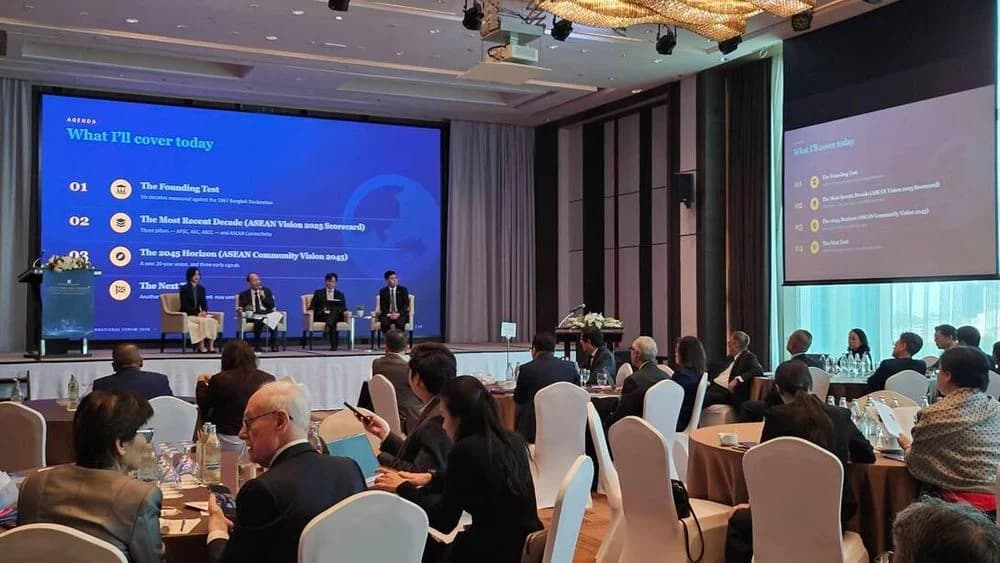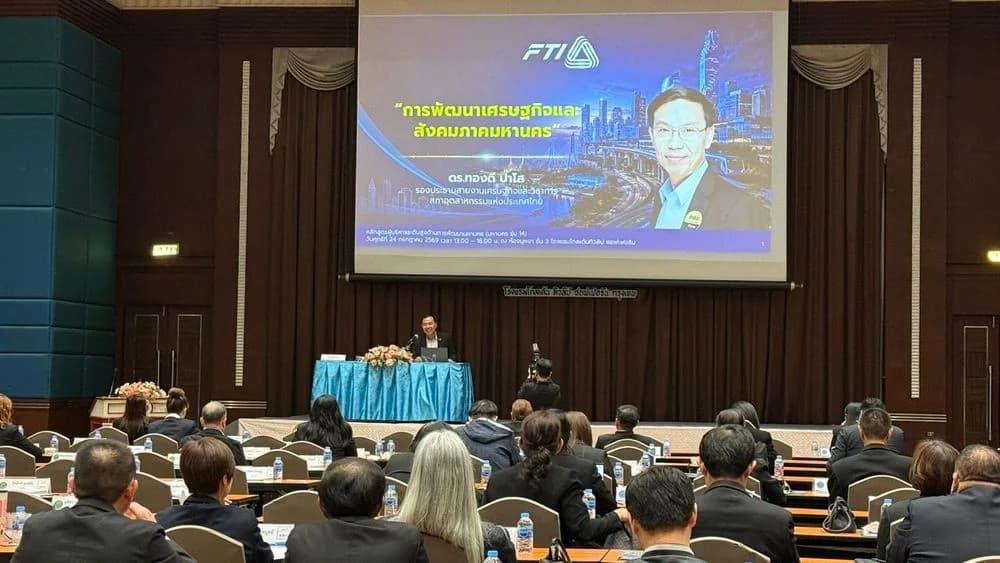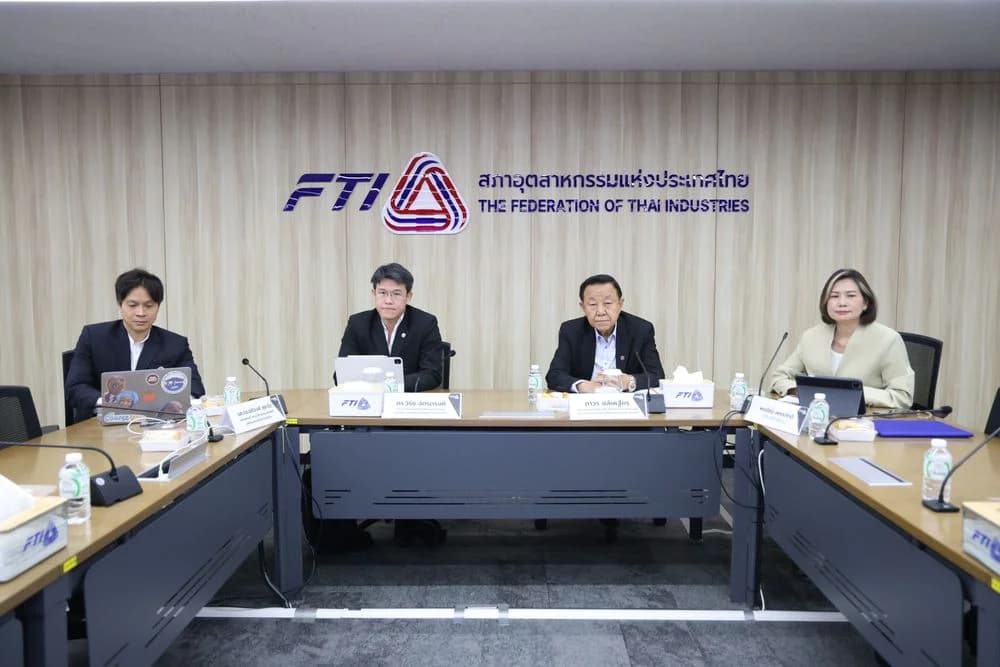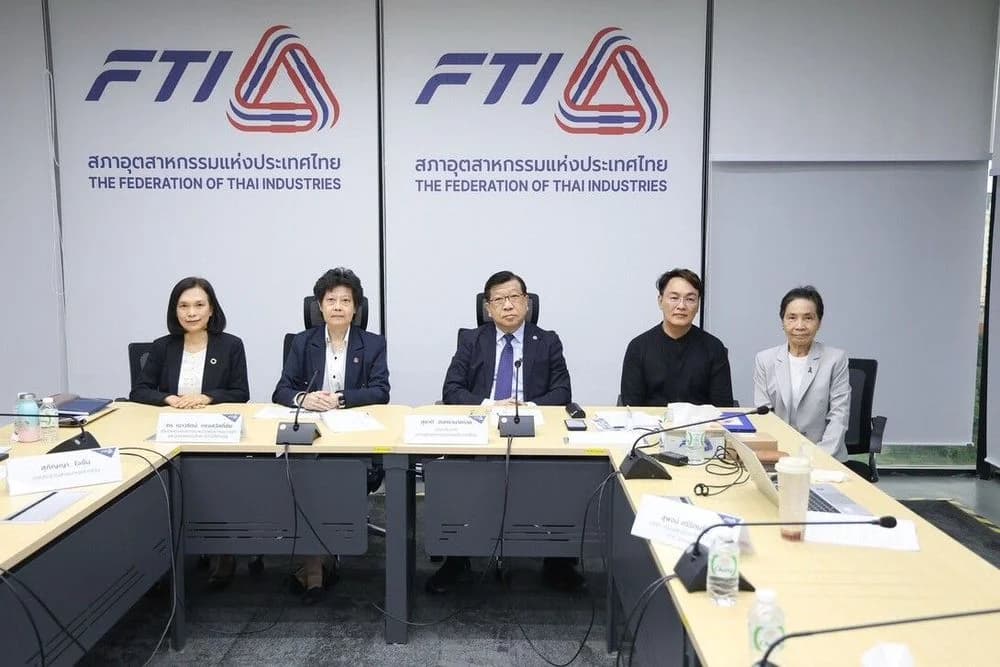

เมื่อวันพุธที่ 11 กุมภาพันธ์ 2569 นางสาวเพชรรัตน์ เอกแสงกุล รองประธานสภาอุตสาหกรรมแห่งประเทศไทย (ส.อ.ท.) ได้รับเกียรติเป็นวิทยากรกล่าวปิดในงาน World Bank Thailand Launch: Advancing Green Manufacturing for Growth ภายใต้หัวข้อ “Thailand as the Global Green Hub: Resilience, Supply Chains, and SMEs” ซึ่งจัดโดยธนาคารโลกประจำประเทศไทย ณ ห้อง Ballroom 1 โรงแรมอินเตอร์คอนติเนนตัล กรุงเทพ
ในโอกาสนี้ นางสาวเพชรรัตน์ กล่าวว่า ส.อ.ท. ให้ความสำคัญกับการสนับสนุนและเตรียมความพร้อมของภาคอุตสาหกรรมในการรองรับพระราชบัญญัติการเปลี่ยนแปลงสภาพภูมิอากาศที่จะเกิดขึ้นในอนาคต โดยมุ่งเน้นการส่งเสริมให้สมาชิกปรับปรุงกระบวนการผลิตแบบครบวงจร ตั้งแต่ต้นน้ำถึงปลายน้ำ (end-to-end process) เพื่อบรรลุเป้าหมายการลดการปล่อยก๊าซคาร์บอนด้วยต้นทุนที่ต่ำที่สุด ขณะเดียวกันยังสามารถรักษาขีดความสามารถในการแข่งขัน เพิ่มโอกาสทางการค้าและการขยายธุรกิจ ควบคู่กับการดำเนินธุรกิจที่เป็นมิตรต่อสิ่งแวดล้อมอย่างยั่งยืน
นอกจากนี้ ส.อ.ท. ยังสนับสนุนการพัฒนาอุตสาหกรรมที่ขับเคลื่อนด้วยแนวคิดเศรษฐกิจ BCG Model (Bio-Circular-Green Economy) ควบคู่กับการส่งเสริมกลไกระบบ “พี่เลี้ยง–น้อง” ซึ่งถือเป็นเสาหลักสำคัญ โดยเฉพาะในกลุ่มอุตสาหกรรมเคมี ผ่านโครงการ Responsible Care ที่มุ่งเน้นการควบคุมมลพิษ (Pollution Control) ซึ่งเป็นการดำเนินการด้วยความสมัครใจก่อนการบังคับใช้กฎหมาย และเปิดโอกาสให้บริษัทขนาดใหญ่ที่มีความเชี่ยวชาญในระดับสากล ถ่ายทอดองค์ความรู้และประสบการณ์การดำเนินงานในต่างประเทศให้แก่ผู้ประกอบการ SMEs
ทั้งนี้ บริษัทที่เข้าร่วมเป็นพี่เลี้ยงจะได้รับคะแนนสะสมในระบบเป็นการตอบแทน กลไกดังกล่าวจะช่วยเสริมสร้างความเข้มแข็งให้ภาคอุตสาหกรรมสามารถฝ่าฟันความท้าทายและดำเนินธุรกิจได้อย่างยั่งยืน
ทั้งนี้ อีกหนึ่งภารกิจสำคัญของ ส.อ.ท. คือ การบูรณาการความร่วมมือกับสภาหอการค้าแห่งประเทศไทย และสมาคมธนาคารไทย ในนามคณะกรรมการร่วมภาคเอกชน 3 สถาบัน (กกร.) ในการขับเคลื่อนโครงการ Zero Corruption กกร. และ “เพื่อนไม่ทน” เพื่อแก้ไขปัญหาคอร์รัปชันและขจัดต้นทุนแฝง (Hidden Cost) ซึ่งแม้จะเป็นประเด็นที่มีความท้าทายอย่างยิ่ง แต่ถือเป็นภารกิจสำคัญที่ต้องผลักดันให้เกิดผลอย่างเป็นรูปธรรม เพื่อเสริมสร้างความโปร่งใสและความยั่งยืนให้กับภาคอุตสาหกรรมไทยในระยะยาว
On Wednesday, February 11, 2026, Ms. Petcharat Aeksangkul, Vice President of the Federation of Thai Industries (FTI), had the honor of being a closing speaker at the World Bank Thailand Launch: Advancing Green Manufacturing for Growth under the theme “Thailand as the Global Green Hub: Resilience, Supply Chains, and SMEs,” organized by the World Bank Thailand at Ballroom 1 of the InterContinental Bangkok.
On this occasion, Ms. Petcharat stated that FTI places great importance on supporting and preparing the industrial sector for the forthcoming Climate Change Act, focusing on promoting members to enhance their integrated production processes, from upstream to downstream (end-to-end process), to achieve the goal of reducing carbon emissions at the lowest possible cost while maintaining competitive capability, increasing trade opportunities, and expanding businesses alongside sustainable and environmentally friendly operations.
Furthermore, FTI supports the development of industries driven by the BCG Model (Bio-Circular-Green Economy) while promoting a “mentor-mentee” system, which is a key pillar, especially in the chemical industry, through the Responsible Care project, which emphasizes pollution control and operates voluntarily before legal enforcement. This opens opportunities for large companies with international expertise to share knowledge and operational experiences from abroad with SMEs.
Additionally, companies participating as mentors will earn points in the system as a reward. This mechanism will help strengthen the industrial sector to withstand challenges and operate sustainably.
Moreover, another important mission of FTI is the integration of cooperation with the Thai Chamber of Commerce and the Thai Bankers' Association under the joint private sector committee of the three institutions (JCC) to drive the Zero Corruption initiative and “Unyielding Friends” to address corruption issues and eliminate hidden costs. Although this is an extremely challenging issue, it is a crucial mission that must be pushed to yield tangible results to enhance transparency and sustainability for the Thai industrial sector in the long term.