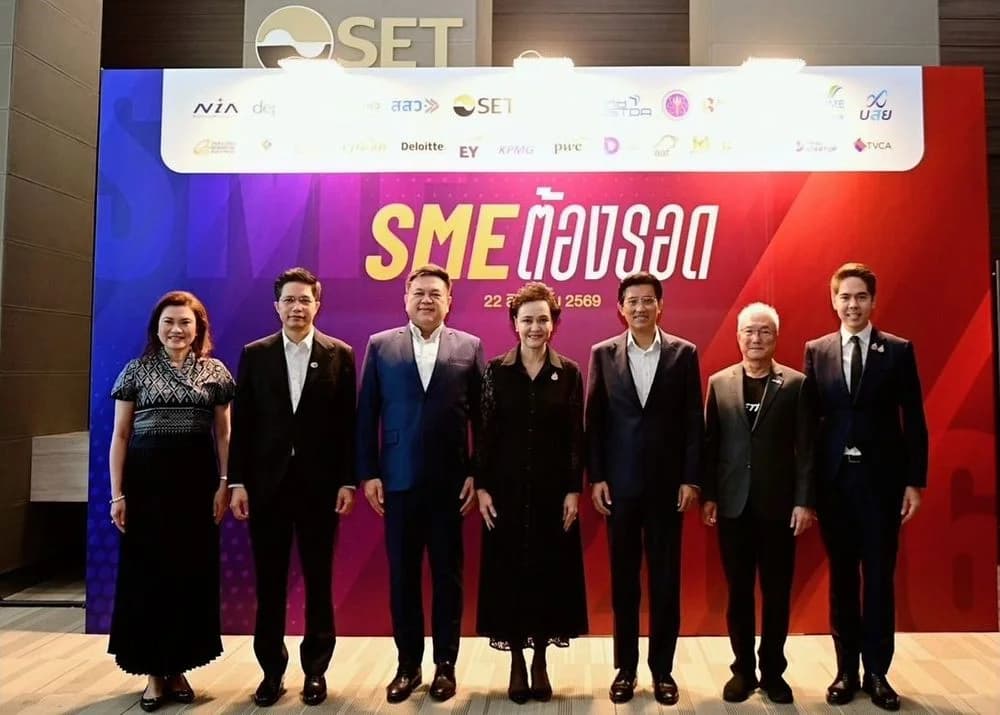
เมื่อวันอังคารที่ 31 มีนาคม 2569 นายเกรียงไกร เธียรนุกุล ประธานสภาอุตสาหกรรมแห่งประเทศไทย (ส.อ.ท.) เข้าร่วมเป็นวิทยากรในงานสัมมนา Battle Strategy 2026 ภายใต้หัวข้อ The 15% Survival Strategy: Unlocking Liquidity and Restructuring Thai Economy from Inside-Out ณ PARAGON HALL ศูนย์การค้าสยามพารากอน
นายเกรียงไกร กล่าวว่า ภายใต้แรงกดดันจากมาตรการกีดกันทางการค้า โดยเฉพาะ “กำแพงภาษี 15%” ประเทศไทยจำเป็นต้องเร่ง “ผ่าตัดใหญ่” โครงสร้างเศรษฐกิจอย่างจริงจัง สิ่งแรกเลย คือเราต้องเลิกแข่ง “ราคาถูก” แล้วหันมาแข่ง “มูลค่า” อุตสาหกรรมไทยต้องขยับไปสู่ นวัตกรรมและเทคโนโลยี สร้างสินค้าและบริการที่แตกต่าง มีคุณภาพ และมีมูลค่าเพิ่มมากขึ้น
ขณะเดียวกัน ต้องทำให้ “ของไทย” แข็งแรงขึ้นทั้งระบบเชื่อมโยงตั้งแต่วัตถุดิบ การผลิต ไปจนถึงสินค้าปลายทาง ให้มูลค่าเพิ่มหมุนอยู่ในประเทศ และผลักดัน Made in Thailand (MiT) ให้ไปได้ไกลขึ้นทั้งในและต่างประเทศ
อีกเรื่องที่เลี่ยงไม่ได้ คือ ต้นทุน เราต้องช่วยกันลดต้นทุนพลังงาน โลจิสติกส์ และขั้นตอนการทำธุรกิจ ควบคู่กับการลงทุนโครงสร้างพื้นฐานระยะยาว เพื่อให้ประเทศแข่งขันได้จริง
ในเวทีโลก เราต้องเดินเกมเชิงรุก เร่งเจรจา FTA เปิดตลาดใหม่ ลดข้อจำกัดทางการค้า เพื่อให้สินค้าไทยมีแต้มต่อมากขึ้น
สุดท้าย ภาครัฐเองก็ต้องปรับตัว ลดกฎระเบียบที่ซ้ำซ้อน เพิ่มความคล่องตัวในการลงทุน และที่สำคัญ ต้องแก้ปัญหาคอร์รัปชันอย่างจริงจัง เพื่อสร้างความเชื่อมั่นให้กับนักลงทุน
ในส่วนของสถานการณ์โลก โดยเฉพาะความขัดแย้งในตะวันออกกลาง ทำให้ต้นทุนพลังงานและการผลิตสูงขึ้นอย่างหลีกเลี่ยงไม่ได้
ทางออกของเราคือ “ต้องเปลี่ยนวิธีคิด” อย่างแรกเลย คือทำให้ “การประหยัดพลังงาน” เป็นวาระแห่งชาติ ไม่ใช่แค่รณรงค์ แต่ต้องทำจริง ตั้งเป้าลดการใช้พลังงานลงควบคู่กับการปรับโครงสร้างพลังงานทั้งระบบ ลดการพึ่งพาฟอสซิล และเปิดทางให้เอกชนเข้าถึงพลังงานสะอาดในราคาที่เป็นธรรม
อีกเรื่องที่สำคัญ คือ “เราต้องพึ่งพาตัวเองให้มากขึ้น” เชื่อมโยงห่วงโซ่อุตสาหกรรมในประเทศให้แน่นขึ้น ตั้งแต่ต้นน้ำถึงปลายน้ำ เช่น อาหาร ยานยนต์ อิเล็กทรอนิกส์ ปิโตรเคมี
และที่ขาดไม่ได้ คือ การช่วย SME ให้เข้าถึงเงินทุน เทคโนโลยี และที่ปรึกษา เพื่อให้สามารถปรับตัว ลดต้นทุน และอยู่รอดได้จริง
ทั้งหมดนี้ ไม่ใช่แค่การ “เอาตัวรอด” แต่คือโอกาสในการ “ยกระดับเศรษฐกิจไทยทั้งระบบ” ถ้าเราปรับได้ทัน
เวทีเสวนานี้ มีผู้แทนจากภาคธุรกิจและสถาบันการเงินร่วมเสวนา ได้แก่ นายจีรพันธ์ อัศวะธนกุล รองประธานกรรมการหอการค้าไทย นายธวัชชัย ชีวานนท์ ประธานผู้บริหาร Product & Business Solutions ธนาคารกรุงไทย นายทรงพล ชีวะปัญญาโรจน์ ผู้อำนวยการธนาคารออมสิน และ ดร.มหัทธนะ อัมพรพิสิฏฐ์ กรรมการผู้จัดการ ธนาคารอาคารสงเคราะห์
On Tuesday, 31 March 2026, Mr. Kriangkrai Theeranukul, President of the Federation of Thai Industries (FTI), participated as a speaker at the Battle Strategy 2026 seminar under the topic "The 15% Survival Strategy: Unlocking Liquidity and Restructuring Thai Economy from Inside-Out" held at PARAGON HALL, Siam Paragon shopping center.
Mr. Kriangkrai stated that under pressure from trade barriers, particularly the "15% tariff wall," Thailand must expedite a serious "major surgery" on its economic structure. Firstly, we must stop competing on "cheap prices" and instead focus on "value." The Thai industry must shift towards innovation and technology, creating differentiated products and services that are of higher quality and added value.
At the same time, we must strengthen Thai products throughout the entire supply chain, from raw materials and production to end products, ensuring that added value circulates within the country, while pushing for Made in Thailand (MiT) to reach further both domestically and internationally.
Another unavoidable issue is cost. We must collectively work to reduce energy, logistics, and operational costs alongside investing in long-term infrastructure to enhance national competitiveness.
On the global stage, we need to adopt a proactive strategy by accelerating FTA negotiations, opening new markets, and reducing trade barriers to provide Thai products with a competitive edge.
Finally, the government must adapt by reducing redundant regulations, increasing investment agility, and, importantly, addressing corruption seriously to build investor confidence.
The global situation, particularly the conflicts in the Middle East, has inevitably increased energy and production costs.
Our solution is to "change our mindset." Firstly, we must prioritize "energy conservation" as a national agenda—not just a campaign, but a genuine effort to reduce energy consumption while restructuring the entire energy system, reducing dependence on fossil fuels, and allowing the private sector fair access to clean energy.
Another critical aspect is that "we must become more self-reliant," tightening the industrial supply chain within the country from upstream to downstream, such as in food, automotive, electronics, and petrochemicals.
Moreover, we cannot overlook the importance of assisting SMEs in accessing funding, technology, and consultancy so they can adapt, reduce costs, and genuinely survive.
All of this is not merely about "survival" but represents an opportunity to "upgrade the Thai economy as a whole"—if we can adapt in time.
This seminar featured representatives from the business sector and financial institutions, including Mr. Jirapan Asavathanakool, Vice Chairman of the Thai Chamber of Commerce; Mr. Thawatchai Chivanan, President of Product & Business Solutions at Krung Thai Bank; Mr. Songpol Chivapanicharoj, Director of Government Savings Bank; and Dr. Mahattan Amornpisit, Managing Director of the Government Housing Bank.