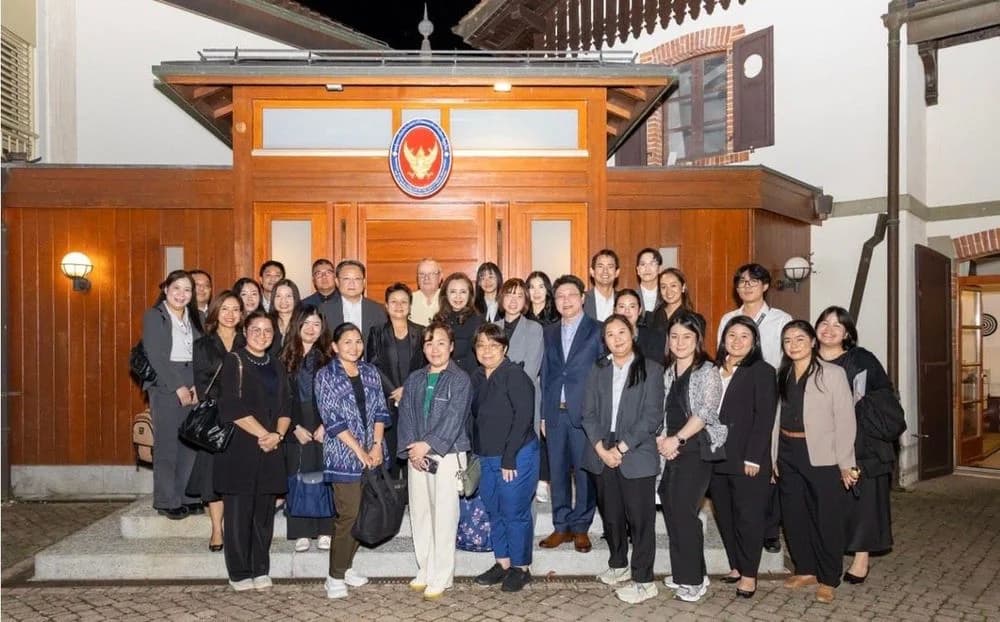

เมื่อวันที่ 25–26 พฤษภาคม 2569 นายชญานินทร์ โพธิวรคุณ กรรมการสภาอุตสาหกรรมแห่งประเทศไทย (ส.อ.ท.) เป็นผู้แทนเข้าร่วมการประชุม East Asia Business Council (EABC) ครั้งที่ 2/2026 และการประชุม RCEP Business Advisory Council (RBAC) เพื่อหารือความร่วมมือด้านเศรษฐกิจ การค้า และการลงทุน รวมถึงแนวทางการเพิ่มการใช้ประโยชน์จากความตกลง RCEP และการเสริมสร้างความร่วมมือทางเศรษฐกิจในภูมิภาคเอเชียตะวันออก ณ กรุงโตเกียว ประเทศญี่ปุ่น
ในการประชุม EABC ที่ประชุมได้ให้ความสำคัญกับการพัฒนาเศรษฐกิจหมุนเวียน (Circular Economy) และการดำเนินธุรกิจอย่างยั่งยืน โดยมีการหารือแนวทางจัดทำกรอบความร่วมมือด้านเศรษฐกิจหมุนเวียนระดับภูมิภาคเอเชียตะวันออก เพื่อส่งเสริมการใช้ทรัพยากรอย่างมีประสิทธิภาพ ลดของเสียและการปล่อยคาร์บอน ตลอดจนสนับสนุนอุตสาหกรรมที่เป็นมิตรต่อสิ่งแวดล้อม และลดการปล่อยก๊าซเรือนกระจกในภาคอุตสาหกรรม
สำหรับการประชุม RBAC ที่ประชุมได้ติดตามความคืบหน้าการดำเนินความตกลง RCEP และแนวทางสนับสนุนผู้ประกอบการ โดยเฉพาะ MSMEs ให้สามารถใช้ประโยชน์จากความตกลงได้มากยิ่งขึ้น
ทั้งนี้ หลายประเทศสมาชิกสะท้อนว่ายังคงมีข้อจำกัดด้านข้อมูล และความซับซ้อนของกฎว่าด้วยถิ่นกำเนิดสินค้า (Rules of Origin) ขณะที่ในบางกรณี ความตกลงการค้าเสรีแบบทวิภาคี (Bilateral FTAs) ยังคงให้อัตราภาษีที่เอื้อประโยชน์มากกว่า RCEP ส่งผลให้ผู้ประกอบการเลือกใช้สิทธิภายใต้ความตกลงเดิม
นอกจากนี้ ที่ประชุมยังได้หารือถึงการใช้กฎถิ่นกำเนิดสินค้าแบบสะสม (Cumulative Rules of Origin) ซึ่งแม้จะเป็นข้อได้เปรียบสำคัญของ RCEP แต่ผู้ประกอบการจำนวนมากยังประสบปัญหาในการคำนวณและประเมินสิทธิประโยชน์ เนื่องจากห่วงโซ่อุปทานมีความซับซ้อนและข้อมูลยังเข้าถึงได้ยาก จึงมีข้อเสนอให้ประเทศสมาชิกเพิ่มการแลกเปลี่ยนข้อมูลระหว่างกัน เพื่อสนับสนุนการใช้ประโยชน์จาก RCEP ได้อย่างมีประสิทธิภาพมากยิ่งขึ้น
อีกหนึ่งประเด็นสำคัญที่ได้รับความสนใจ คือ ข้อเสนอการพัฒนา “AI Powered Trade and RCEP Support Chatbot” เพื่อให้ข้อมูลด้านการค้า อัตราภาษี กฎว่าด้วยถิ่นกำเนิดสินค้า และสิทธิประโยชน์ทางการค้าแก่ภาคธุรกิจ โดยเฉพาะ SMEs เพื่ออำนวยความสะดวกและเพิ่มการเข้าถึงข้อมูลด้านการค้าในยุคดิจิทัล
On May 25-26, 2026, Mr. Chayanin Phothiwakhun, a board member of the Federation of Thai Industries (FTI), represented the organization at the 2nd East Asia Business Council (EABC) meeting and the RCEP Business Advisory Council (RBAC) meeting to discuss cooperation in economics, trade, and investment, as well as ways to increase the utilization of the RCEP agreement and strengthen economic cooperation in the East Asian region in Tokyo, Japan.
During the EABC meeting, the participants emphasized the development of a Circular Economy and sustainable business practices, discussing the establishment of a regional framework for Circular Economy cooperation in East Asia to promote efficient resource utilization, reduce waste and carbon emissions, as well as support environmentally friendly industries and mitigate greenhouse gas emissions in the industrial sector.
At the RBAC meeting, participants monitored the progress of the RCEP agreement and discussed support mechanisms for enterprises, particularly MSMEs, to enable them to benefit more from the agreement.
Many member countries reflected existing data constraints and the complexities of the Rules of Origin, while in some cases, bilateral free trade agreements (Bilateral FTAs) still provide more favorable tariff rates than RCEP, leading enterprises to opt for benefits under the previous agreements.
Additionally, the meeting discussed the use of cumulative Rules of Origin, which, while a significant advantage of RCEP, continues to pose challenges for many enterprises in calculating and assessing benefits due to complex supply chains and limited access to information. As a result, it was proposed that member countries enhance information exchange among themselves to support more effective utilization of RCEP.
Another important topic of interest was the proposal to develop an “AI Powered Trade and RCEP Support Chatbot” to provide trade information, tariff rates, Rules of Origin, and trade benefits to businesses, especially SMEs, facilitating and increasing access to trade information in the digital era.