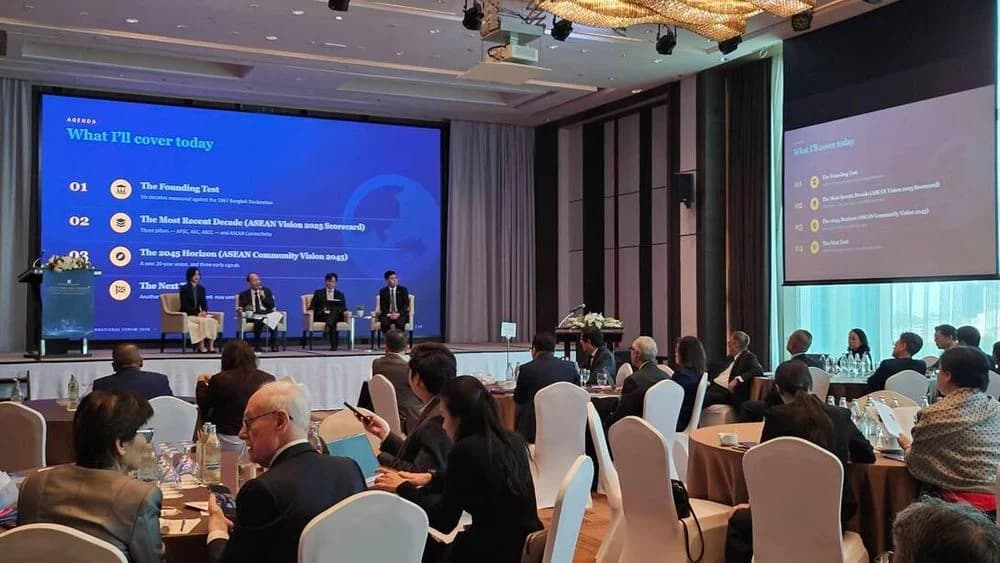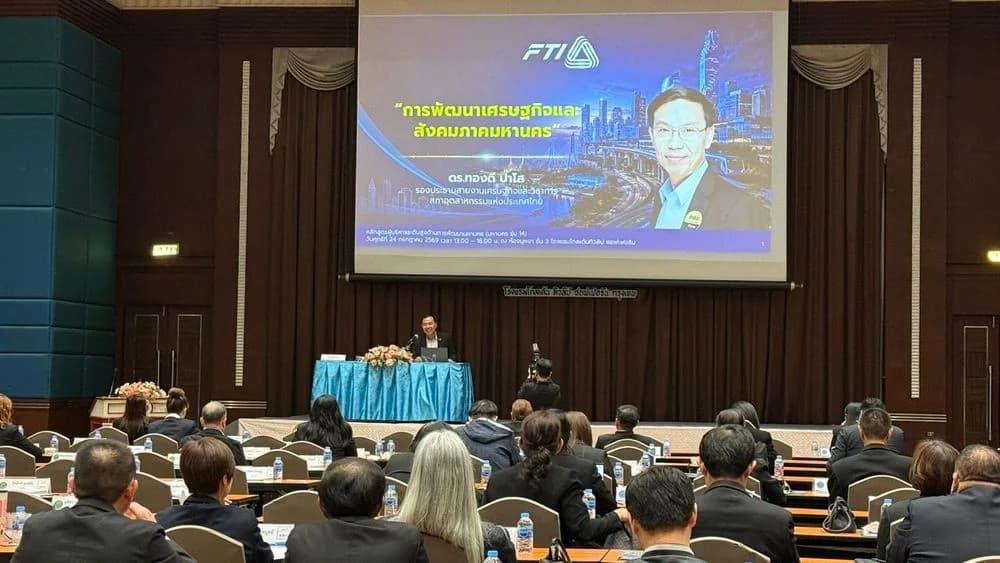
เมื่อวันพุธที่ 19 กุมภาพันธ์ 2568 นายนาวา จันทนสุรคน รองประธานสภาอุตสาหกรรมแห่งประเทศไทย (ส.อ.ท.) ได้รับเกียรติเป็นวิทยากรงานเสวนา Morning Talk ครั้งที่ 1 ภายใต้โครงการ Intelligence Unit ปี 2568 ซึ่งจัดโดยสำนักงานเศรษฐกิจอุตสาหกรรม (สศอ.) กระทรวงอุตสาหกรรม ร่วมกับมหาวิทยาลัยหอการค้าไทย ในหัวข้อ “โลกเปลี่ยน อุตสาหกรรมไทยต้องปรับกับความท้าทายภายใต้สถานการณ์เศรษฐกิจโลก” ณ ห้องแซฟไฟร์ 1-2 ชั้น 2 โรงแรมเซ็นจูรี่ พาร์ค
การบรรยายดังกล่าว นายนาวา ได้นำเสนอความท้าทายของเศรษฐกิจโลก โดยกล่าวถึงเทคโนโลยีและนวัตกรรมใหม่ที่เข้ามาเปลี่ยนแปลงการดำเนินธุรกิจและพฤติกรรมของผู้ประกอบการ (Disruption Technology) ความผันผวนทางเศรษฐกิจภายใต้นโยบายของประธานาธิบดีทรัมป์ และปัญหาความขัดแย้งทางภูมิรัฐศาสตร์ที่ยังคงยืดเยื้อ ซึ่งล้วนส่งผลต่อการขยายตัวทางเศรษฐกิจ นอกจากนี้ การเข้าสู่สังคมผู้สูงอายุ ส่งผลให้ภาคอุตสาหกรรมเผชิญกับปัญหาขาดแคลนแรงงาน กระทบต่อขีดความสามารถในการแข่งขันของประเทศ ขณะเดียวกัน การเปลี่ยนแปลงสภาพภูมิอากาศทำให้หลายประเทศออกมาตรการด้านสิ่งแวดล้อมและตั้งเป้าหมายการปล่อยก๊าซคาร์บอนไดออกไซด์สุทธิเป็นศูนย์ (Net Zero) อย่างไรก็ตาม นโยบายด้านสิ่งแวดล้อมของรัฐบาลสหรัฐฯ ภายใต้การนำของประธานาธิบดีทรัมป์ ไม่ได้ให้การสนับสนุนอย่างเต็มที่ โดยเฉพาะการถอนตัวจากข้อตกลงปารีสว่าด้วยการเปลี่ยนแปลงสภาพภูมิอากาศ (COP 2015) ซึ่งอาจทำให้การบรรลุเป้าหมาย Net Zero ล่าช้า และส่งผลกระทบต่อการแก้ไขปัญหาโลกร้อนในระยะยาว
สำหรับแนวโน้มอุตสาหกรรมไทยในปี 2568 มีอุตสาหกรรมที่คาดว่าจะเติบโต ได้แก่
1) อุตสาหกรรมอาหาร ซึ่งได้รับโอกาสจากการขยายตัวของอาหารแห่งอนาคต (Future Food) 2) อุตสาหกรรมอิเล็กทรอนิกส์ที่ได้อานิสงส์จากการย้ายฐานการผลิตมายังไทย 3) อุตสาหกรรมยานยนต์ไฟฟ้า (EV) ซึ่งได้รับแรงสนับสนุนจากการลงทุนตั้งฐานการผลิตและโอกาสในการพัฒนา Future ICE 4) อุตสาหกรรมพลังงานหมุนเวียนที่เติบโตตามเป้าหมาย Net Zero และ 5) อุตสาหกรรมสร้างสรรค์ที่ได้รับแรงขับเคลื่อนจากนโยบายซอฟต์พาวเวอร์ (Soft Power) และเศรษฐกิจดิจิทัล (Digital Economy)
อย่างไรก็ตาม อุตสาหกรรมบางกลุ่มยังคงเผชิญความท้าทาย เช่น อุตสาหกรรมแฟชั่นและเฟอร์นิเจอร์ที่ได้รับผลกระทบจากการแข่งขันกับสินค้านำเข้าจากจีน ญี่ปุ่น และเกาหลีใต้ อุตสาหกรรมวัสดุก่อสร้างที่เผชิญปัญหากำลังซื้อที่อ่อนแอ อุตสาหกรรมยานยนต์เครื่องยนต์สันดาปภายใน (ICE) ซึ่งได้รับแรงกดดันจากการเปลี่ยนผ่านสู่ EV และภาวะกำลังซื้อที่ลดลง รวมถึงอุตสาหกรรมที่ปล่อยคาร์บอนสูงที่ต้องเผชิญมาตรการด้านสิ่งแวดล้อมที่เข้มงวดขึ้นจากประเทศคู่ค้า ส่งผลให้ต้นทุนการดำเนินงานเพิ่มขึ้น
นอกจากนี้ ส.อ.ท. ยังมีข้อเสนอ 8 แนวทางการพัฒนา เพื่อส่งเสริมการปรับโครงสร้างภาคอุตสาหกรรมประกอบด้วย 1. การปฏิรูปกฎหมายและ ส่งเสริมความยากง่ายในการประกอบธุรกิจ (Ease of Doing Business) 2. การลดต้นทุนการผลิตเพื่อให้สามารถแข่งขันได้ 3. การส่งเสริมเทคโนโลยีและนวัตกรรม 4. การพัฒนากำลังคน การศึกษา ยกระดับผลิตภาพแรงงาน (Labor Productivity) 5. การส่งเสริมการลงทุนในอุตสาหกรรมเป้าหมาย S-curve 6. การสร้างแต้มต่อทางการค้า ผ่านการเจรจาเขตการค้าเสรี (FTA) 7. การพัฒนาโครงสร้าง (Infrastructure) ระบบโลจิสติกส์ (Logistic & Digital) 8. การพัฒนาอย่างยั่งยืนตามแนวทาง SDGs, ESG, และการมุ่งสู่เป้าหมายการปลดปล่อยก๊าซคาร์บอนไดออกไซด์สุทธิเป็นศูนย์ (Net Zero)
On Wednesday, February 19, 2025, Mr. Nava Jantanurak, Vice President of the Federation of Thai Industries (FTI), was honored to be a speaker at the Morning Talk session 1 under the Intelligence Unit Project for the year 2025, organized by the Office of Industrial Economics (OIE), Ministry of Industry, in collaboration with the University of Thai Chamber of Commerce. The topic of discussion was “Changing World: Thai Industry Must Adapt to Challenges Amid Global Economic Situation” held at Sapphire Room 1-2, 2nd Floor, Century Park Hotel.
During his lecture, Mr. Nava presented the challenges of the global economy, discussing the emerging technologies and innovations that are transforming business operations and entrepreneurs' behavior (Disruption Technology), economic volatility under President Trump's policies, and ongoing geopolitical conflicts, all of which impact economic growth. Additionally, the shift towards an aging society poses challenges to the labor supply in the industrial sector, affecting the country's competitiveness. At the same time, climate change has prompted many countries to implement environmental measures and set targets for net zero carbon dioxide emissions. However, the environmental policies of the U.S. government under President Trump did not fully support these initiatives, particularly with the withdrawal from the Paris Agreement on Climate Change (COP 2015), which may delay the achievement of Net Zero targets and impact long-term solutions to global warming.
Regarding the outlook for the Thai industry in 2025, sectors anticipated to grow include:
1) Food Industry, which benefits from the expansion of Future Food; 2) Electronics Industry, which is gaining from the relocation of production bases to Thailand; 3) Electric Vehicle (EV) Industry, receiving support from investments in production bases and opportunities for the development of Future ICE; 4) Renewable Energy Industry, growing in line with Net Zero goals; and 5) Creative Industry, driven by Soft Power policies and the Digital Economy.
However, certain industries continue to face challenges, such as the Fashion and Furniture Industries, which are affected by competition from imports from China, Japan, and South Korea; the Construction Materials Industry, facing weak purchasing power; the Internal Combustion Engine (ICE) Automotive Industry, which is under pressure from the transition to EVs and declining purchasing power; and high-carbon industries that must contend with increasingly stringent environmental measures from trading partners, resulting in rising operational costs.
Furthermore, the FTI has proposed eight development guidelines to promote the restructuring of the industrial sector, including: 1. Reforming legislation and enhancing the ease of doing business; 2. Reducing production costs to enhance competitiveness; 3. Promoting technology and innovation; 4. Developing human resources and education to improve labor productivity; 5. Promoting investment in target S-curve industries; 6. Creating trade advantages through free trade agreement (FTA) negotiations; 7. Developing infrastructure and logistic systems (Logistics & Digital); 8. Promoting sustainable development in line with SDGs, ESG, and striving toward achieving net zero carbon dioxide emissions.