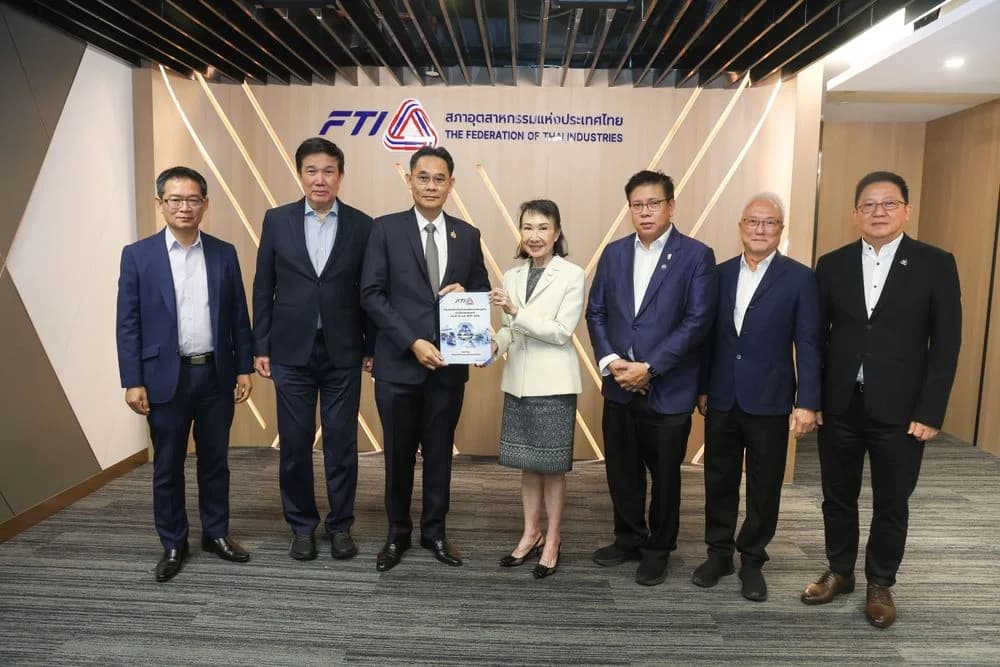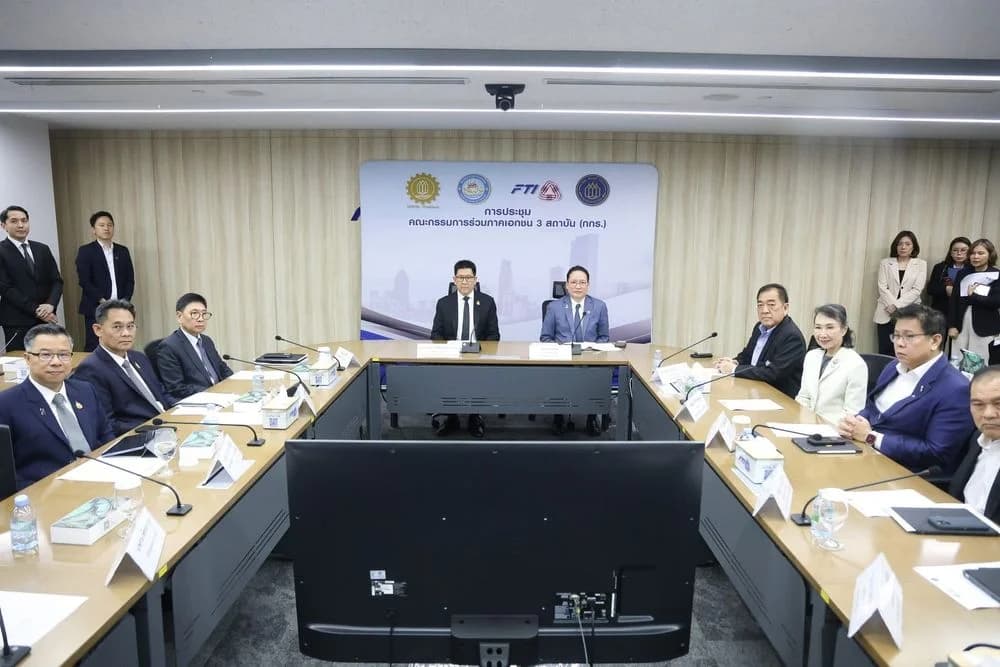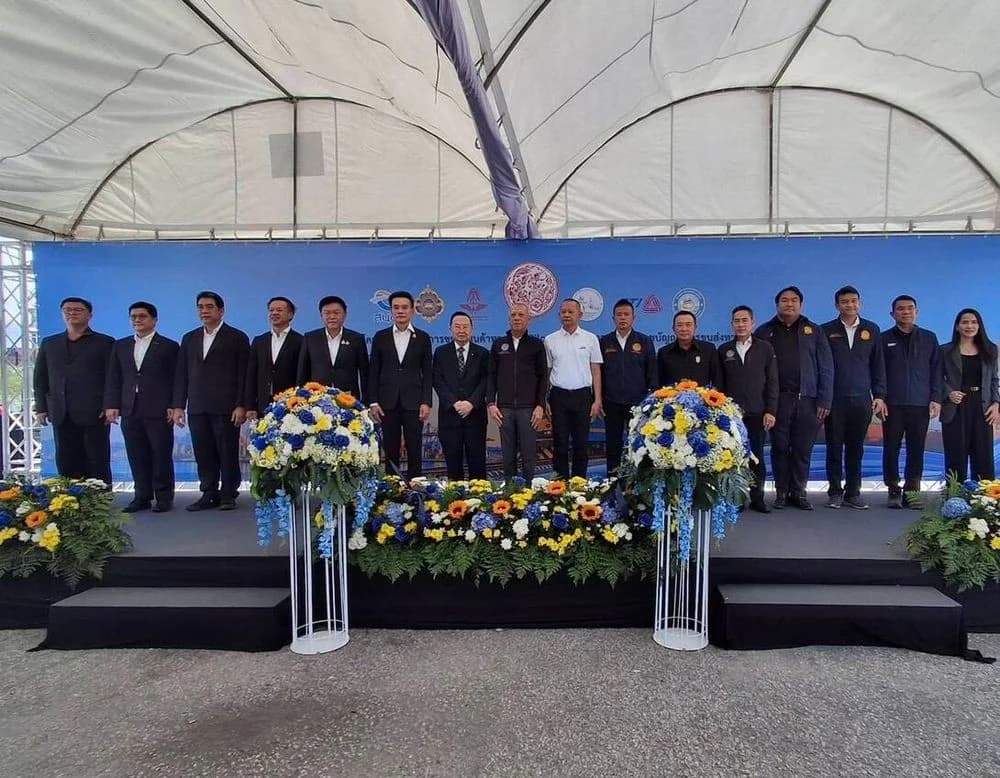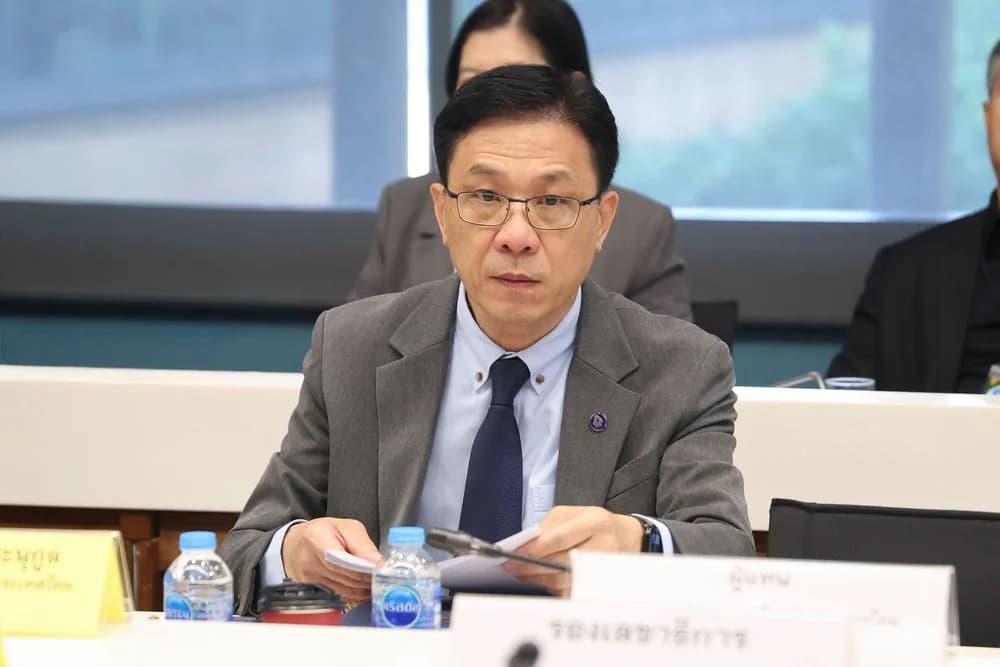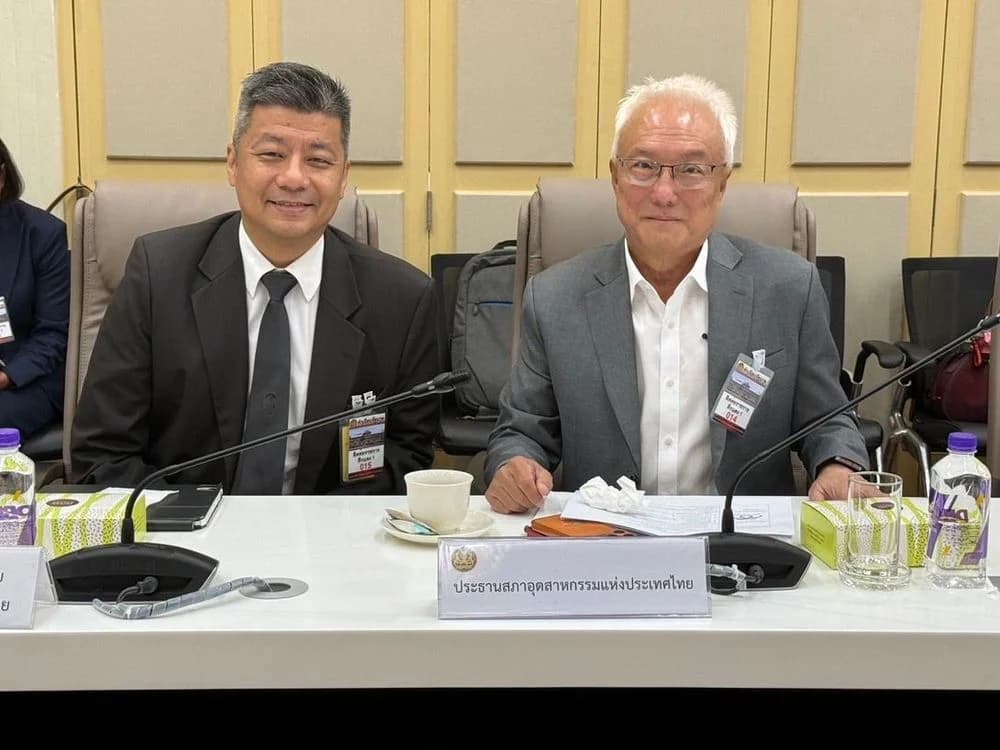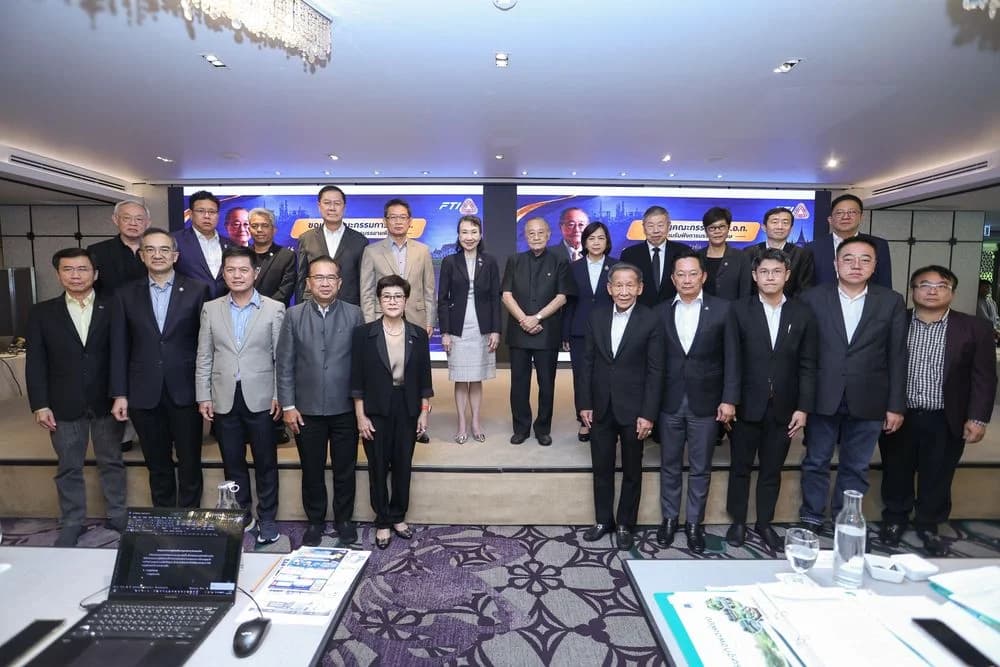

วันนี้ (วันที่ 2 ธันวาคม 2568) นายเกรียงไกร เธียรนุกุล ประธานสภาอุตสาหกรรมแห่งประเทศไทย (ส.อ.ท.) พร้อมด้วยคณะผู้บริหาร ส.อ.ท. ให้การต้อนรับคณะผู้บริหารพรรคประชาธิปัตย์ นำโดยนายอภิสิทธิ์ เวชชาชีวะ เพื่อประชุมหารือแลกเปลี่ยนแนวทางการขับเคลื่อนอุตสาหกรรมไทย ณ ห้อง Passion (802) ชั้น 8 ส.อ.ท.
นายเกรียงไกร เธียรนุกุล ประธานสภาอุตสาหกรรมแห่งประเทศไทย (ส.อ.ท.) กล่าวว่า เศรษฐกิจไทยในวันนี้ เปรียบได้กับ “รถที่ติดหล่ม” ต้องใช้แรงมหาศาลในการดึงขึ้นมา ซึ่งสะท้อนถึงความจำเป็นในการเร่งเครื่องนโยบายจากภาครัฐ ดังนั้น รัฐบาลจึงได้ประกาศนโยบาย “Quick Big Win” เพื่อฟื้นฟูเศรษฐกิจ เพิ่มรายได้ ลดรายจ่าย แก้หนี้ เพิ่มสภาพคล่อง และฟื้นการท่องเที่ยวให้กลับมาเป็นแรงขับเคลื่อนสำคัญอีกครั้ง
พร้อมกันนี้ นายเกรียงไกร ได้นำเสนอความท้าทายของภาคอุตสาหกรรมไทย เช่น 1) มาตรการทางภาษีของสหรัฐฯ 2) ปัญหาสินค้าทุ่มตลาด/สวมสิทธิ์ส่งออก 3) ความขัดแย้งทางภูมิรัฐศาสตร์ 4) ข้อพิพาทพื้นที่ชายแดน 5) หนี้ครัวเรือนและหนี้ธุรกิจ 6) ค่าเงินบาทแข็งค่า 7) ผลกระทบจากปัญหาสภาพภูมิอากาศ 8) ธุรกิจสีเทาและอาชญากรรมไซเบอร์ ตลอดจนปัญหาเชิงโครงสร้างทั้งสังคมผู้สูงอายุ กับดักรายได้ปานกลาง ระบบการศึกษา การเมือง งบประมาณไม่สมดุล คอร์รัปชันและกฎหมายล้าสมัย
ขณะเดียวกัน นายเกรียงไกร ได้เสนอยุทธศาสตร์สำคัญในการยกระดับผู้ประกอบการไทยสู่มาตรฐานสากล ผ่านแนวทาง 4GO ประกอบด้วย
1) Go Digital & AI ยกระดับอุตสาหกรรมด้วยเทคโนโลยีดิจิทัลและ AI
2) Go Innovation สร้างผู้ประกอบการ “จิ๋วแต่แจ๋ว” ด้วยนวัตกรรม
3) Go Global พัฒนาสินค้าและบริการไทย เพื่อขยายโอกาสสู่ตลาดโลก
4) Go Green ขับเคลื่อนองค์กรสู่การพัฒนาอย่างยั่งยืนและปรับตัวสู่เป้าหมายการปล่อยก๊าซเรือนกระจกสุทธิให้เป็นศูนย์ (Net Zero) ภายในปี 2050
แนวทาง 4GO อยู่ภายใต้นโยบาย ONE FTI ของ ส.อ.ท. ซึ่งช่วยยกระดับผู้ประกอบการไทยให้สามารถแข่งขันได้ เพื่อพัฒนาประเทศไทยให้เข้มแข็งกว่าเดิม โดยให้ความสำคัญกับการบูรณาการความร่วมมือระหว่างภาครัฐ ภาคเอกชนและภาคประชาสังคม
เพื่อขับเคลื่อนและเสริมสร้างความเข้มแข็งให้ภาคอุตสาหกรรมไทย นายเกรียงไกร ยังได้ระบุเป้าหมายการพัฒนาประเทศใน 3 ด้าน ประกอบด้วย เป้าหมายที่ 1 เพิ่มขีดความสามารถในการแข่งขันของประเทศไทย (Competitiveness) มีผลประเมินการจัดอันดับ IMD TOP 20 อันดับแรก (ปี 2025 ประเทศไทยยังอยู่อันดับที่ 30) เป้าหมายที่ 2 ขับเคลื่อนการเติบโตทางเศรษฐกิจ (Driving GDP Growth) ให้ขยายตัวได้ในระดับ 5% และเป้าหมายที่ 3 การพัฒนาที่ยั่งยืน (Sustainable Development Goals: SDGs) เพื่อบรรลุเป้าหมายการลดการปล่อยก๊าซเรือนกระจกให้เป็นศูนย์ภายในปี 2050 เร็วกว่าเดิม 15 ปี จากเป้าหมายเดิมคือปี 2065
ปล่อยก๊าซเรือนกระจกให้เป็นศูนย์ภายในปี 2050 เร็วกว่าเดิม 15 ปี จากเป้าหมายเดิมคือปี 2065
ทั้งนี้ ได้แบ่งข้อเสนอแนวทางการพัฒนาอุตสาหกรรมไทย ออกเป็น 8 ด้าน ได้แก่
1. การปรับปรุงกฎหมาย กฎระเบียบ เพื่อส่งเสริมความยากง่ายในการประกอบธุรกิจ (Ease of Doing Business) และเพิ่มการเติบโตทางเศรษฐกิจ โดยยกระดับการปฏิรูปกฎหมายเป็นวาระแห่งชาติด้วยวิธี Omnibus Laws และ Regulatory Guillotine ปรับปรุงกฎหมายระดับรองที่สามารถดำเนินการได้ทันที รวมทั้งผลักดันร่าง พ.ร.บ.อำนวยความสะดวก ยกระดับการให้บริการภาครัฐ
2. การพัฒนาบุคลากร เพิ่มผลิตภาพแรงงาน และแก้ไขปัญหาขาดแคลนแรงงานทั้งระบบ โดยปรับอัตราค่าจ้างขั้นต่ำควรเป็นไปตามอำนาจหน้าที่ของคณะกรรมการค่าจ้างไตรภาคี พิจารณาให้สอดคล้องตามปัจจัยทางเศรษฐกิจของแต่ละพื้นที่ การเพิ่มผลิตภาพแรงงาน (Labour Productivity) รวมทั้งส่งเสริมการจ่ายค่าจ้างตามมาตรฐานฝีมือแรงงาน (Pay by Skills)
3. การบริหารจัดการด้านพลังงานทั้งระบบ รองรับการเปลี่ยนผ่านพลังงาน (Energy Transition) โดยเร่งทบทวนและผลักดันแผนพลังงานชาติ (NEP) ฉบับใหม่ ทบทวนโครงสร้างพลังงาน เพื่อลดต้นทุนพลังงาน/ไฟฟ้า และสร้างความร่วมมือระหว่างภาครัฐและเอกชนเพื่อให้แก้ไขปัญหาพลังงาน
4. การส่งเสริมการส่งออก การค้า และสนับสนุนการลงทุนในอุตสาหกรรมเป้าหมาย S-Curve โดยเร่งสร้างกลไกและแผนในการขับเคลื่อนอุตสาหกรรม S-Curve เร่งรัดการเจรจาความตกลงการค้าเสรี (FTA) เพิ่มสิทธิประโยชน์สำหรับสินค้า Made in Thailand (MiT) รวมทั้งปกป้องสินค้าไทยโดยการควบคุมสินค้านำเข้าที่ไม่ได้คุณภาพ
5. การยกระดับอุตสาหกรรมด้วยเทคโนโลยี นวัตกรรม และดิจิทัล โดยสนับสนุนการลงทุนพัฒนาไปสู่ Digital Transformation 4.0 ส่งเสริมการขับเคลื่อนโจทย์นวัตกรรมรายกลุ่มอุตสาหกรรม เชื่อมโยงสถาบันการศึกษา รวมทั้งเพิ่มประสิทธิภาพการผลิตด้วยเทคโนโลยีเกษตรแม่นยำ สนับสนุนอุตสาหกรรมต่อเนื่อง
6. การพัฒนาอุตสาหกรรมอย่างยั่งยืน (BCG & ESG) การบริหารจัดการทรัพยากรนํ้า และการมุ่งสู่เป้าหมาย Net Zero โดยบูรณาการการบริหารจัดการน้ำอย่างยั่งยืน เตรียมความพร้อมในการรับมือมาตรการ Climate Change รวมทั้งนำกากอุตสาหกรรมไปใช้ประโยชน์ เป็นวัสดุหมุนเวียน (Circular Materials) การใช้ประโยชน์ใหม่ (Waste symbiosis)
7. การส่งเสริมและพัฒนาศักยภาพของผู้ประกอบการ SMEs โดยผลักดัน SME ให้เข้าถึงการจัดซื้อจัดจ้างภาครัฐ และขยายสิทธิประโยชน์ให้ครอบคลุม SME Size M ดำเนินโครงการสินเชื่อดอกเบี้ยต่ำ (Soft loan) และจัดทำมาตรการช่วยเหลือลูกหนี้ค้ำประกันสินเชื่อ
8. การพัฒนาโครงสร้างพื้นฐานด้าน Logistics และพื้นที่สำหรับอุตสาหกรรม โดยทบทวนการกำหนดเขตเศรษฐกิจพิเศษและระเบียงเศรษฐกิจพิเศษ เพื่อให้สอดคล้องกับการเปลี่ยนแปลงในปัจจุบัน พัฒนาโครงสร้างพื้นฐานด้านโลจิสติกส์ เพิ่มขีดความสามารถการส่งออก นำเข้าไทย รวมทั้งอำนวยความสะดวกด้านโลจิสติกส์ ส่งเสริมการค้าชายแดนผ่านแดนของไทย
ด้านนายอภิสิทธิ์ เวชชาชีวะ หัวหน้าพรรคประชาธิปัตย์ กล่าวถึงนโยบายขับเคลื่อนเศรษฐกิจและอุตสาหกรรมของพรรคประชาธิปัตย์ว่า “พรรคประชาธิปัตย์เชื่อมาโดยตลอดว่า กลไกขับเคลื่อนเศรษฐกิจตัวจริงคือ ภาคเอกชน และบทบาทของภาครัฐ คือ การสร้างกติกาสภาพแวดล้อมที่จะเอื้อให้ทางภาคเอกชนทำงานได้ดีที่สุด วันนี้ตระหนักถึงความเปลี่ยนแปลงที่เกิดขึ้น ทั้งด้านภูมิรัฐศาสตร์ เทคโนโลยี และแนวโน้มใหม่ๆ รวมถึงปัญหาภายในประเทศที่สะสมมาเป็นระยะเวลานาน ทำให้ทั้งภาครัฐ ภาคเอกชน และภาคการเมือง จำเป็นจะต้องหาแนวทางใหม่เพื่อจะทำให้เศรษฐกิจไทยหลุดพ้นจากกับดักหรือหล่มที่เผชิญอยู่ วันนี้ตนและผู้บริหารพรรคประชาธิปัตย์ได้วางกรอบทิศทางไว้หลายประเด็น ตลอดจนการรับฟังความคิดเห็นจากภาคส่วนต่างๆ เพื่อแก้ปัญหาประเทศ โดยเฉพาะการเผชิญกับวิกฤติเศรษฐกิจและอัตราการเจริญเติบโต ที่นับวันยิ่งถดถอยลงไปเรื่อยๆ ที่จำเป็นต้องทำให้อัตราการเจริญเติบโตกลับไปโตที่ประมาณ 5 % เพราะหากตัวเลขยังเติบโตในระดับที่ 2 % แบบปัจจุบัน ก็จะไม่สามารถแก้ไขปัญหาในเรื่องอื่นๆ ได้ เช่น สังคมสูงวัย การจัดสวัสดิการแห่งรัฐ ดังนั้น เราต้องแสวงหาเครื่องจักรตัวใหม่หรือกระบวนทัศน์ใหม่ในการที่จะขับเคลื่อนไม่ว่าจะเป็นภาคอุตสาหกรรม ภาคการเกษตร และภาคบริการ ให้เกิดการผสมผสานในภาพรวม”
นอกจากเรื่องการกระตุ้นเศรษฐกิจให้เติบโตแล้ว สิ่งสำคัญที่สุดที่เป็นโจทย์ใหญ่มี 2 เรื่อง เรื่องแรก คือ การทุจริตคอร์รัปชั่น ที่เป็นความท้าทายและต้องยอมรับว่าเป็นตัวสร้างปัญหาปั่นป่วนและทำลายความไว้เนื้อเชื่อใจซึ่งกันและกัน ซึ่งส่งผลกระทบต่อการขับเคลื่อนเศรษฐกิจและบั่นทอนขีดความสามารถทางเศรษฐกิจของประเทศอย่างต่อเนื่อง ดังนั้น ต้องเริ่มต้นที่บ้านเมืองที่สุจริตอย่างเอาจริงเอาจัง และให้ประชาชนตระหนักถึงความสำคัญและอันตรายตรงนี้ และเรื่องที่สองที่ถือเป็นโจทย์ใหญ่ คือ การพัฒนาทักษะคน โดยเฉพาะระบบการศึกษาที่เรื้อรังและยืดเยื้อมานาน ที่จะไม่ใช่เรื่องการให้ความรู้อีกต่อไป แต่จะเป็นการสร้างกระบวนการเรียนรู้และมีความยืดหยุ่น รวมถึงการมีหลักสูตรที่รับรองเป็นรายทักษะที่มากขึ้นอีกด้วย
อย่างไรก็ตาม ปัจจัยทางด้านภูมิรัฐศาสตร์และการค้าการลงทุนระหว่างประเทศ ซึ่งเป็นเงื่อนไขสำคัญในสถานการณ์โลกปัจจุบัน ที่จะต้องเตรียมพร้อมสำหรับประเทศไทยในการเป็นประธานอาเซียนในปี 2571 ตลอดจนการใช้ประโยชน์จากอาเซียนให้เกิดเป็นความร่วมมือระหว่างกัน รวมถึงนโยบายทางการเงินเพื่อส่งเสริมการเติบโตทางเศรษฐกิจจริงโดยไม่กระทบกับระบบสถาบันทางการเงิน
นายอภิสิทธิ์ ได้กล่าวทิ้งท้ายว่า ตนและพรรคประชาธิปัตย์พยายามแสวงหาเครื่องมือใหม่ ๆ เพื่อเข้ามาช่วยเสริมสร้างและผลักดันประเทศให้ไปสู่เป้าหมาย ตลอดจนสร้างความเจริญเติบโตทางเศรษฐกิจ ทั้งนี้ ข้อเสนอแนะและความคิดเห็นจากสภาอุตสาหกรรมแห่งประเทศไทยที่ตรงกับมุมมองของพรรคฯ จะเป็นประโยชน์อย่างยิ่งต่อนโยบายในการขับเคลื่อนเศรษฐกิจประเทศของพรรคประชาธิปัตย์ในอนาคตต่อไป
.....................................................................................................................
เผยแพร่โดย ฝ่ายสื่อสารองค์กร สภาอุตสาหกรรมแห่งประเทศไทย (โทร. 0-2345-1051)
Today (December 2, 2025), Mr. Kriangkrai Theeranukul, Chairman of the Federation of Thai Industries (FTI), along with FTI executives, welcomed the executive committee of the Democrat Party led by Mr. Abhisit Vejjajiva to discuss and exchange ideas on driving the Thai industry forward at Passion Room (802), 8th floor, FTI.
Mr. Kriangkrai Theeranukul stated that the current Thai economy resembles a “stuck vehicle” that requires tremendous effort to pull it out, reflecting the necessity to accelerate government policy measures. Therefore, the government has announced the “Quick Big Win” policy to revitalize the economy, increase income, reduce expenses, resolve debts, enhance liquidity, and revive tourism as a significant driving force once again.
In conjunction, Mr. Kriangkrai presented the challenges facing the Thai industrial sector, such as 1) U.S. tax measures 2) dumping and export right infringement issues 3) geopolitical conflicts 4) border disputes 5) household and business debts 6) the appreciating Thai baht 7) the impact of climate change issues 8) gray businesses and cybercrime, along with structural challenges like an aging society, the middle-income trap, education systems, politics, budget imbalances, corruption, and outdated laws.
Simultaneously, Mr. Kriangkrai proposed key strategies to elevate Thai entrepreneurs to international standards through the 4GO approach, which includes
1) Go Digital & AI: Elevating industries with digital technologies and AI
2) Go Innovation: Creating “miniature yet mighty” entrepreneurs through innovation
3) Go Global: Developing Thai products and services to expand opportunities in global markets
4) Go Green: Driving organizations towards sustainable development and adapting to the goal of achieving net-zero greenhouse gas emissions by 2050.
The 4GO approach is part of FTI's ONE FTI policy, which aims to enhance the competitiveness of Thai entrepreneurs to strengthen Thailand. It emphasizes the importance of integrating cooperation among the government, private sector, and civil society.
To drive and strengthen the Thai industrial sector, Mr. Kriangkrai also outlined three development goals: Goal 1 aims to increase the competitiveness of Thailand (Competitiveness) with a target to achieve a ranking within the top 20 in the IMD Global Competitiveness Index (Thailand is currently ranked 30th in 2025); Goal 2 focuses on driving economic growth (Driving GDP Growth) to expand at a rate of 5%; and Goal 3 pertains to sustainable development (Sustainable Development Goals: SDGs) to achieve net-zero greenhouse gas emissions by 2050, 15 years earlier than the original target of 2065.
Moreover, the development proposals for the Thai industrial sector were divided into eight areas, including
1. Legal and regulatory reforms to facilitate ease of doing business and enhance economic growth by prioritizing legal reforms as a national agenda through Omnibus Laws and Regulatory Guillotine, improving secondary legislation that can be immediately implemented, and pushing for the drafting of a Bill for Convenience to elevate public service delivery.
2. Developing human resources, increasing labor productivity, and addressing the systematic labor shortage by adjusting the minimum wage in line with the Tripartite Wage Committee's authority and considering the economic factors of each area, enhancing labor productivity, and promoting payment by skills.
3. Comprehensive energy management to support energy transition by expediting the review and advancement of the new National Energy Plan (NEP), revising energy structure to reduce energy/electricity costs, and fostering cooperation between the government and private sectors to address energy issues.
4. Promoting exports, trade, and supporting investment in target S-Curve industries by expediting the creation of mechanisms and plans to drive S-Curve industries and accelerating free trade agreement (FTA) negotiations to increase benefits for Made in Thailand (MiT) products, while also protecting Thai products by regulating low-quality imports.
5. Elevating industries through technology, innovation, and digital transformation by supporting investments aimed at Digital Transformation 4.0, advancing innovation challenges specific to industry groups, connecting educational institutions, and enhancing production efficiency through precision agriculture technology to support continuous industries.
6. Sustainable industrial development (BCG & ESG), managing water resources, and working towards net-zero goals by integrating sustainable water management, preparing to cope with climate change measures, and utilizing industrial waste as circular materials and new material utilization (Waste symbiosis).
7. Promoting and developing the capacities of SMEs by facilitating SME access to public procurement and expanding benefits to encompass Medium SMEs, implementing low-interest soft loans, and formulating measures to assist borrowing guarantees.
8. Developing logistics infrastructure and industrial zones by reviewing the designation of special economic zones and special economic corridors to align with current changes, enhancing logistics infrastructure to improve Thailand’s export-import capabilities, and facilitating logistics to promote cross-border trade in Thailand.
Mr. Abhisit Vejjajiva, Leader of the Democrat Party, remarked on the party’s economic and industrial policies, stating, “The Democrat Party has always believed that the real driver of the economy is the private sector, and the role of the government is to establish an environment that enables the private sector to operate at its best. Today, we recognize the changes that have occurred globally in terms of geopolitics, technology, and new trends, as well as long-standing domestic challenges, which necessitate both the public and private sectors, along with the political sector, to find new ways to free the Thai economy from the traps it faces. Today, we and the management of the Democrat Party have outlined various frameworks and are listening to opinions from diverse sectors to address the country's problems, particularly in facing economic crisis and declining growth rates that have continuously dwindled. We must aim to restore growth to about 5%, as maintaining the current growth level at around 2% will prevent us from addressing other issues such as an aging society and public welfare. Therefore, we must seek new engines or new paradigms to drive the industrial, agricultural, and service sectors to foster overall synergy.”
In addition to stimulating economic growth, two major issues stand out: Firstly, corruption, which is both a challenge and a recognized cause of turmoil that undermines mutual trust and consistency, impacting economic drive and continually undermining the nation's economic competitiveness. Thus, we must start from a genuinely honest government and raise public awareness of the importance and dangers posed by this issue. The second issue of significant importance is the development of human skills, particularly in a long-standing and ailing education system that must shift from mere knowledge provision to fostering a learning process that is flexible, along with developing more skills-based accredited curricula.
However, geopolitical factors and international trade and investment conditions are crucial in today’s global situation, requiring readiness for Thailand as the ASEAN chair in 2028, as well as utilizing ASEAN benefits to enhance cooperation, including monetary policies that promote genuine economic growth without impacting the financial institutional system.
Mr. Abhisit concluded by stating that he and the Democrat Party are striving to seek new tools to help elevate and drive the country towards its goals and establish economic growth. The recommendations and insights from the Federation of Thai Industries that align with the party’s perspective will be immensely beneficial to the Democrat Party's policy for driving the nation's economy forward.
.....................................................................................................................
Published by Corporate Communications Office, Federation of Thai Industries (Tel. 0-2345-1051)