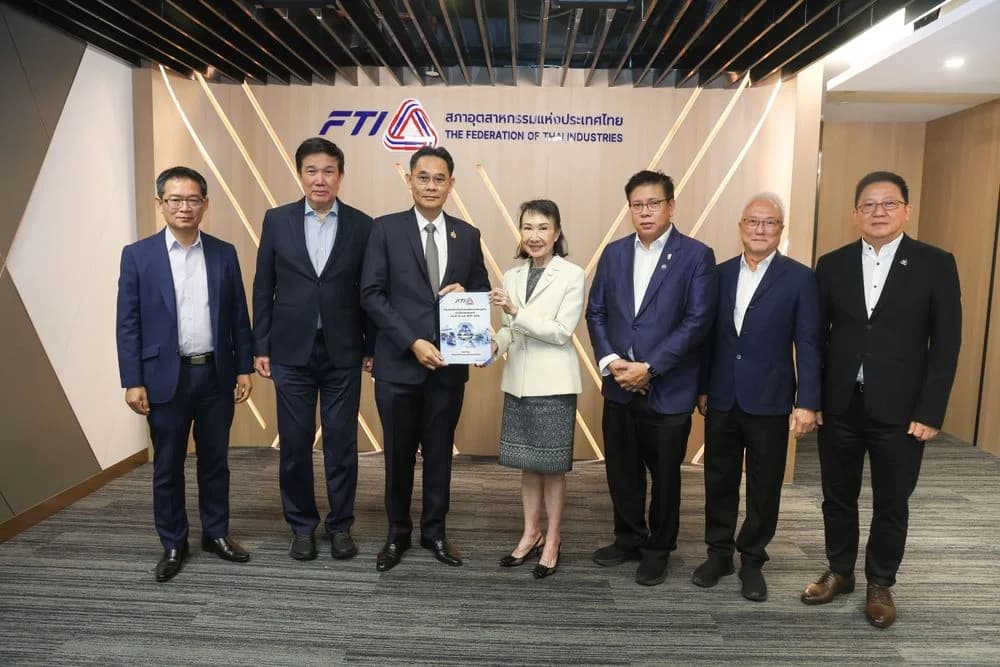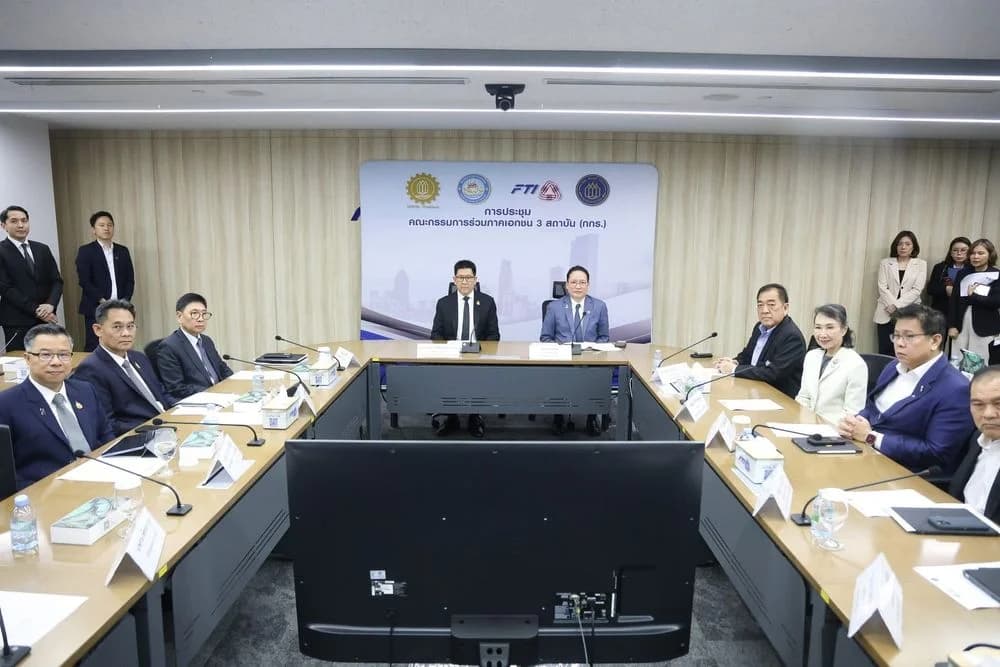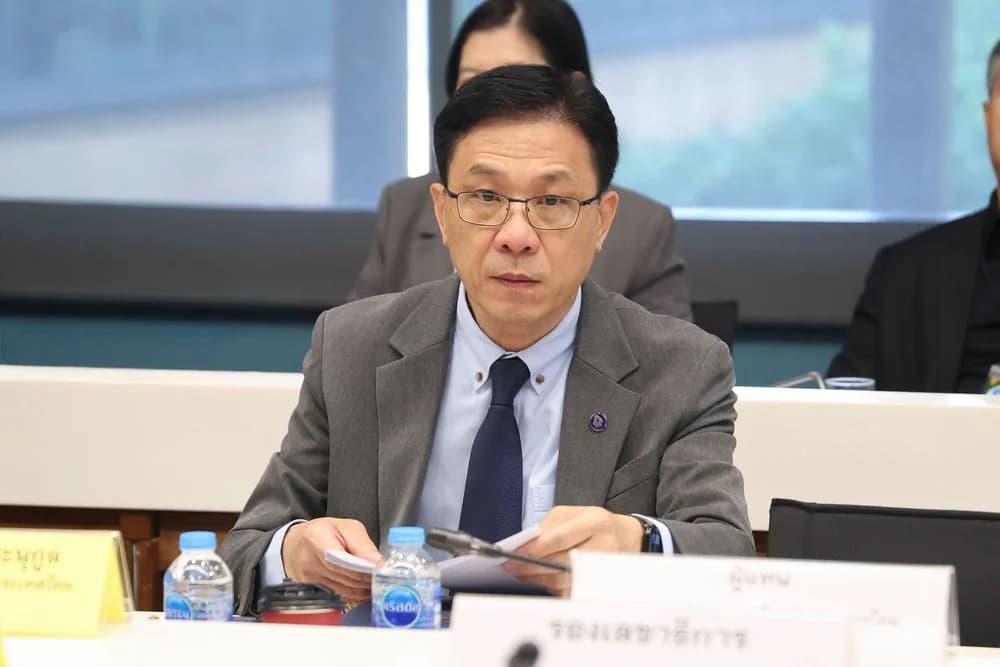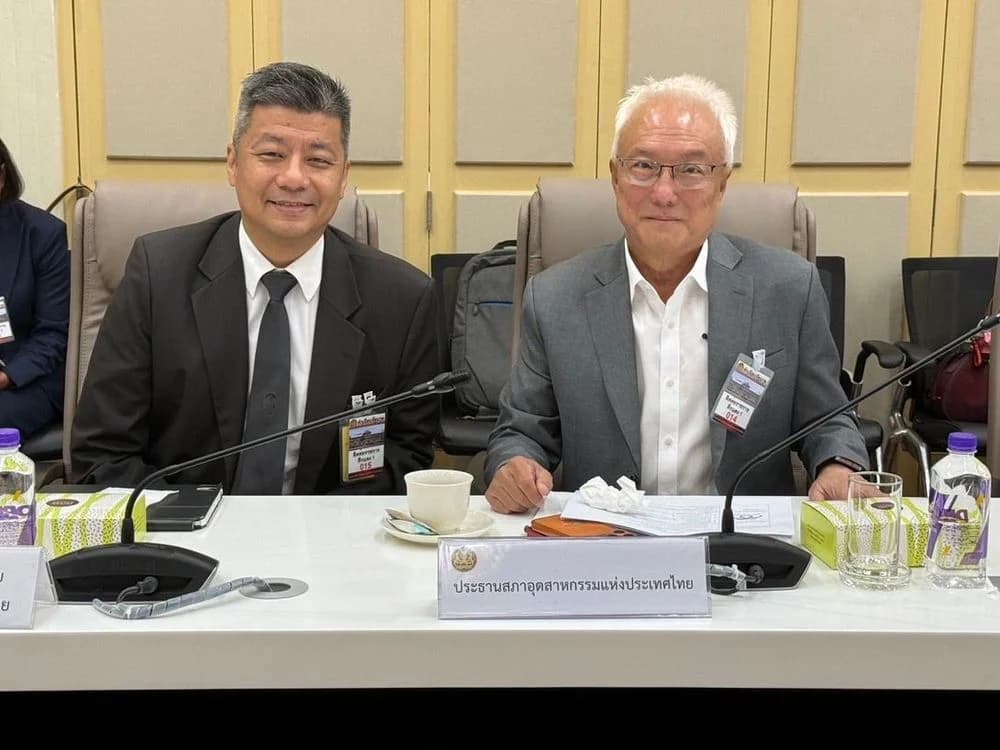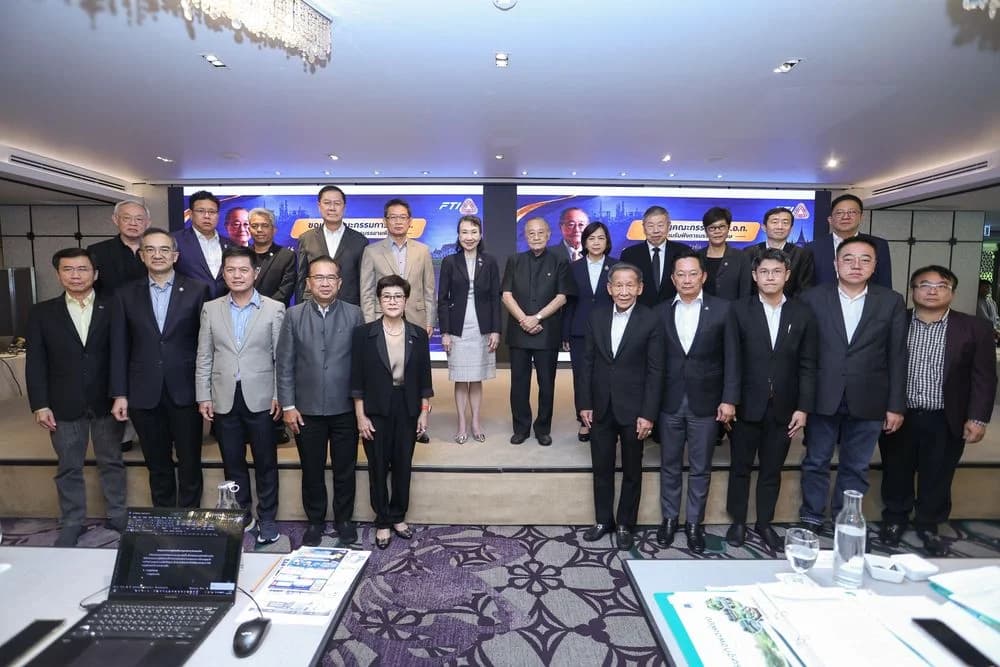

วันศุกร์ที่ 23 สิงหาคม 2567 สภาอุตสาหกรรมแห่งประเทศไทย (ส.อ.ท.) นำโดยนายเกรียงไกร เธียรนุกุล ประธาน ส.อ.ท. พร้อมคณะผู้บริหาร ส.อ.ท. เข้าพบนางสาวแพทองธาร ชินวัตร นายกรัฐมนตรีและคณะ เพื่อนำเสนอแนวทางกระตุ้นเศรษฐกิจยกระดับอุตสาหกรรมการผลิตไทย และขับเคลื่อนนโยบายร่วมกัน ณ อาคารชินวัตร 3
โดยมี คณะผู้บริหาร ส.อ.ท. เข้าร่วมหารือ ดังนี้
1. นายเกรียงไกร เธียรนุกุล
ประธานสภาอุตสาหกรรมแห่งประเทศไทย
ประธานสายงานส่งเสริมและสนับสนุนอุตสาหกรรม
2. นายทวี ปิยะพัฒนา
รองประธานอาวุโสสภาอุตสาหกรรมแห่งประเทศไทย
ประธานสายงานส่งเสริมและสนับสนุนสภาอุตสาหกรรมจังหวัด
3. ดร.คมสัน เหล่าศิลปเจริญ
รองประธานสภาอุตสาหกรรมแห่งประเทศไทย
ประธานสถาบันรหัสสากล (GS1)
4. นายชัยวัฒน์ โควาวิสารัช
รองประธานสภาอุตสาหกรรมแห่งประเทศไทย
ประธานสถาบันการเปลี่ยนแปลงสภาพภูมิอากาศ
5. นายถาวร ชลัษเฐียร
รองประธานสภาอุตสาหกรรมแห่งประเทศไทย
ประธานสถาบันเสริมสร้างขีดความสามารถมนุษย์
6. นายธนารักษ์ พงษ์เภตรา
รองประธานสภาอุตสาหกรรมแห่งประเทศไทย
ประธานสถาบันอุตสาหกรรมเพื่อการเกษตร
7. นายปรนนท์ ฐิตะวรรโณ
รองประธานสภาอุตสาหกรรมแห่งประเทศไทย
ประธานสถาบันเทคโนโลยีสารสนเทศและการสื่อสารเพื่ออุตสาหกรรม
8. นางพิมพ์ใจ ลี้อิสสระนุกูล
รองประธานสภาอุตสาหกรรมแห่งประเทศไทย
ประธานสถาบันอุตสาหกรรมสร้างสรรค์และซอฟต์พาวเวอร์
9. นายวิวรรธน์ เหมมณฑารพ
รองประธานสภาอุตสาหกรรมแห่งประเทศไทย
ประธานสถาบันนวัตกรรมเพื่ออุตสาหกรรม
10. นายนาวา จันทนสุรคน
รองประธานสภาอุตสาหกรรมแห่งประเทศไทย
ประธานสายงานสื่อสารองค์กร
11. ม.ล.ปีกทอง ทองใหญ่
รองประธานสภาอุตสาหกรรมแห่งประเทศไทย
ประธานสายงานเศรษฐกิจและวิชาการ
12. นายเวทิต โชควัฒนา
รองประธานสภาอุตสาหกรรมแห่งประเทศไทย
ประธานสายงานอาเซียนและโลจิสติกส์
13. นายสุชาติ จันทรานาคราช
รองประธานสภาอุตสาหกรรมแห่งประเทศไทย
ประธานสายงานแรงงาน
14. นางสาวพิมพ์นารา จิรานิธิศนนท์
รองประธานสภาอุตสาหกรรมแห่งประเทศไทย
งานสำนักประธาน
15. นายอดุล ขาวละออ
รองประธานสภาอุตสาหกรรมแห่งประเทศไทย
งานสำนักประธาน
16. ดร.ปิยะนุช มาลากุล ณ อยุธยา
รองประธานสภาอุตสาหกรรมแห่งประเทศไทย
เหรัญญิก
17. นายอิศเรศ รัตนดิลก ณ ภูเก็ต
รองประธานสภาอุตสาหกรรมแห่งประเทศไทย
นายทะเบียน
18. นายกฤษณ์ อิ่มแสง
เลขาธิการสภาอุตสาหกรรมแห่งประเทศไทย
19. ดร.วิบูลย์ รักสาสน์เจริญผล
กรรมการบริหารสภาอุตสาหกรรมแห่งประเทศไทย
20. นายนาคาญ์ ทวิชาวัฒน์
รองเลขาธิการสภาอุตสาหกรรมแห่งประเทศไทย
21. นายอมฤต ฟรานเซน
กรรมการสภาอุตสาหกรรมแห่งประเทศไทย
22. นางสาวพรรรัตน์ เพชรภักดี
ผู้อำนวยการใหญ่สภาอุตสาหกรรมแห่งประเทศไทย
23. ดร.เจนกฤษณ์ คณาธารณา
รองผู้อำนวยการใหญ่
นายเกรียงไกร เธียรนุกุล ประธานสภาอุตสาหกรรมแห่งประเทศไทย (ส.อ.ท.) กล่าวว่า “วันนี้ถือเป็นโอกาสอันดีที่สภาอุตสาหกรรมแห่งประเทศไทย ได้เข้าพบนายกรัฐมนตรีและคณะ เพื่อนำเสนอ 5 ข้อเสนอเร่งด่วน และหาแนวทางความร่วมมือในการขับเคลื่อนเศรษฐกิจของประเทศไปด้วยกัน ซึ่งเป็นสิ่งที่เอกชนเน้นย้ำเสมอ โดยแบ่งเป็นระยะเร่งด่วน ระยะกลางและระยะยาว”
ในส่วนของระยะเร่งด่วน ส.อ.ท. เสนอแนะว่า
1) ต้องมีการปกป้องอุตสาหกรรมภายในประเทศจากสินค้านำเข้าที่ไม่มีคุณภาพและการทุ่มตลาด โดย
- เพิ่มความเข้มงวดในการตรวจจับสินค้าไม่มีคุณภาพหรือไม่มีมาตรฐานที่มีการนำเข้าผ่านด่านศุลกากร มีการทดสอบมาตรฐานก่อนนำเข้า เพิ่มจำนวนเครื่องเอกซเรย์ตู้คอนเทนเนอร์ป้องกันการสำแดงเท็จ รวมทั้งตรวจจับสินค้าที่ไม่ได้มาตรฐานในท้องตลาด
- บังคับใช้กฎหมายที่เกี่ยวข้องกับการคุ้มครองผู้บริโภคและการแข่งขันทางการค้าอย่างเคร่งครัด รวมถึงการดำเนินการกับผู้กระทำผิดที่นำเข้าสินค้าไม่ได้มาตรฐานเข้าสู่ตลาด
- ออกมาตรการกำกับดูแลผู้ให้บริการแพลตฟอร์มอีคอมเมิร์ซจากต่างประเทศ เพื่อป้องกันการทะลักเข้ามาของสินค้าที่ไม่ได้มาตรฐานจากต่างประเทศ
- เชื่อมโยงระบบการบริการข้อมูลหน่วยงานภาครัฐและภาคธุรกิจ หรือ National Single Window (NSW) เพื่อตรวจสอบและอำนวยความสะดวกในการนำเข้าสินค้าที่ต้องมีใบอนุญาต
2) ต้องมีการส่งเสริมสินค้าที่ผลิตในประเทศไทย และสินค้าที่ได้รับการรับรอง Made in Thailand (MiT) โดย
- เพิ่มแต้มต่อการจัดซื้อจัดจ้างสินค้า MiT ผ่านวิธี e-bidding จากเดิม 5% เป็น 10% เป็นเวลา 2 ปี เพื่อสร้างกระแสเงินหมุนเวียนให้กับผู้ประกอบการไทย
- กำหนดให้มีการจัดซื้อจัดจ้างสินค้าที่มีมาตรฐานผลิตภัณฑ์อุตสาหกรรม (มอก.) แทนการอ้างอิงมาตรฐานต่างประเทศ เพื่อให้หน่วยงานมีความมั่นใจในสินค้า
- ออกมาตรการให้สิทธิประโยชน์ทางภาษี สำหรับภาคเอกชนที่จัดซื้อสินค้าที่ได้รับการรับรอง MIT ให้สามารถนำยอดซื้อมาหักเป็นค่าใช้จ่ายลดหย่อนภาษีได้ 2 เท่า
- ออกมาตรการช่วยอุดหนุนค่าใช้จ่ายในการส่งออกที่ได้รับการรับรอง MiT ไปยังตลาดต่างประเทศ เช่น ค่าระวางเรือ ค่าขนส่งในประเทศ เป็นต้น
3) ควรมีการลดต้นทุนด้านการผลิต เพื่อเพิ่มขีดความสามารถในการแข่งขันของภาคอุตสาหกรรม ผ่านการดำเนินงานด้านต้นทุนพลังงาน ได้แก่
- คงอัตราค่าไฟฟ้าโดยไม่ปรับเพิ่มขึ้น หรือปรับลดค่า Ft เพื่อรักษาต้นทุนการผลิตของภาคอุตสาหกรรมในสภาวะการชะลอตัวทางเศรษฐกิจ
- บริหารจัดการความจุสำรอง (Reserve Capacity) ให้อยู่ในระดับไม่สูงเกินไป โดยพิจารณาการเจรจาเลื่อนโรงไฟฟ้าที่จะเกิดใหม่ให้สอดคล้องระหว่างกำลังความต้องการใช้ไฟฟ้าและกำลังการผลิต
- พิจารณาผลดี ผลเสียของการเกลี่ยค่าใช้จ่ายไปในอนาคต โดยขยายสัญญาการผลิตของโรงไฟฟ้า เพื่อลดภาระต้นทุนค่าไฟฟ้า
- ลดเงินประกันการใช้ไฟฟ้า เพื่อเสริมสภาพคล่องในภาคอุตสาหกรรม
- เร่งพิจารณากระบวนการจัดสรรเงินกองทุน เพื่อส่งเสริมการอนุรักษ์พลังงาน และกระตุ้นให้เกิดการอนุรักษ์พลังงานอย่างทั่วถึง โดยเฉพาะผู้ประกอบการ SMEs
สำหรับการดำเนินงานด้านต้นทุนแรงงาน
- ควรมีการปรับค่าแรงขั้นต่ำให้เป็นไปตามที่กฎหมายบัญญัติกำหนดไว้ในมาตรา 87 แห่ง พ.ร.บ.คุ้มครองแรงงาน พ.ศ. 2541 โดยมีคณะอนุกรรมการค่าจ้างไตรภาคีจังหวัดพิจารณาอัตราค่าจ้างขั้นต่ำรายจังหวัด เสนอต่อคณะกรรมการค่าจ้าง พิจารณาให้สอดคล้องกับปัจจัยทางเศรษฐกิจของแต่ละพื้นที่ อัตราเงินเฟ้อ อัตราการเจริญเติบโตของ GDP ความสามารถในการจ่ายของนายจ้าง และประสิทธิภาพของแรงงาน
- ส่งเสริมการปรับอัตราค่าจ้างตามทักษะฝีมือแรงงาน (Pay By Skills) เพื่อส่งเสริมการเพิ่มผลิตภาพแรงงานควบคู่ไปกับการเพิ่มรายได้ให้แก่แรงงาน
- ผลักดันให้ผลิตภาพแรงงานเป็นวาระแห่งชาติ ให้กระทรวงแรงงานเป็นกระทรวงหลักในการดำเนินการ
- พัฒนาทักษะฝีมือแรงงานทั้ง Upskill/ Reskill/ Multi-Skill/ Future Skill ให้ตรงตามความต้องการของผู้ประกอบการและตลาดแรงงาน สอดรับเศรษฐกิจยุคดิจิทัล
- ประสานความร่วมมือระหว่างภาครัฐ ภาคเอกชน และภาคการศึกษาในการจัดทำหลักสูตรการเรียนการสอนที่สนองตอบความต้องการของตลาดแรงงาน
- จัดทำแพลตฟอร์ม Future Skill ที่ครบวงจร โดยมีงบประมาณสนับสนุนการฝึกและพัฒนาอาชีพ
4) ควรมีการส่งเสริมและพัฒนาผู้ประกอบการ SME ผ่านแนวทางต่างๆ ดังนี้
- ออกมาตรการทางการเงินเพื่อเพิ่มสภาพคล่องให้กับ SME ไทย การผ่อนปรนคุณสมบัติของผู้กู้ ณ เงื่อนไขที่ SME กู้เงินไม่ได้ เช่น การดูประวัติ NPL ไม่มีหลักทรัพย์ เป็นสาขาธุรกิจที่มีความเสี่ยงหรืออื่นๆ ซึ่งธนาคารกำหนดไว้และเป็นประเด็นที่เป็นปัญหาในการเข้าถึงสินเชื่อของ SME มาโดยตลอด
- จัดสรรวงเงินเฉพาะเพื่อช่วยเหลือ SME ที่อยู่ระหว่างปรับโครงสร้างหนี้เพื่อประคองธุรกิจ พร้อมให้คำปรึกษาในการปรับปรุงและพัฒนาธุรกิจควบคู่ไปด้วย
- ผ่อนปรนเงื่อนไขการพิจารณาปล่อยสินเชื่อกับ SME สาหรับลูกค้าที่ติดเครดิตบูโรเกิน 1 ปี โดยไม่นำเอาประวัติการติดเครดิตบูโรในอดีตมาใช้เป็นเกณฑ์ในการพิจารณาอนุมัติสินเชื่อ หาก ณ วันที่ยื่นขอสินเชื่อผู้ประกอบการไม่เป็น NPLs แล้ว
- ออกมาตรการสินเชื่อพิเศษ เพื่อช่วยเหลือและส่งเสริม SME โดยอัตราดอกเบี้ย 2 – 3% คงที่เป็นเวลา 3 ปี โดยขยายครอบคลุมทั้งการลงทุนและเงินหมุนเวียนในกิจการ
- ขอให้สถาบันการเงินเปิดให้มีการปรับเพิ่มระยะเวลาการผ่อนเป็นทางเลือก รวมทั้งปรับลดค่าธรรมเนียมอื่นๆ ที่เกี่ยวข้องกับการพิจารณาสินเชื่อ เพื่อช่วยเหลือเรื่องสภาพคล่อง
- ขอให้สถาบันการเงินและบรรษัทประกันสินเชื่ออุตสาหกรรมขนาดย่อม (บสย.) คิดค่าธรรมเนียมการค้ำประกันอย่างเป็นธรรม
นอกจากนี้ ส.อ.ท. ยังมีการส่งเสริมและผลักดัน SME สู่ Smart SME ด้วย 4 GO คือ
1. GO Digital: สนับสนุนการลงทุนพัฒนาไปสู่ Digital Transformation 4.0 เพื่อยกระดับขีดความสามารถภาคอุตสาหกรรมการผลิต และ SMEs ทั้งในส่วนกลางและส่วนภูมิภาค
2. GO Innovation: สร้างหน่วยงานกลางและหน่วยงานความเชี่ยวชาญทางด้านธุรกิจนวัตกรรมที่เข้มแข็งในแต่ละภูมิภาค สนับสนุนการวิจัยและพัฒนาในส่วนที่สำคัญของอุตสาหกรรม และการจัดหาตลาดรองรับสินค้านวัตกรรม
3. GO Global: สร้างโอกาสด้านการตลาดต่างประเทศให้กับ SME ที่มีศักยภาพ การจัดงานแสดงสินค้าไทยในต่างประเทศจากรัฐบาลทั่วทุกมุมโลก การพัฒนาแพลตฟอร์มการซื้อขายของไทยให้เป็นที่รู้จักและได้รับความนิยมมากขึ้น และการเตรียมความพร้อมให้ SME มีศักยภาพสู่ตลาดต่างประเทศในรูปแบบต่างๆ
4. GO Green: การให้ความรู้แก่ SME และสนับสนุนให้ SME ปรับธุรกิจไปสู่ธุรกิจสีเขียว สนับสนุนเงินทุนสำหรับการขอการรับรองด้านสิ่งแวดล้อมแก่ SME รวมถึงการให้แต้มต่อด้านการจัดซื้อจัดจ้างภาครับและภาษีแก่สินค้าที่เป็นมิตรกับสิ่งแวดล้อม
5) ควรมีการส่งเสริมการค้าชายแดน และพัฒนาระบบโลจิสติกส์
- เจรจาหารือกับประเทศเพื่อนบ้าน เพื่อพิจารณายกระดับจุดผ่อนปรนพิเศษทางการค้าและจุดผ่อนปรนทางการค้า ให้เป็นจุดผ่านแดนถาวร
- นำเสนอให้มีการจัดตั้งคณะทำงานร่วมไทย-ลาว เพื่อสร้างความร่วมมือด้านการขนส่งสินค้าผ่านด่านท่าบก ท่านาแล้ง สปป.ลาว เพื่อแก้ไขข้อจำกัดและอุปสรรคการขนส่งสินค้าจากไทยผ่านไปยังท่าบกของ สปป.ลาว
- แก้ไขข้อจำกัด อุปสรรคนโยบายรัฐและพัฒนาโครงข่ายระบบรางภายในประเทศ
- จัดตั้งคณะกรรมการร่วมภาครัฐและเอกชน เพื่อกำหนดยุทธศาสตร์แนวทางการพัฒนาส่งเสริมโครงข่ายเชื่อมโยงระบบรางของไทยกับประเทศเพื่อนบ้านและภูมิภาค
- ส่งเสริมและเพิ่มประสิทธิภาพการนำเข้า – ส่งออกสินค้าทางอากาศ
สำหรับการดำเนินการระยะกลางและระยะยาว ส.อ.ท. มีข้อเสนอแนะเพิ่มเติม ดังนี้
1) ควรมีการส่งเสริมอุตสาหกรรมยานยนต์และชิ้นส่วน รักษาฐานการผลิตยานยนต์ของไทย ผ่านวิธีการต่างๆ ดังนี้
- รักษาและต่อยอดความเป็นฐานการผลิตยานยนต์และชิ้นส่วนที่เป็น Future ICE (Future Internal Combustion Engine) ให้สามารถแข่งขันได้ในตลาดโลก
- ขยายสู่ตลาดต่างประเทศ เช่น เร่งรัดการเจรจาข้อตกลงการค้าเสรี (FTA) ในกลุ่มประเทศที่ยังมีการใช้เครื่องยนต์ ICE โดยเฉพาะตะวันออกกลาง แอฟริกาใต้ และอเมริกาใต้
- กระตุ้นการผลิตอุตสาหกรรมยานยนต์ภายในประเทศ เช่น สนับสนุนแนวทางการกำหนดโครงสร้างภาษีสรรพสามิตสาหรับยานยนต์ที่จะบังคับใช้ปี 2569 ออกมาตรการส่งเสริมการผลิตยานยนต์ในกลุ่ม Future ICE (Product champion, HEV, PHEV, REEV) ผลักดันให้หน่วยงานภาครัฐมีการกำหนดมาตรฐานมลพิษ (Euro 5 สำหรับรถจักรยานยนต์ และ Euro 6 สำหรับรถยนต์ขนาดใหญ่) ให้มีความเหมาะสม
- ส่งเสริมประสิทธิภาพการผลิตชิ้นส่วนประเภทอะไหล่ทดแทน REM (Replacement Equipment Manufacturing)
- สร้างอุตสาหกรรมยานยนต์และชิ้นส่วนสมัยใหม่ เตรียมพร้อมสู่ทิศทางความเป็นกลางทางคาร์บอน (Carbon Neutrality) ทั้งการผลักดันนโยบายให้มีความต่อเนื่อง ยกระดับให้ผู้ประกอบการไทยเข้าสู่ห่วงโซ่อุปทาน (Supply Chain) ยานยนต์สมัยใหม่อย่างเป็นรูปธรรม
- จัดตั้งกองทุนสนับสนุน หรือกำหนดมาตรการทางภาษี เพื่อส่งเสริมการลงทุน และการเตรียมพร้อมการรับมือกับมาตรการทางคาร์บอน
- ส่งเสริมนโยบายการเปลี่ยนผ่านชิ้นส่วนยานยนต์ (Part Transformation) เข้าสู่อุตสาหกรรมยานยนต์สมัยใหม่ และอุตสาหกรรมที่มีศักยภาพอื่นๆ ทั้งเครื่องมือแพทย์ ระบบราง อากาศยาน และ Robot & Automation รวมทั้งสร้างกลไกการจับคู่บริษัทผลิตชิ้นส่วนยานยนต์ไทยกับต่างชาติ เพื่อเพิ่มการผลิตในประเทศ (Localization) และต่อยอดสู่ชิ้นส่วนอิเล็กทรอนิกส์กำลัง (Power Electronic Parts)
2) ควรมีการพัฒนาอุตสาหกรรมสร้างสรรค์และซอฟต์พาวเวอร์ในประเทศไทย ผ่านอุตสาหกรรมต่างๆ อาทิ
อุตสาหกรรมอาหาร
- มุ่งเน้นการพัฒนามาตรฐาน คุณภาพและประสิทธิภาพของห่วงโซ่อุปทาน เพื่อให้ประเทศไทยสามารถขยับจากลำดับที่ 12 สู่ TOP 10 ในการส่งออกอาหารระดับโลกในอนาคต
- เปิดร้านอาหารไทยที่มีมาตรฐานในต่างประเทศ (B2B)
- ผลักดันวัตถุดิบและเครื่องปรุงรสแบรนด์ไทยสู่ตลาดโลก (B2C)
- ใช้ Influencer เพื่อสร้างกระแสความนิยมและความต้องการสินค้าอาหารไทย ต่อยอดไปสู่การท่องเที่ยวเชิงอาหารในประเทศไทย
อุตสาหกรรมแฟชั่น
- ตั้งเป้าหมายสร้างอัตลักษณ์ของการแต่งกายไทยผ่านการส่งเสริม “THAINESS LIFESTYLE” ด้วยการนำเสนอผ่านสื่อและพัฒนาเครื่องหมายที่สะท้อนความเป็นไทย เช่น “HAPPY THAI” เพื่อให้เอกลักษณ์การแต่งกายไทยเป็นที่ยอมรับและเข้าถึงได้ง่ายขึ้นทั้งในและต่างประเทศ และวางแผนพัฒนาประเทศไทยสู่การเป็นศูนย์กลางอัญมณีระดับนานาชาติ โดยมุ่งเน้นการยกระดับมาตรฐานและคุณภาพของอัญมณีไทยให้เป็นที่ยอมรับในตลาดโลก
อุตสาหกรรมเกม
- พัฒนาและสนับสนุนการสร้างเกมไทยให้สามารถเข้าสู่ระดับโลก โดยตั้งเป้าหมายให้มีเกมไทยติดอันดับ TOP TEN ของเกมระดับโลกในระยะ 5 ปี เช่น ให้หน่วยงานรัฐอย่างสำนักงานส่งเสริมเศรษฐกิจดิจิทัล(DEPA) ประเมินมูลค่าและโอกาสในการลงทุน และเสนอส่วนลดภาษีสำหรับการลงทุนและการนำเข้าอุปกรณ์ที่เกี่ยวข้อง
- ส่งเสริมการส่งออกเกมไทยและสนับสนุนการตลาดออนไลน์ผ่านผู้คัดเลือกตัวแสดง (Caster) กลางและยาว
การท่องเที่ยวเชิงวัฒนธรรม
- จังหวัดจันทบุรีได้รับเลือกเป็นจังหวัดนำร่องในการส่งเสริมการท่องเที่ยวเชิงวัฒนธรรม โดยมีแผนการสนับสนุน Soft Power ในทุกจังหวัดผ่านการผลิตรายการสื่อ เช่น "One Province, One Series"
3) ควรมีการปรับปรุงกฎหมาย กฎระเบียบ เพื่อส่งเสริมความยากง่ายในการประกอบธุรกิจ (Ease of Doing Business) และเพิ่มการเติบโตทางเศรษฐกิจ
- กำหนดให้การปฏิรูปกฎหมาย (Regulatory Reform) เป็นวาระแห่งชาติ โดยใช้กลไกผ่านวิธีการแก้ไขกฎหมายกลาง (Omnibus Laws) และ Regulatory Guillotine
- ผลักดันข้อเสนอของคณะกรรมการพัฒนากฎหมาย สำนักงานคณะกรรมการกฤษฎีกา โดยรัฐบาลสนับสนุน ข้อสรุปผลการพิจารณาของคณะกรรมการพัฒนากฎหมายฯ และผลักดันแก้ไขกฎหมายเพื่อลดอุปสรรคการดำเนินธุรกิจดังกล่าว
ทั้งนี้ มติที่ประชุม เห็นด้วยกับข้อเสนอ ส.อ.ท. โดยหลังจากจัดตั้งคณะรัฐมนตรีชุดใหม่ จะมอบหมายเจ้าภาพในการขับเคลื่อนข้อเสนอร่วมกัน รวมทั้งจะรื้อฟื้นการประชุมร่วมภาครัฐและเอกชนเป็นรายอุตสาหกรรม เพื่อขับเคลื่อนอุตสาหกรรมให้เติบโตและเห็นผลเป็นรูปธรรมยิ่งขึ้น
.............................................
เผยแพร่โดย ฝ่ายสื่อสารองค์กร สภาอุตสาหกรรมแห่งประเทศไทย (โทร. 0-2345-1013)
On Friday, August 23, 2024, the Federation of Thai Industries (FTI), led by Mr. Kriangkrai Theeranukul, the FTI Chairman, along with the FTI executive team, met with Ms. Phaethongtarn Shinawatra, the Prime Minister, and her team to present the strategies for stimulating the economy and elevating the production industry in Thailand and to drive collaborative policies at the Shinawatra 3 Building.
The FTI executive team attending the discussion included the following members:
1. Mr. Kriangkrai Theeranukul
Chairman of the Federation of Thai Industries
Chairman of the Industrial Promotion and Support Division
2. Mr. Thavee Piyapathana
Senior Vice Chairman of the Federation of Thai Industries
Chairman of the Provincial Industrial Promotion and Support Division
3. Dr. Komsan Laesilapjarern
Vice Chairman of the Federation of Thai Industries
Chairman of the Global Standards Organization (GS1)
4. Mr. Chaiwat Kowawisarach
Vice Chairman of the Federation of Thai Industries
Chairman of the Climate Change Institute
5. Mr. Thaworn Chonlatsatien
Vice Chairman of the Federation of Thai Industries
Chairman of the Human Capability Enhancement Institute
6. Mr. Thanarak Phongphetra
Vice Chairman of the Federation of Thai Industries
Chairman of the Agricultural Industry Institute
7. Mr. Pranon Thitavanroh
Vice Chairman of the Federation of Thai Industries
Chairman of the Information and Communication Technology Institute for Industry
8. Ms. Pimjai Leeissaranukul
Vice Chairman of the Federation of Thai Industries
Chairman of the Creative Industry and Soft Power Institute
9. Mr. Wiwat Hemmantharop
Vice Chairman of the Federation of Thai Industries
Chairman of the Innovation Institute for Industry
10. Mr. Nava Chantanasurakhan
Vice Chairman of the Federation of Thai Industries
Chairman of the Corporate Communication Division
11. M.L. Piktong Thongyai
Vice Chairman of the Federation of Thai Industries
Chairman of the Economic and Academic Division
12. Mr. Wetit Chokpattana
Vice Chairman of the Federation of Thai Industries
Chairman of the ASEAN and Logistics Division
13. Mr. Suchart Chanthranarakraj
Vice Chairman of the Federation of Thai Industries
Chairman of the Labor Division
14. Ms. Pimnara Jiranitithanon
Vice Chairman of the Federation of Thai Industries
Office of the Chairman
15. Mr. Adul Khaolao
Vice Chairman of the Federation of Thai Industries
Office of the Chairman
16. Dr. Piyanut Malakul na Ayutthaya
Vice Chairman of the Federation of Thai Industries
Treasurer
17. Mr. Isareth Rattanadilok na Phuket
Vice Chairman of the Federation of Thai Industries
Registrar
18. Mr. Kritsana Imsang
Secretary-General of the Federation of Thai Industries
19. Dr. Wiboon Raksasanjerngphon
Executive Committee Member of the Federation of Thai Industries
20. Mr. Nakarn Tiwichawat
Deputy Secretary-General of the Federation of Thai Industries
21. Mr. Amaret Franzen
Committee Member of the Federation of Thai Industries
22. Ms. Parrarat Phetphakdee
Director-General of the Federation of Thai Industries
23. Dr. Jengkrit Kanatharana
Deputy Director-General
Mr. Kriangkrai Theeranukul, the Chairman of the Federation of Thai Industries, stated, “Today is a good opportunity for the Federation of Thai Industries to meet with the Prime Minister and her team to present 5 urgent proposals and seek collaborative ways to drive the country's economy together, which is something that the private sector has always emphasized, categorized into immediate, medium-term, and long-term measures.”
In terms of immediate measures, the FTI recommends the following:
1) There must be protection for domestic industries against low-quality imports and market dumping by
- intensifying the detection of low-quality or non-standard products imported through customs checkpoints, ensuring product testing prior to import, increasing the number of X-ray machines for container inspection to prevent misdeclaration, and monitoring non-compliant products in the market.
- strictly enforcing laws related to consumer protection and fair competition, including actions against wrongdoers who bring substandard products into the market.
- issuing regulations to supervise foreign e-commerce platform providers to prevent the influx of non-compliant foreign products.
- linking the government and business information services system, or National Single Window (NSW), to verify and facilitate the importation of items requiring permits.
2) There must be promotion of products made in Thailand and products certified as Made in Thailand (MiT) by
- increasing the bidding advantage for MiT products via e-bidding from 5% to 10% for 2 years to create liquidity for Thai entrepreneurs.
- requiring the procurement of products that meet industrial product standards (TIS) instead of referencing foreign standards to increase agency confidence in purchases.&
- issuing tax incentives for the private sector that purchases MiT products, allowing them to deduct purchase amounts as tax-deductible expenses at double the rate.
- implementing subsidies for export expenses for MiT certified products to international markets, such as shipping costs, domestic transportation costs, etc.
3) There should be reduction of production costs to enhance the competitiveness of the industrial sector through energy cost management, including
- stabilizing electricity rates without increases or reducing the Ft rate to maintain production costs amid economic slowdown.
- managing reserve capacity to not exceed appropriate levels by negotiating the postponement of new power plants in accordance with electricity demand and production capabilities.
- considering the benefits and drawbacks of spreading costs into the future by extending power production contracts to reduce electricity costs burdens.
- reducing the electricity usage guarantee to enhance liquidity in the industrial sector.
- expediting the consideration of fund allocation processes to promote energy conservation and stimulate widespread energy-saving measures, especially for SMEs.
In terms of labor cost management
- the minimum wage should be adjusted in accordance with the legal provisions outlined in Section 87 of the Labor Protection Act B.E. 2541 (1998), with provincial tripartite wage committees reviewing provincial minimum wage rates to be proposed to the Wage Commission aligned with local economic factors, inflation rates, GDP growth, employers’ payment capabilities, and labor efficiency.
- promoting skill-based wage adjustments (Pay By Skills) to simultaneously enhance labor productivity and income levels.
- pushing for labor productivity to be a national agenda, with the Ministry of Labor as the lead agency in implementing it.
- developing skills in labor training, including Upskill/Reskill/Multi-Skill/Future Skill to meet the demands of employers and labor markets, especially in the digital economy.
- collaborating between the government, private sector, and educational sector to create curricula that meet labor market demands.
- establishing a comprehensive Future Skill platform with budget support for training and career development.
4) There should be support and development for SMEs through various approaches as follows
- issuing financial measures to enhance liquidity for Thai SMEs by relaxing the borrowing qualifications at points where SMEs encounter difficulties, such as looking at NPL history without collateral; addressing high-risk business sectors, and other criteria set by banks that hinder SMEs' access to loans.
- allocating specific budgets to assist SMEs undergoing debt restructuring to sustain their businesses, with additional consultations for business improvements and developments.
- relaxing credit approval conditions for SMEs that have been in credit bureau difficulties for more than a year, not using past credit bureau records as criteria for lending approval if the applicants are not NPLs on the date of loan application.
- issuing special loans to assist and promote SMEs with fixed interest rates of 2-3% for 3 years covering both investment and working capital.
- requesting financial institutions to allow for extended repayment terms as an option and to reduce other fees related to credit approvals to assist with liquidity.
- requesting that financial institutions and the Small Industry Credit Guarantee Corporation (SGC) set fair guarantee fees.
Additionally, the FTI is promoting and pushing SMEs towards Smart SMEs through 4 GO initiatives:
1. GO Digital: Supporting investments in transitioning towards Digital Transformation 4.0 to enhance the competitiveness of the manufacturing sector and SMEs both centrally and regionally.
2. GO Innovation: Establishing a central agency and strong regional business innovation centers to support R&D in critical industry sectors and find markets to support innovative products.
3. GO Global: Creating international marketing opportunities for potential SMEs through Thai trade shows organized by the government globally, enhancing the recognition and popularity of Thailand's online trading platforms, and preparing SMEs for diverse entry into international markets.
4. GO Green: Providing education to SMEs and supporting them in transitioning their businesses to green businesses, promoting funding for obtaining environmental certifications for SMEs, including competitive advantages in public procurement and taxes for environmentally friendly products.
5) There should be promotion of border trade and development of logistics systems
- negotiating with neighboring countries to consider upgrading special trade facilitation points and customs checkpoints to permanent crossing points.
- proposing the establishment of a joint working committee between Thailand and Laos to enhance cooperation in transporting goods through the border checkpoint of Thanaleng in Laos to overcome transport limitations and obstacles from Thailand to Laos.
- remedying restrictions and obstacles from government policies and developing domestic railway networks.
- forming a joint public-private committee to outline strategic plans for developing and promoting the linkage of Thailand's rail network with neighboring countries and the region.
- enhancing the efficiency of import-export processes through air transport.
For the medium- and long-term implementation, the FTI has additional recommendations:
1) There should be promotion of the automotive and parts industry to maintain Thailand's automotive manufacturing base through various methods as follows:
- maintaining and advancing the status as a manufacturing base for Future ICE (Future Internal Combustion Engine) vehicles to compete in the global market.
- expanding into foreign markets, such as accelerating free trade agreement (FTA) negotiations with countries still utilizing ICE engines, including the Middle East, South Africa, and South America.
- stimulating domestic automotive production, for example, supporting the upcoming excise tax structure for vehicles to be implemented in 2026; issuing measures to promote the production of Future ICE vehicles (Product champion, HEV, PHEV, REEV); encouraging government agencies to establish appropriate emission standards (Euro 5 for motorcycles and Euro 6 for large cars).
- enhancing the efficiency of manufacturing replacement parts (REM),
- developing a modern automotive and parts industry in preparation for carbon neutrality, consistently pushing policies to elevate Thai operators into the supply chain of modern automobiles effectively.
- establishing a support fund or tax measures to incentivize investments and prepare for carbon measure compliance.
- promoting the transformation of automotive parts into modern automotive industries and other potential sectors such as medical equipment, rail systems, aviation, and Robot & Automation, while creating mechanisms to match Thai automotive parts manufacturers with foreign counterparts to increase domestic production (Localization) and develop into power electronics properties.
2) There should be development of the creative industry and soft power in Thailand through various sectors, such as:
The food industry
- focusing on enhancing standards, quality, and efficiency of the supply chain for Thailand to move from the 12th to the TOP 10 in global food exports in the future.
- opening standardized Thai restaurants abroad (B2B)
- promoting Thai ingredients and seasonings in global markets (B2C)
- leveraging influencers to create trends and demand for Thai food, boosting food tourism in Thailand.
The fashion industry
- aiming to create Thai style identity through promoting “THAINESS LIFESTYLE” via media presentations and developing labels that reflect Thai culture, such as “HAPPY THAI,” to increase the acceptance and accessibility of Thai fashion both domestically and internationally, and planning to develop Thailand into an international gem hub by enhancing the standards and quality of Thai gems for global market recognition.
The gaming industry
- developing and supporting the creation of Thai games to reach global standards with a goal of having Thai games rank in the TOP TEN of the global gaming sector within 5 years, such as having government agencies like the Digital Economy Promotion Office (DEPA) assess the value and investment opportunities and propose tax incentives for investments and the importation of related equipment.
- promoting the export of Thai games and supporting online marketing through central and long-term casting selectors.
Cultural tourism
- Chanthaburi province has been selected as a pilot province for promoting cultural tourism, with plans to support Soft Power across all provinces through media production such as “One Province, One Series.”
3) There should be improvements to laws and regulations to promote ease of doing business and increase economic growth
- designating legal reform (Regulatory Reform) as a national agenda through mechanisms utilizing central legal amendments (Omnibus Laws) and Regulatory Guillotine.
- pushing for resolutions from the Legal Development Committee of the Office of the Council of State that the government supports, and fostering amendments to laws to reduce business operation barriers.
The meeting resolved to agree with the FTI's proposals, and once the new cabinet is established, it will assign responsibilities to expedite the proposals collectively and rejuvenate cooperative meetings between the public and private sectors by industry to drive industrial growth and yield more tangible results.
.............................................
Published by the Corporate Communications Division of the Federation of Thai Industries (Tel. 0-2345-1013)