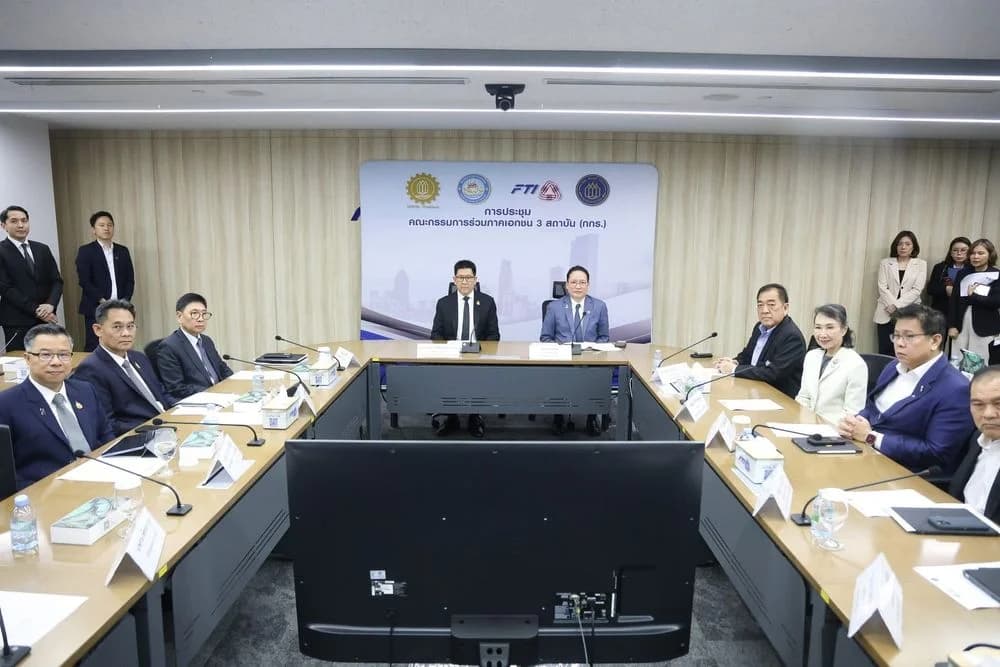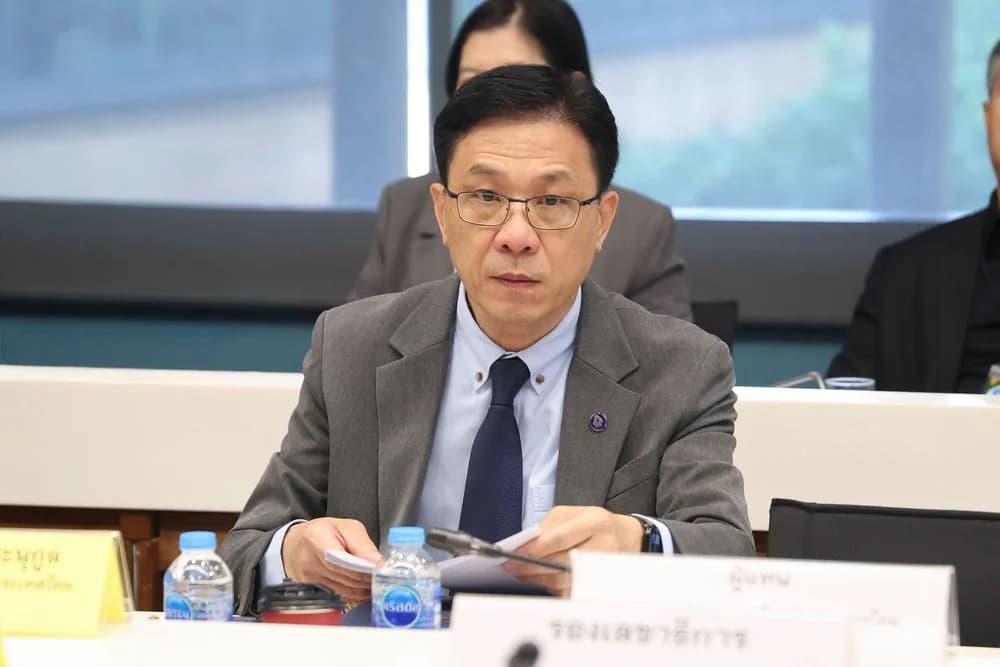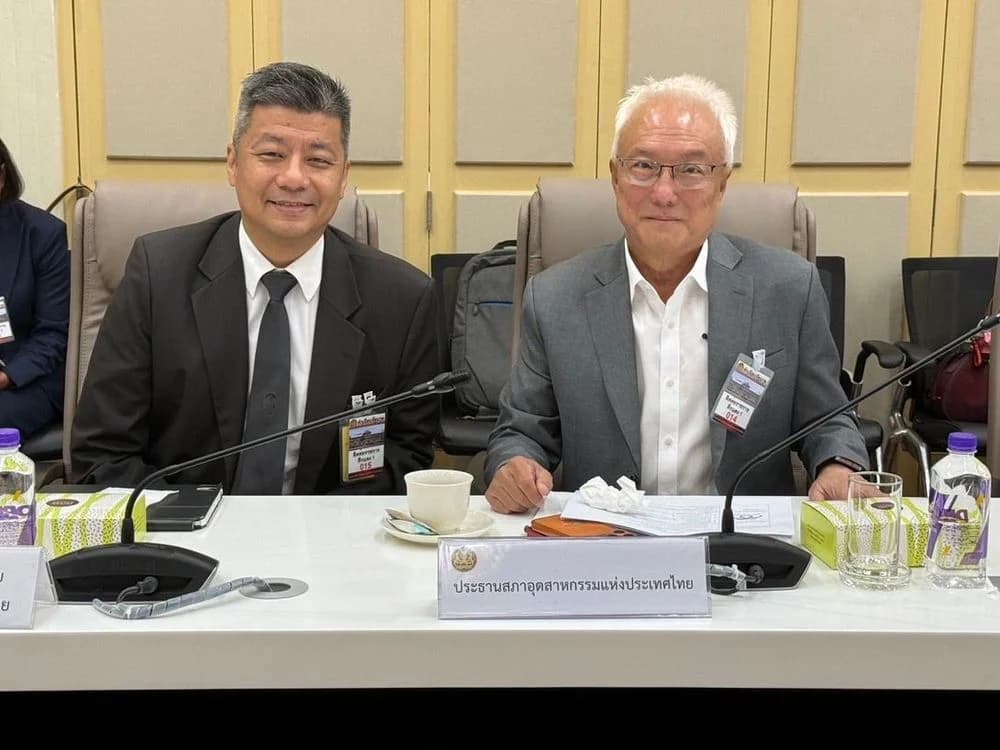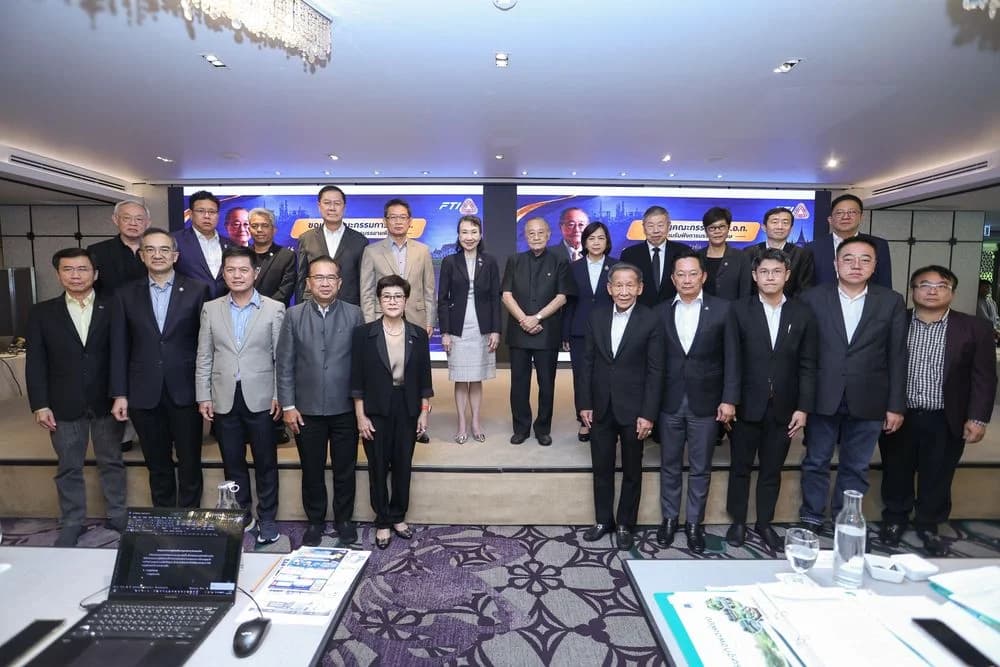

วันพุธที่ 2 ตุลาคม 2567 นายสนั่น อังอุบลกุล ประธานสภาหอการค้าแห่งประเทศไทย เป็นประธานการประชุมคณะกรรมการร่วมภาคเอกชน 3 สถาบัน (กกร.) โดยมีนายเกรียงไกร เธียรนุกุล ประธานสภาอุตสาหกรรมแห่งประเทศไทย (ส.อ.ท.) และนายผยง ศรีวณิช ประธานสมาคมธนาคารไทย ร่วมในการแถลงข่าว
การชะลอตัวของเศรษฐกิจโลกชัดเจนขึ้น เครื่องชี้ด้านการผลิต PMI Manufacturing เดือนกันยายนของสหรัฐฯ ยุโรป จีน และญี่ปุ่นหดตัวลงมากขึ้น ส่งผลให้หลายประเทศกระตุ้นเศรษฐกิจ โดยธนาคารกลางสหรัฐฯ ปรับลดอัตราดอกเบี้ยนโยบายลงแล้ว 0.5% และเป็นไปได้ที่จะลดดอกเบี้ยเพิ่มเติมอีกในช่วงที่เหลือของปี เช่นเดียวกับธนาคารกลางจีนที่ปรับลดดอกเบี้ยรวมถึงภาครัฐที่ออกมาตรการกระตุ้นเศรษฐกิจระลอกใหม่ เพื่อพยุงการผลิตและการใช้จ่ายของประชาชนที่มีแนวโน้มอ่อนแอลง
ค่าเงินบาทที่แข็งค่าขึ้นอย่างรวดเร็วเพิ่มแรงกดดันต่อภาคการส่งออก เงินบาทแข็งค่าจาก 36.8 มาที่ 32.3 บาทต่อดอลลาร์สหรัฐในช่วง 3 เดือนที่ผ่านมา หรือราว 12% เป็นการแข็งค่าที่มากกว่าค่าเงินอื่นในภูมิภาค กลายเป็นปัจจัยลบต่อความสามารถในการแข่งขัน โดยเฉพาะกลุ่มสินค้าเกษตรและอาหารที่ใช้วัตถุดิบในประเทศเป็นหลัก ทั้งนี้ หากค่าเงินบาทแข็งค่าต่อเนื่องในช่วงที่เหลือของปีอาจทำให้รายได้ในรูปเงินบาทของผู้ส่งออกกระทบได้ราว 1.8-2.5 แสนล้านบาท
ยังต้องติดตามผลกระทบจากอุทกภัย กับกิจกรรมทางเศรษฐกิจ และยังมีแนวโน้มต่อเนื่องจากพายุลูกใหม่ที่อาจเข้าไทยอีกในช่วงไตรมาส 4/67 คาดว่าน้ำท่วมรอบนี้จะทำให้เกิดความเสียหายราว 3-5 หมื่นล้านบาท หรือประมาณ 0.2% ของจีดีพี โดยภาคเกษตรได้รับผลกระทบมากที่สุด จากสถานการณ์น้ำท่วมที่อาจขยายวงกว้างมากขึ้น ทั้งนี้ ประเมินว่าเศรษฐกิจไทยปี 2567 จะยังสามารถขยายตัวได้ในกรอบ 2.2% ถึง 2.7% ด้วยแรงสนับสนุนจากภาครัฐในการกระตุ้นเศรษฐกิจและการเร่งเบิกจ่ายงบลงทุน รวมถึงการช่วยเหลือผู้ที่ได้รับผลกระทบฯ ทั้งในส่วนของการเยียวยาและมาตรการที่เข้ามาช่วยเสริมสภาพคล่องในการฟื้นฟูกิจการที่คณะรัฐมนตรีได้มีมติเห็นชอบไปเมื่อวันที่ 1 ตุลาคมที่ผ่านมา รวมทั้งให้ภาครัฐบูรณาการพัฒนาระบบแจ้งเตือนระดับน้ำและพื้นที่เสี่ยงน้ำท่วมให้ประชาชนและผู้ประกอบการในพื้นที่ทราบแบบ Real time ผ่านโทรศัพท์มือถือ และมีความร่วมมือกับประเทศเพื่อนบ้านในการเร่งแก้ไขปัญหาการบุกรุกพื้นที่ป่าเพื่อทำการเกษตรทั้งในฝั่งไทยและประเทศเพื่อนบ้าน ซึ่งจะช่วยเพิ่มพื้นที่ต้นน้ำป้องกันปัญหาน้ำท่วมฉับพลันและน้ำป่าไหลหลาก
กรอบประมาณการเศรษฐกิจปี 2567 ของ กกร.
(ณ ส.ค. 67) ปี 2567
GDP 2.2 ถึง 2.7
ส่งออก 0.8 ถึง 1.5
เงินเฟ้อ 0.5 ถึง 1.0
(ณ ก.ย. 67) ปี 2567
GDP 2.2 ถึง 2.7
ส่งออก 1.5 ถึง 2.5
เงินเฟ้อ 0.5 ถึง 1.0
(ณ ต.ค. 67) ปี 2567
GDP 2.2 ถึง 2.7
ส่งออก 1.5 ถึง 2.5
เงินเฟ้อ 0.5 ถึง 1.0
ที่ประชุม กกร. มีความกังวลต่อสถานการณ์ค่าเงินบาทที่แข็งค่าขึ้นอย่างรวดเร็ว ทำให้ค่าเงินบาทแข็งค่ากว่าระดับ 34.0-34.5 บาทต่อดอลลาร์ฯ ซึ่งเป็นระดับที่ธุรกิจแข่งขันได้ โดยมองว่าควรให้ความสำคัญกับการดูแลค่าเงินไม่ให้แข็งค่าหรือผันผวนเร็วจนเกินไป และการสื่อสารฯเชิงรุกเพื่อให้ภาคธุรกิจสามารถรับรู้และปรับตัวได้ทันการณ์ อีกทั้งยังจำเป็นต้องมีการส่งผ่านประโยชน์จากค่าเงินบาทแข็ง เช่นต้นทุนนำเข้าสินค้าพลังงาน และวัตถุดิบโดยเฉพาะในภาคเกษตรฯ ที่ลดลงไปยังภาคการผลิตและภาคประชาชนให้ได้อย่างเป็นระบบ พร้อมเสนอให้ธปท.เร่งพิจารณาปรับอัตราดอกเบี้ยที่สะท้อนอยู่แล้วในตลาดการเงินล่วงหน้า (Forward Market) ปัจจุบันตลาดคาดการณ์ว่าอัตราดอกเบี้ยนโยบายจะลดลงอย่างน้อย 0.25% ภายในปีนี้ และอีกประมาณ 0.25% - 0.5% อีกภายในปีหน้า ซึ่งจะช่วยลดผลกระทบต่อ Real Sector ได้อย่างรวดเร็ว และพิจารณาทบทวนกรอบเป้าหมายเงินเฟ้อที่กำลังอยู่ในช่วงการหารือร่วมกับกระทรวงการคลังให้อยู่ในระดับที่เหมาะสมกับบริบทศักยภาพและโครงสร้างของเศรษฐกิจของประเทศในปัจจุบันและอนาคต
ที่ประชุม กกร. ได้มีการพิจารณาข้อเสนอต่อแผนพัฒนากำลังไฟฟ้าของประเทศ (PDP2024) เพื่อรักษาขีดความสามารถในการแข่งขันของประเทศและสร้างเสถียรภาพด้านพลังงาน โดยมี 6 ข้อเสนอ ดังนี้
1)การปรับเพิ่มสัดส่วนการผลิตไฟฟ้าจากพลังงานหมุนเวียนให้สอดคล้องกับยุทธศาสตร์ระยะยาวในการพัฒนาแบบปล่อยก๊าซเรือนกระจกต่ำของประเทศ(LT-LEDS) เพื่อบรรลุเป้าหมาย Carbon Neutrality และ Net Zero ของประเทศไทย
2)การเพิ่มสัดส่วนของไฟฟ้าพลังงานแสงอาทิตย์และพลังงานลมร่วมกับแบตเตอรี่ (BESS)
โดยในช่วงเปลี่ยนผ่านควรลดการพึ่งพาการนำเข้าพลังงานด้วยการเร่งพัฒนาแหล่งพลังงานจาก OCA ไทย-กัมพูชา
3)ความร่วมมือระหว่างภาครัฐและเอกชนเพื่อพิจารณาจัดหาพลังงานทางเลือกใหม่ในสัดส่วนที่เหมาะสม อาทิ ไฮโดรเจน นิวเคลียร์ (SMR) การใช้พลังงานหมุนเวียนร่วมกับระบบกักเก็บพลังงาน เป็นต้น
4)เร่งให้ความสำคัญการเปิดเสรีไฟฟ้า ในระยะเร่งด่วนควรเร่งการเปิดใช้ระบบโครงข่ายไฟฟ้าแก่บุคคลที่สาม (Third Party Access, TPA) ภายในปี พ.ศ. 2569 และต้องมีการกำหนดแนวทางการเปิดเสรีอย่างเป็นรูปธรรมและกรอบเวลาชัดเจนใน PDP 2024 มีการพัฒนาระบบโครงข่ายไฟฟ้าอัจฉริยะ (Smart Grid) และส่งเสริมเทคโนโลยีระบบกักเก็บพลังงาน (Energy Storage) ตลอดจนมีระบบการจัดการแบตเตอรี่เก่าใช้แล้วอย่างครบวงจร
5)การพิจารณาความคุ้มค่าทางเศรษฐศาสตร์ และความจำเป็นในการสร้างโรงไฟฟ้าใหม่โดยเทียบกับทางเลือกในการ Repowering หรือ Overhaul โรงไฟฟ้าเดิม และการกำหนดใช้เกณฑ์ดัชนีโอกาสการเกิดไฟฟ้าดับ (Loss of Load Expectation: LOLE) ที่ควรมีการให้ข้อมูล Reserve Margin ควบคู่ไปด้วย
6)เสนอให้มีการจัดตั้งคณะกรรมการร่วมภาครัฐ และเอกชน เพื่อแก้ไขปัญหาพลังงาน (กรอ.พลังงาน) ซึ่งให้ภาคเอกชนเข้าไปมีส่วนร่วมให้ความเห็นและข้อเสนอแนะต่อภาครัฐในการเสนอแนะนโยบาย แผนการบริหารและพัฒนามาตรการด้านพลังงานของประเทศ ต่อคณะกรรมการนโยบายพลังงานแห่งชาติ (กพช.)
On Wednesday, October 2, 2024, Mr. Sanan Angubolkul, Chairman of the Thai Chamber of Commerce, presided over a meeting of the Joint Committee of the Private Sector (JCC) with Mr. Kriangkrai Tiranukool, Chairman of the Federation of Thai Industries (FTI), and Mr. Payong Srivanich, Chairman of the Thai Bankers' Association, present for the press briefing.
The global economic slowdown has become more pronounced, with the PMI Manufacturing index for September in the U.S., Europe, China, and Japan declining significantly. This has prompted several countries to stimulate their economies, as the U.S. Federal Reserve has already decreased the policy interest rate by 0.5%, and additional rate cuts may occur in the remaining months of the year. Similarly, the People’s Bank of China has also lowered interest rates, alongside government measures to stimulate the economy anew to support production and consumer spending, which are trending weaker.
The rapid strengthening of the Thai baht has increased pressure on the export sector. The Thai baht appreciated from 36.8 to 32.3 baht per U.S. dollar over the past three months, or approximately 12%, marking a stronger rise than other regional currencies. This has become a negative factor for competitiveness, especially for agricultural and food products that primarily use local raw materials. Furthermore, if the Thai baht continues to strengthen in the remaining months of the year, it may impact exporters' revenues in baht by approximately 180-250 billion baht.
It is also necessary to monitor the effects of flooding on economic activities, alongside the potential continuation of new storms entering Thailand in the fourth quarter of 2024. It is anticipated that the current flooding will result in damages amounting to about 30-50 billion baht or approximately 0.2% of GDP, with the agricultural sector being the most affected due to the possibility of expanding flooding. It is estimated that Thailand's economy in 2024 will still grow within a range of 2.2% to 2.7%, supported by government initiatives to stimulate the economy and expedite budget disbursements for investments, along with assistance for those affected, including relief measures and liquidity-boosting strategies approved by the Cabinet on October 1. Additionally, the government is tasked with integrating the development of a real-time water level and flood risk notification system for citizens and businesses, in cooperation with neighboring countries to accelerate the resolution of encroachment issues for agricultural purposes both in Thailand and with neighboring countries, which will help increase upstream areas to prevent sudden flooding and mudslides.
The JCC's economic outlook for 2024
(as of August 2024) 2024
GDP: 2.2 to 2.7
Exports: 0.8 to 1.5
Inflation: 0.5 to 1.0
(as of September 2024) 2024
GDP: 2.2 to 2.7
Exports: 1.5 to 2.5
Inflation: 0.5 to 1.0
(as of October 2024) 2024
GDP: 2.2 to 2.7
Exports: 1.5 to 2.5
Inflation: 0.5 to 1.0
The JCC meeting expressed concerns regarding the rapidly strengthening Thai baht, which has risen above the 34.0-34.5 baht per dollar level, a rate at which businesses can remain competitive. They emphasized the importance of managing the exchange rate to prevent excessive strengthening or volatility, alongside proactive communication to allow businesses to adapt in a timely manner. It is also essential to systematically pass on the benefits of a stronger baht, such as reduced costs of imported energy and raw materials, particularly in the agricultural sector, to the manufacturing sector and the populace. They proposed that the Bank of Thailand expedite its consideration of interest rate adjustments already reflected in the forward market, where the market currently anticipates a policy rate reduction of at least 0.25% within this year and an additional 0.25%-0.5% next year, which would swiftly mitigate impacts on the real sector, while also reviewing the inflation target framework currently under discussion with the Ministry of Finance to align it appropriately with the nation's current and future economic contexts.
The JCC meeting also reviewed proposals for the National Power Development Plan (PDP2024) to maintain the country’s competitiveness and energy stability, which includes 6 proposals as follows:
1) Increase the proportion of electricity generation from renewable energy to align with the long-term greenhouse gas reduction strategy (LT-LEDS) in order to achieve Thailand's Carbon Neutrality and Net Zero goals.
2) Increase the share of solar and wind energy alongside battery energy storage systems (BESS). During the transition period, efforts should be made to reduce reliance on energy imports by accelerating the development of energy sources from the Thailand-Cambodia area.
3) Foster cooperation between the public and private sectors to consider procuring new alternative energy sources in appropriate proportions, such as hydrogen and small modular reactors (SMRs), and the use of renewable energies alongside energy storage systems.
4) Urgently prioritize electricity liberalization by accelerating the implementation of third-party access (TPA) to the electricity grid by 2026, and clearly define the roadmap for liberalization in the PDP 2024, which involves developing smart grid systems and promoting energy storage technology, as well as comprehensive management of used batteries.
5) Evaluate the economic viability and necessity of establishing new power plants compared to the options of repowering or overhauling existing plants, and set criteria based on Loss of Load Expectation (LOLE) indicators, ensuring that Reserve Margin information is provided alongside.
6) Propose the establishment of a joint committee comprising public and private sectors to address energy issues (Energy Task Force), allowing private sectors to provide input and suggestions to the public sector regarding policy proposals and management plans for the country’s energy development to the National Energy Policy Committee (NEPC).