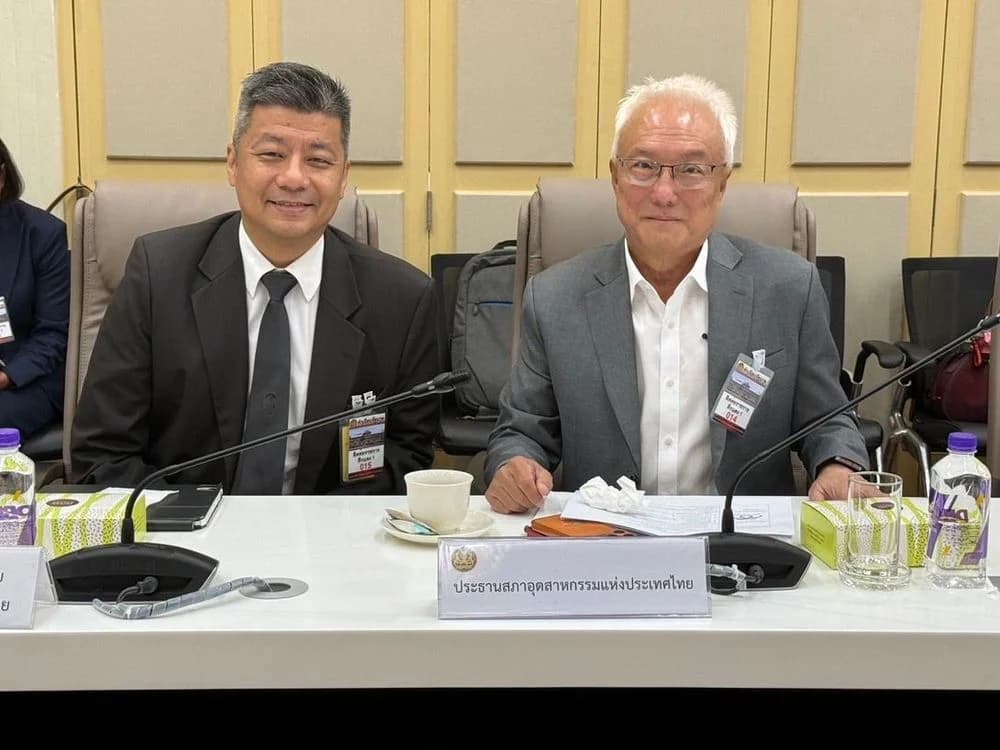

วันที่ 19 พฤศจิกายน 2567 นายเกรียงไกร เธียรนุกุล ประธานสภาอุตสาหกรรมแห่งประเทศไทย (ส.อ.ท.) เข้าร่วมเสวนาในงาน “EMPOWERING THAILAND ยุทธศาสตร์ประเทศไทย 2568" หัวข้อ "เศรษฐกิจโลก เศรษฐกิจไทย เมื่อ “ทรัมป์” หวนคืนทำเนียบขาว" จัดโดยสถานีโทรทัศน์ดิจิทัล TNN ช่อง 16 ณ พารากอน ฮอลล์ ชั้น 5 สยามพารากอน
งานนี้ จัดขึ้นเพื่อระดมความคิดเห็นจากผู้ที่มีบทบาทสำคัญจากทั้งภาครัฐและภาคเอกชน สำหรับประเมินภาพรวมปี 2567 ที่กำลังจะหมดไป และฉายทิศทางในปี 2568 ที่กำลังจะมาถึงในเรื่องการเพิ่มขีดความสามารถ ยกระดับประเทศ เพื่อให้ภาคธุรกิจและการลงทุน สามารถนำไปปรับแผนหรือต่อยอดธุรกิจและการลงทุนต่อไป โดยมีผู้เข้าร่วมสัมมนากว่า 100 ท่าน
นายเกรียงไกร ได้กล่าวถึง ภาพของเศรษฐกิจโลกหลังจากที่โดนัลด์ ทรัมป์ได้รับเลือกให้ดำรงตำแหน่งประธานาธิบดีสหรัฐฯ เป็นสมัยที่สอง ภายใต้นโยบาย "Make America Great Again" ซึ่งเป็นเรื่องที่ทั่วโลกจับตามองและอาจมีผลกระทบต่อเศรษฐกิจโลกในด้านต่างๆ ดังนี้
1. ด้านการค้าระหว่างประเทศ ซึ่งทรัมป์มีความกังวลกับเรื่องของการขาดดุลการค้ากับประเทศคู่ค้ามาก เนื่องจากสหรัฐฯ มีการขาดดุลการค้าในระดับสูงมาเป็นเวลานาน และประเทศจีน ถือได้ว่าเป็นคู่ค้าอันดับหนึ่งของสหรัฐฯ และสหรัฐฯ ขาดดุลการค้ากับจีนมากที่สุด เป็นเวลาติดต่อกันหลายปี จนต้องประกาศสงครามทางการค้า และเป็นสาเหตุให้สหรัฐฯ จับตาดูประเทศอื่นๆ ที่ได้ดุลการค้า รวมถึงประเทศไทยเช่นกัน (ในปี 2562 ประเทศไทยได้ดุลการค้าสหรัฐอเมริกาเป็นอันดับที่ 14) ดังนั้น รัฐบาลสหรัฐฯ จึงได้ออกมาตรการหรือเครื่องมือมาใช้ เพื่อลดการขาดดุลการค้าลง โดย การตรวจสอบและระบุชื่อประเทศที่มีการบิดเบือนค่าเงิน หรือ Currency manipulation ถือเป็นเครื่องมือหนึ่งที่ทางสหรัฐฯ ใช้ เพื่อสร้างความชอบธรรมในการเจรจาต่อรองทางการค้ากับประเทศคู่ค้าที่สหรัฐฯ มองว่าได้เปรียบในการแข่งขัน รวมทั้งสหรัฐฯ ได้มีการออกนโยบายเพิ่มภาษีนำเข้าสินค้าจากต่างประเทศทั้งหมด 10% เพิ่มภาษีนำเข้าสินค้าจีนสูงสุด 60% ยกเลิกนำเข้าสินค้าจำเป็นจากจีน เช่น อิเล็กทรอนิกส์ เหล็กกล้า และยา รวมทั้งปรับขึ้นภาษีรถยนต์นำเข้าจากเม็กซิโกสูงสุดถึง 200% ซึ่งส่งผลให้ไทยได้มีโอกาสในการส่งออกสินค้าไปยังสหรัฐฯ ทดแทนสินค้าจีน แต่ขณะเดียวกัน ก็อาจเกิดความเสี่ยงต่อมาตรการกีดกันทางการค้าที่เข้มงวดขึ้น และสินค้าจีนอาจทะลักเข้ามาแข่งขันในตลาดอาเซียนและไทยได้มากขึ้น
2. ด้านการต่างประเทศ โดยทรัมป์ มีนโยบายมุ่งเน้นการเจรจาเขตการค้าเสรี และความร่วมมือแบบทวิภาคี ซึ่งส่งผลให้ความร่วมมือระหว่างประเทศในรูปแบบพหุภาคีหยุดชะงัก เช่น กรอบความร่วมมือทางเศรษฐกิจอินโด-แปซิฟิก (Indo-Pacific Economic Framework: IPEF) ขณะเดียวกัน จะมีการยุติการเข้าร่วมกับเหตุการณ์ภูมิรัฐศาสตร์ทั่วโลก ซึ่งจะส่งผลให้ผลกระทบจากปัญหาดังกล่าวลดลง
3. ด้านการลงทุน โดยทรัมป์ จะเน้นการส่งเสริมการลงทุนในประเทศให้กลับมาสร้างงาน สร้างจีดีพี (GDP) จะลดภาษีนิติบุคคลเป็น 15% จากเดิม 21% เฉพาะกับบริษัทที่ผลิตสินค้าในสหรัฐฯ เท่านั้น ในโมเดลเดิมของการลงทุนภายใต้นโยบาย America First ที่ให้ความสำคัญกับการดึงการลงทุนกลับสหรัฐฯ ซึ่งจะเป็นโอกาสให้เกิดการโยกย้ายการลงทุนจากต่างชาติเข้ามาในไทย และเพิ่มโอกาสในการเข้าไปมีส่วนในห่วงโซ่อุปทานสินค้าเทคโนโลยีใหม่ นอกจากนี้ ยังมีโอกาสที่ไทยจะได้เข้าไปลงทุนในสหรัฐฯ มากขึ้นจากการปรับลดภาษีฯ อย่างไรก็ตาม ด้วยมาตรการทางภาษี อาจส่งผลต่อเงินเฟ้อในสหรัฐฯ เพิ่มขึ้น และอาจทำให้ธนาคารกลางของสหรัฐฯ (FED) ชะลอการลดอัตราดอกเบี้ยนโยบาย
4. ด้านสิ่งแวดล้อม โดยทรัมป์มีนโยบายจะถอนตัวออกจากข้อตกลงปารีสว่าด้วยการเปลี่ยนแปลงสภาพภูมิอากาศปี 2015 (COP) และเพิ่มการขุดเจาะหาแหล่งน้ำมัน และยกเลิกบางมาตรการของกฎหมายลดเงินเฟ้อ (Inflation Reduction Act -IRA) ซึ่งอาจทำให้ต้นทุนลดลงในระยะสั้น จากการชะลอมาตรการด้านสิ่งแวดล้อมของสหรัฐฯ แต่ส่งผลกระทบต่อการแก้ไขปัญหาโลกร้อนในระยะยาว และทำให้การมุ่งสู่เป้าหมายการลดการปล่อยก๊าซคาร์บอนไดออกไซด์สุทธิเป็นศูนย์ (Net Zero) ชะลอออกไป
On November 19, 2024, Mr. Kriangkrai Thiennukul, President of the Federation of Thai Industries (FTI), attended a discussion at the "EMPOWERING THAILAND 2025" event on the topic "Global Economy and Thai Economy when Trump Returns to the White House," organized by TNN Channel 16 at Paragon Hall, 5th Floor, Siam Paragon.
This event was organized to gather opinions from key stakeholders in both the public and private sectors to assess the overall situation of 2024 that is coming to a close and to project the direction for 2025 regarding enhancing capabilities and elevating the country, so that businesses and investments can adjust their plans or further develop their businesses and investments. More than 100 participants attended the seminar.
Mr. Kriangkrai spoke about the state of the global economy following Donald Trump's election to a second term as President of the United States under the "Make America Great Again" policy, which is closely watched worldwide and may impact the global economy in various aspects as follows:
1. In terms of international trade, Trump is concerned about the trade deficit with trading partners, as the U.S. has experienced a high trade deficit for a long time, with China being its largest trading partner and experiencing the largest trade deficit for several consecutive years, which led to the declaration of a trade war. This also causes the U.S. to scrutinize other countries with trade surpluses, including Thailand (which ranked 14th in terms of trade surplus with the United States in 2019). Therefore, the U.S. government has implemented measures or tools to reduce the trade deficit, including the identification of countries that manipulate their currencies as a negotiating tool in trade negotiations with countries that the U.S. perceives to have a competitive edge. Additionally, the U.S. has imposed a 10% increase in tariffs on all imported goods, with tariffs on Chinese imports rising up to 60%, banning the import of essential goods from China such as electronics, steel, and medicine, as well as raising tariffs on imported cars from Mexico by up to 200%. This has opened opportunities for Thailand to export products to the U.S. to replace Chinese goods; however, there is also a risk of stricter trade barriers and an influx of Chinese goods competing in the ASEAN and Thai markets.
2. Regarding foreign relations, Trump has focused on negotiating free trade agreements and bilateral cooperation, which has stalled multilateral cooperation, such as the Indo-Pacific Economic Framework (IPEF). At the same time, there will be a cessation of participation in geopolitical events around the world, which will reduce the impacts from such issues.
3. On investment, Trump is inclined to promote domestic investment to create jobs and boost GDP, proposing to reduce the corporate tax rate to 15% from 21% specifically for companies manufacturing goods in the U.S. The former investment model under the America First policy emphasizes attracting investment back to the U.S. This presents an opportunity for shifts in foreign investments into Thailand and increases chances for involvement in new technology supply chains. Additionally, there will likely be increased opportunities for Thai investments in the U.S. due to tax reductions. Nevertheless, the tax measures could increase inflation in the U.S. and may result in the Federal Reserve (FED) delaying interest rate reductions.
4. In terms of the environment, Trump has policies to withdraw from the 2015 Paris Agreement on climate change (COP) and increase oil drilling while canceling some measures of the Inflation Reduction Act (IRA), which may reduce costs in the short term by stalling U.S. environmental measures but negatively impact efforts to address global warming in the long term and delay progress toward the goal of achieving net-zero carbon dioxide emissions.