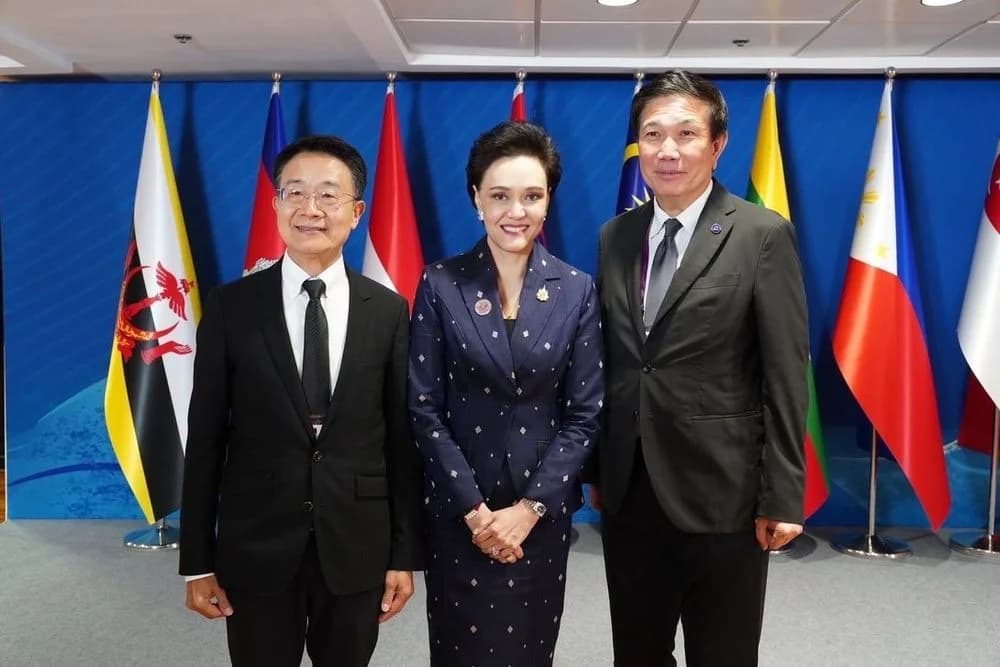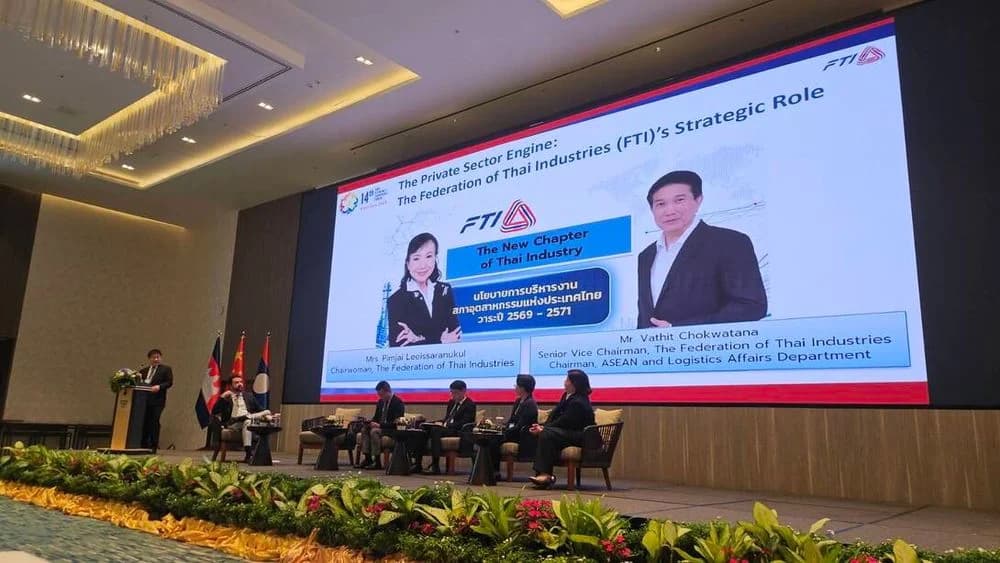

เมื่อวันพฤหัสบดีที่ 27 พฤศจิกายน 2568 คณะกรรมการร่วมภาคเอกชน 3 สถาบัน (กกร.) จัดงาน GMS Business Forum 2025 ในฐานะกิจกรรมคู่ขนานกับการประชุมรัฐมนตรีความร่วมมือเศรษฐกิจอนุภูมิภาคลุ่มน้ำโขง ครั้งที่ 27 (GMS Ministerial Conference: MC-27) ภายใต้แนวคิด “Greater Mekong Subregion Business Opportunities and Challenges Under the Changing Economic Landscape” โดยมีนายเกรียงไกร เธียรนุกุล ประธานสภาอุตสาหกรรมแห่งประเทศไทย (ส.อ.ท.) กล่าวเปิดงาน พร้อมด้วยนายเวทิต โชควัฒนา รองประธาน ส.อ.ท. เข้าร่วม และได้รับเกียรติจากนายอาคม เติมพิทยาไพสิฐ อดีตรัฐมนตรีว่าการกระทรวงการคลังกล่าวปาฐกถาพิเศษ โดยมีตัวแทนจากภาครัฐ ภาคเอกชน และองค์กรพัฒนาจาก 6 ประเทศ รวมทั้งนักลงทุนต่างชาติที่ดำเนินธุรกิจในประเทศไทยเข้าร่วม ณ ห้องแกรนด์บอลรูม โรงแรมแชงกรี-ลา กรุงเทพฯ
นายเกรียงไกร เธียรนุกุล ประธานสภาอุตสาหกรรมแห่งประเทศไทย (ส.อ.ท.) และประธานสภาธุรกิจ GMS กล่าวถึงการพัฒนาและความท้าทายของภูมิภาคว่า “ตลอดสามทศวรรษที่ผ่านมา ความร่วมมือภายใต้กรอบ GMS ได้ยกระดับภูมิภาคลุ่มน้ำโขงอย่างเห็นได้ชัด ทั้งในด้านโครงสร้างพื้นฐาน การเชื่อมโยง และการร่วมมือข้ามพรมแดน ซึ่งช่วยเปิดโอกาสใหม่ทั้งด้านการค้า การลงทุน และการพัฒนาอย่างยั่งยืน ปัจจุบันภูมิภาคกำลังเผชิญความท้าทายจากเศรษฐกิจโลกที่เปลี่ยนแปลงรวดเร็ว เทคโนโลยีที่ก้าวหน้า และความเสี่ยงด้านสิ่งแวดล้อม ซึ่งล้วนต้องอาศัยความร่วมมือที่เข้มแข็งยิ่งขึ้น”
“GMS Business Forum 2025 ไม่ได้เป็นเพียงเวทีประชุม แต่เป็นพื้นที่สำหรับความร่วมมือ การแก้ปัญหา และการกำหนดทิศทางการลงทุนเชิงยุทธศาสตร์ เพื่อเสริมความสามารถในการแข่งขันและเชื่อมโยงภูมิภาคเข้ากับห่วงโซ่มูลค่าระดับโลกอย่างมั่นคง ผมเชื่อว่าการหารือวันนี้จะวางรากฐานสำคัญต่อความร่วมมือและการเติบโตของอนุภูมิภาคในระยะต่อไป” นายเกรียงไกร กล่าวเสริม
ด้านนายอาคม เติมพิทยาไพสิฐ อดีตรัฐมนตรีว่าการกระทรวงการคลังของไทย กล่าวว่า“ภาคเอกชนมีบทบาทสำคัญอย่างมากต่อการขับเคลื่อนเศรษฐกิจการค้าในกลุ่มประเทศ GMS ทั้งนี้ในระยะที่ผ่านมา เศรษฐกิจในกลุ่มประเทศ GMS ได้ขยายตัวอย่างมีนัยสำคัญ ผลิตภัณฑ์มวลรวมภายในประเทศ (GDP) รวมกัน เติบโตจากประมาณ 455 พันล้านดอลลาร์สหรัฐ เป็นประมาณ 2.9 ล้านล้านดอลลาร์สหรัฐ รายได้ต่อหัว (Per Capita Income) เพิ่มขึ้นจาก 2,045 ดอลลาร์สหรัฐ เป็น 8,572 ดอลลาร์สหรัฐ ความสำเร็จเหล่านี้เน้นย้ำถึงความสำเร็จของความร่วมมือในภาคส่วนสำคัญ ๆ เช่น เกษตรกรรม พลังงาน ทุนมนุษย์ การขนส่ง การค้าและการลงทุน การท่องเที่ยว และโครงสร้างพื้นฐาน ความร่วมมือนี้มีความสำคัญอย่างยิ่งในการยกระดับภูมิทัศน์ทางเศรษฐกิจและสังคมของอนุภูมิภาคของเรา ความก้าวหน้าดังกล่าวไม่ได้เกิดขึ้นโดยบังเอิญ แต่เป็นผลผลิตของพันธกิจร่วมกัน ความร่วมมือที่ยั่งยืนและวิสัยทัศน์ร่วมกัน เพื่อการพัฒนาที่ครอบคลุมและยั่งยืน”
ในฐานะเจ้าภาพและผู้นำความร่วมมือ GMS ประเทศไทยมีบทบาทเชิงยุทธศาสตร์ ทั้งด้านการเชื่อมโยงโลจิสติกส์ พาณิชย์ และดิจิทัล การพัฒนาโครงข่ายคมนาคมและด่านชายแดนเพื่อรองรับการขนส่งสินค้าข้ามพรมแดน ตลอดจนการส่งเสริมการลงทุนในภาคท่องเที่ยว พลังงาน เมืองอัจฉริยะ และการพัฒนาทุนมนุษย์ ซึ่งล้วนช่วยเสริมความมั่นคงทางเศรษฐกิจของภูมิภาค และตอกย้ำบทบาทไทยในฐานะ “ศูนย์กลางความร่วมมือของอนุภูมิภาคลุ่มน้ำโขง”
งานปีนี้จัดภายใต้หัวข้อ “Greater Mekong Subregion Business Opportunities and Challenges Under the Changing Economic Landscape” เพื่อสะท้อนทั้งโอกาสและความเสี่ยงในโลกเศรษฐกิจที่ผันผวน ห่วงโซ่อุปทานที่ถูกทดสอบ เทคโนโลยีดิจิทัลที่เร่งการเปลี่ยนผ่านทางธุรกิจ และความท้าทายด้านสภาพภูมิอากาศ ซึ่งล้วนเป็นปัจจัยที่ผลักดันให้ประเทศสมาชิกต้องร่วมกันออกแบบรูปแบบความร่วมมือใหม่ที่ยืดหยุ่นและเพิ่มศักยภาพการแข่งขันของภูมิภาค
ตลอดทั้งวันมีการบรรยายพิเศษและการเสวนาโดยผู้บริหารและผู้เชี่ยวชาญระดับนานาชาติ อาทิ นาย Scott Morris รองประธานธนาคารพัฒนาเอเชีย (ADB) และ ดร.อาคม เติมพิทยาไพสิฐ อดีตรัฐมนตรีว่าการกระทรวงการคลัง ที่ร่วมให้มุมมองด้านเศรษฐกิจและทิศทางการลงทุนในอนาคต
Session 1 นำเสนอภาพรวมความร่วมมือในกรอบ GMS และโอกาสทางธุรกิจ ครอบคลุมยุทธศาสตร์หลัก โครงการลงทุนสำคัญ และบทบาทของสถาบันการเงินระหว่างประเทศ เช่น ธนาคารพัฒนาเอเชีย (Asian Development Bank: ADB) ธนาคารเพื่อการลงทุนโครงสร้างพื้นฐานแห่งเอเชีย (Asian Infrastructure Investment Bank: AIIB) และองค์การอาหารและเกษตรแห่งสหประชาชาติ (Food and Agriculture Organization: FAO) รวมถึงการหารือเกี่ยวกับ Flagship Projects ของประเทศสมาชิก เพื่อสร้างความเข้าใจร่วมกันในระดับภูมิภาค
Session 2 หรือการประชุม Investment Tracks เป็นการหารือเชิงลึกในสามประเด็น ได้แก่ กลุ่มเกษตร–พลังงาน–สิ่งแวดล้อม กลุ่มสุขภาพ–ทุนมนุษย์–ICT และนวัตกรรม และกลุ่มคมนาคม–การค้า–การท่องเที่ยวและการพัฒนาเมือง โดยมุ่งระบุโครงการที่มีศักยภาพ วิเคราะห์อุปสรรคสำคัญต่อการลงทุน และจัดทำข้อเสนอแนะเพื่อกระตุ้นการลงทุนภาคเอกชน ผลลัพธ์จากการหารือนี้จะถูกนำเสนอต่อใน Session 3 ซึ่งเป็นการประชุมปิดระดับรัฐมนตรีและผู้นำธุรกิจ เพื่อใช้เป็นข้อมูลประกอบการกำหนดนโยบาย GMS สำหรับปีถัดไป รวมถึงวางกรอบแผนปฏิบัติงานปี 2028–2030
ผลลัพธ์ที่คาดหวังจากการจัดงาน ได้แก่ การพัฒนาโมเดลความร่วมมือภาครัฐ–เอกชนเพื่อสนับสนุนโครงการ RIF ข้อเสนอเชิงนโยบายด้านการค้า การเชื่อมโยงโครงสร้างพื้นฐาน และการพัฒนาที่ยั่งยืน รวมถึงการจัดทำ Pipeline โครงการพร้อมลงทุนของประเทศในลุ่มน้ำโขง นอกจากนี้ งานยังช่วยเสริมบรรยากาศการลงทุนข้ามพรมแดน และเพิ่มขีดความสามารถการแข่งขันของภูมิภาคในระยะยาว
ปีนี้มีผู้เข้าร่วมกว่า 300 คนจากภาครัฐ ภาคเอกชน องค์กรระหว่างประเทศ และสถาบันพัฒนา นับเป็นเวทีสำคัญที่ช่วยขยายความร่วมมือทางเศรษฐกิจของภูมิภาค พร้อมร่วมกันวางพื้นฐานการเชื่อมโยงและการเติบโตของอนุภูมิภาคลุ่มน้ำโขงในอนาคตอย่างยั่งยืนและมั่นคง
On Thursday, November 27, 2025, the Joint Foreign Chambers of Commerce in Thailand (JFCCT) organized the GMS Business Forum 2025 as a parallel event to the 27th Greater Mekong Subregion Ministerial Conference (GMS Ministerial Conference: MC-27) under the theme “Greater Mekong Subregion Business Opportunities and Challenges Under the Changing Economic Landscape.” Mr. Kriengkrai Thiennukul, Chairman of the Federation of Thai Industries (FTI), opened the event, accompanied by Mr. Vetith Chokwatana, Vice Chairman of FTI, and graced by a special keynote speech from Mr. Arkhom Termpittayapaisith, former Minister of Finance. Representatives from the government, private sector, and development organizations from six countries, along with foreign investors operating in Thailand, attended the event at the Grand Ballroom, Shangri-La Hotel, Bangkok.
Mr. Kriengkrai Thiennukul, Chairman of the Federation of Thai Industries (FTI) and Chairman of the GMS Business Council, discussed the development and challenges of the region, stating, “Over the past three decades, cooperation under the GMS framework has significantly uplifted the Mekong region in terms of infrastructure, connectivity, and cross-border cooperation, creating new opportunities for trade, investment, and sustainable development. Currently, the region is facing challenges from a rapidly changing global economy, advancing technologies, and environmental risks, all of which necessitate strengthened cooperation.”
“The GMS Business Forum 2025 is not just a meeting platform but a space for cooperation, problem-solving, and establishing strategic investment directions to enhance competitiveness and securely connect the region with global value chains. I believe today’s discussions will lay an important foundation for future cooperation and growth in the subregion,” Mr. Kriengkrai added.
Former Minister of Finance Mr. Arkhom Termpittayapaisith remarked, “The private sector plays a crucial role in driving trade economics among GMS countries. Recently, the GMS economies have expanded significantly, with the combined Gross Domestic Product (GDP) growing from approximately $455 billion to about $2.9 trillion, and per capita income rising from $2,045 to $8,572. These successes underscore the achievements of cooperation in key sectors such as agriculture, energy, human capital, transport, trade and investment, tourism, and infrastructure. This collaboration is essential for enhancing the economic and social landscape of our subregion. Such progress is not incidental but is the product of a collective mission, sustainable cooperation, and a shared vision for comprehensive and sustainable development.”
As the host and leader of GMS cooperation, Thailand plays a strategic role in logistics, commerce, and digital connectivity, developing transportation networks and border checkpoints to facilitate cross-border goods transport, as well as promoting investment in tourism, energy, smart cities, and human capital development, all of which enhance the region's economic resilience and reaffirm Thailand’s role as “the center of cooperation in the Greater Mekong Subregion.”
This year’s event was organized under the theme “Greater Mekong Subregion Business Opportunities and Challenges Under the Changing Economic Landscape” to reflect both opportunities and risks in the fluctuating economic world, the tested supply chains, the digital technology accelerating business transformation, and climate challenges, all of which compel member countries to collaboratively design new, flexible cooperation models that enhance the region’s competitive potential.
Throughout the day, special lectures and discussions were held by executives and international experts, including Mr. Scott Morris, Vice President of the Asian Development Bank (ADB), and Dr. Arkhom Termpittayapaisith, former Minister of Finance, who shared insights on economic perspectives and future investment directions.
Session 1 provided an overview of cooperation within the GMS framework and business opportunities, covering key strategies, important investment projects, and the roles of international financial institutions such as the Asian Development Bank (ADB), the Asian Infrastructure Investment Bank (AIIB), and the Food and Agriculture Organization (FAO), as well as discussions on Flagship Projects of member countries to foster a common understanding at the regional level.
Session 2, or Investment Tracks meeting, focused on in-depth discussions in three areas: agriculture–energy–environment; health–human capital–ICT and innovation; and transportation–trade–tourism and urban development, aimed at identifying potential projects, analyzing key investment barriers, and formulating recommendations to stimulate private sector investment. The outcomes of these discussions would be presented in Session 3, a closing meeting for ministers and business leaders, to inform policy formulation for GMS for the following year and to outline the operational plan for 2028–2030.
The anticipated outcomes of the event include developing a public-private partnership model to support RIF projects, policy recommendations on trade, infrastructure connectivity, and sustainable development, as well as creating a pipeline of ready-to-invest projects in the Mekong basin. Furthermore, the forum enhances the cross-border investment atmosphere and increases the region’s long-term competitive capacity.
This year, over 300 participants from the government, private sector, international organizations, and development institutions joined the event, marking it as a significant platform for expanding economic cooperation in the region and collaboratively laying the foundation for connectedness and sustainable growth in the Greater Mekong Subregion in the future.