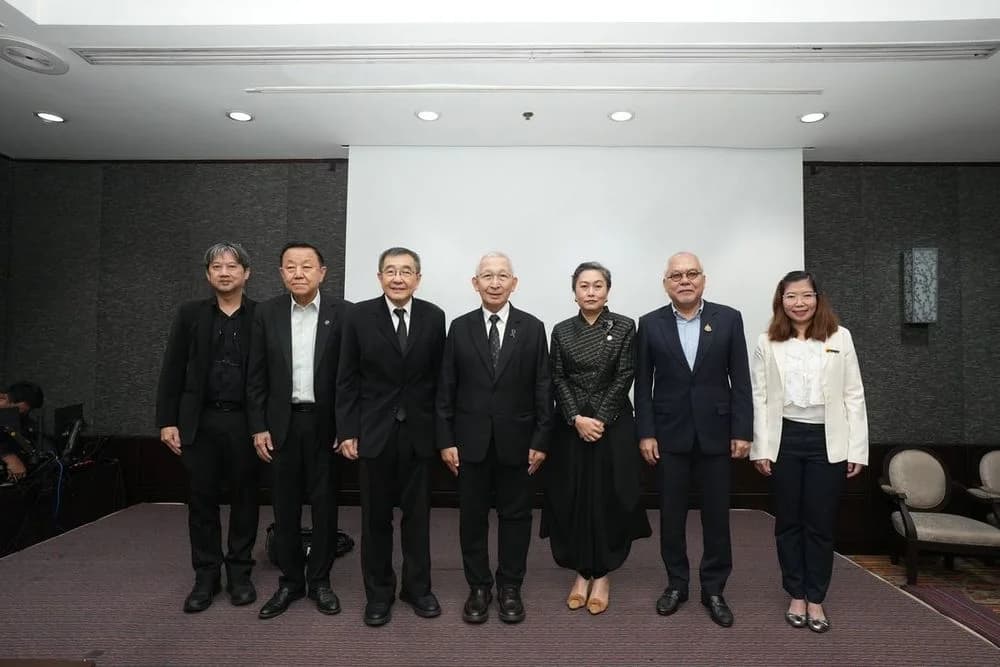

วันพฤหัสบดีที่ 18 ธันวาคม 2568 สถาบันเพื่อการยุติธรรมแห่งประเทศไทย (TIJ) ประกาศความร่วมมือกับ World Justice Project (WJP) และคณะกรรมการร่วมภาคเอกชน 3 สถาบัน (กกร.) ซึ่งประกอบด้วย สมาคมธนาคารไทย สภาหอการค้าแห่งประเทศไทย และสภาอุตสาหกรรมแห่งประเทศไทย (ส.อ.ท.) เพื่อร่วมกันขับเคลื่อนการยกระดับ “หลักนิติธรรม” ของประเทศไทยอย่างเป็นรูปธรรม โดยมุ่งสร้างความเชื่อมั่นของประชาชนต่อระบบกฎหมายไทย ควบคู่กับการเสริมภาพลักษณ์และความน่าเชื่อถือของประเทศในสายตานานาชาติและ OEC ณ ห้องประชุม Learning Studio 2 สถาบันเพื่อการยุติธรรมแห่งประเทศไทย (TIJ)
ความร่วมมือครั้งนี้สะท้อนพลังของพันธมิตรในการผลักดันหลักนิติธรรมให้เป็นมากกว่านโยบาย แต่เป็น “วัฒนธรรมทางกฎหมาย” ที่หยั่งรากในสังคมไทย โดยอาศัยข้อมูลและมาตรฐานสากลจาก WJP ควบคู่กับบทบาทของภาคธุรกิจในการสะท้อนต้นทุนจริงของกติกาที่ไม่เป็นธรรม และความจำเป็นของกฎเกณฑ์ที่โปร่งใส คาดการณ์ได้ และแข่งขันได้
ศาสตราจารย์พิเศษ ดร. กิตติพงษ์ กิตยารักษ์ ประธานกรรมการสถาบันเพื่อการยุติธรรมแห่งประเทศไทย (TIJ) กล่าวว่า หลักนิติธรรม คือรากฐานสำคัญในการสร้างความเชื่อมั่นทางเศรษฐกิจและยกระดับขีดความสามารถในการแข่งขันของประเทศไทยบนเวทีโลก ท่ามกลางภาวะเศรษฐกิจที่ผันผวน ความเชื่อมั่นของนักลงทุนขึ้นอยู่กับเสถียรภาพและประสิทธิภาพของกลไกภาครัฐ กติกาที่เป็นธรรม ตลอดจนระบบยุติธรรมที่โปร่งใสและตรวจสอบได้ ประเทศไทยจึงจำเป็นต้องเร่งปฏิรูปโครงสร้างเชิงสถาบัน โดยเฉพาะในช่วงที่ประเทศกำลังอยู่ในกระบวนการเข้าเป็นสมาชิก OECD เพราะความเข้มแข็งของหลักนิติธรรม เป็นปัจจัยชี้วัดความสำเร็จที่ OECD ใช้ประเมินความพร้อมของประเทศในการก้าวสู่มาตรฐานสากล
ความร่วมมือระหว่าง TIJ กับ World Justice Project ช่วยให้ประเทศไทยมองเห็นจุดแข็ง จุดอ่อน และช่องว่างเชิงโครงสร้างบนฐานข้อมูลและมาตรฐานสากล นำไปสู่การออกแบบนโยบายบนข้อมูลที่สะท้อน Feedback จากประสบการณ์จริงของประชาชน ซึ่งช่วยตอบโจทย์ความต้องการของประชาชนได้ตรงจุด และพัฒนากลไกการติดตามและวัดผลความสำเร็จได้จริงและเป็นระบบ
TIJ เชื่อว่า การยกระดับหลักนิติธรรมไม่สามารถดำเนินการได้โดยรัฐเพียงลำพัง จึงขอประกาศจุดยืนในการร่วมกับทุกภาคส่วน รวมถึง คณะกรรมการร่วมภาคเอกชน 3 สถาบัน (กกร.) ผลักดันให้เกิด Rule of Law Policy Framework ที่จะเป็นกรอบทิศทางการทำงานที่มีความต่อเนื่องแม้ว่าการเมืองจะเปลี่ยนแปลง ครอบคลุมการปฏิรูปกฎหมาย การป้องกันคอร์รัปชั่น การส่งเสริมรัฐบาลเปิด การยกระดับกระบวนการยุติธรรม และการคุ้มครองสิทธิประชาชน ผ่านแนวทาง Whole-of-Society Approach เพื่อเปิดพื้นที่ให้ทุกภาคส่วนมีส่วนร่วมในการกำหนดอนาคต และในช่วงเปลี่ยนผ่านทางการเมือง Framework นี้จะทำหน้าที่เป็น "เข็มทิศนโยบาย" ให้พรรคการเมืองนำไปใช้แข่งขันทางนโยบายอย่างสร้างสรรค์ ขณะเดียวกันก็เป็นเครื่องมือให้ประชาชนใช้ตั้งคำถามและติดตามการทำงานของรัฐบาลในอนาคต เพื่อสร้างระบบนิเวศทางสังคมที่โปร่งใสและยั่งยืน
ดร. ศรีรักษ์ ผลิพัฒน์ ผู้อำนวยการภูมิภาคเอเชียแปซิฟิก World Justice Project กล่าวว่า จากรายงานดัชนีหลักนิติธรรมประจำปี 2568 (WJP Rule of Law Index 2025) ประเทศไทยได้พิสูจน์ให้เห็นถึง 'ศักยภาพ' ในการรักษาสถานะที่มีเสถียรภาพท่ามกลางกระแสถดถอยของหลักนิติธรรมทั่วโลก ด้วยคะแนนภาพรวม 0.50 โดยเราพบจุดแข็งที่โดดเด่นในด้านความสงบเรียบร้อย (Order and Security) และความเชื่อมั่นที่ประชาชนมีต่อความซื่อสัตย์สุจริตของสถาบันตุลาการ ซึ่งถือเป็นรากฐานสำคัญที่หาได้ยากในหลายประเทศ
อย่างไรก็ตาม ข้อมูลชุดเดียวกันนี้ได้ฉายภาพ 'ข้อท้าทาย' ที่ไม่อาจมองข้าม ทั้งในเรื่องประสิทธิภาพของกระบวนการยุติธรรมทางอาญาที่ต้องเร่งปรับปรุง ปัญหาการเลือกปฏิบัติในสังคมที่ตัวเลขกำลังเพิ่มสูงขึ้น รวมถึงอุปสรรคเชิงโครงสร้างในการออกใบอนุญาตภาครัฐที่กลายเป็นต้นทุนแฝงของประเทศ
WJP เชื่อมั่นว่า “ข้อมูลคือเข็มทิศของการปฏิรูป' และพร้อมให้การ สนับสนุนประเทศไทยอย่างเต็มที่ ในการนำข้อมูลเชิงลึกเหล่านี้ไปแปลงเป็นยุทธศาสตร์ชาติ เพื่อปิดช่องว่างความเหลื่อมล้ำและยกระดับความโปร่งใส โดย WJP ยินดีที่จะเดินหน้าทำงานร่วมกับภาครัฐและประชาสังคมไทย เพื่อสร้างระบบนิเวศแห่งความยุติธรรมที่ตอบโจทย์และคุ้มครองคนไทยทุกคนได้อย่างแท้จริง"
ดร.พจน์ อร่ามวัฒนานนท์ ประธานกรรมการหอการค้าไทยและสภาหอการค้าแห่งประเทศไทย และประธาน คณะกรรมการร่วมภาคเอกชน 3 สถาบัน (กกร.) แสดงการสนับสนุนการขับเคลื่อนการยกระดับ “หลักนิติธรรม” ของประเทศไทย ผ่านความร่วมมือระหว่างสถาบันเพื่อการยุติธรรม แห่งประเทศไทย (TIJ) และ World Justice Project (WJP) เพื่อผลักดันกรอบนโยบายหลักนิติธรรมจากข้อมูลเชิงดัชนี สู่การปฏิบัติจริงในเชิงโครงสร้าง โดย คุณพจน์ ระบุว่า หลักนิติธรรมไม่ใช่เพียงประเด็นทางกฎหมาย แต่เป็นโครงสร้างพื้นฐานของธรรมาภิบาล ความเชื่อมั่น และความสามารถในการแข่งขันของประเทศในระยะยาว
ดร.พจน์ กล่าวว่า จากมุมมองของภาคธุรกิจ Rule of Law และ Level Playing Field เป็นเงื่อนไขสำคัญต่อการตัดสินใจลงทุน ภาคเอกชนไม่ได้กังวลต่อการมีกฎระเบียบ แต่กังวลต่อกติกาที่ไม่ชัดเจนไม่เสมอภาค และไม่สามารถคาดการณ์ได้ โดยผู้ประกอบการสะท้อนปัญหาหลัก 3 ประการ ได้แก่ การบังคับใช้กฎหมายที่ไม่เป็นมาตรฐานเดียวกันและล้าสมัย กระบวนการอนุญาตที่ซับซ้อน ใช้เวลานาน และพึ่งพาดุลยพินิจสูง รวมถึงการแข่งขันที่ไม่เท่าเทียม โดยเฉพาะ ต่อผู้ประกอบการ SMEs และ ธุรกิจใหม่ ซึ่งล้วนเป็นต้นทุนแฝงที่บั่นทอนศักยภาพเศรษฐกิจไทย
ในส่วนของการแก้ไขปัญหา กกร. ได้ขับเคลื่อนการทำงานเชิงรุกผ่านโครงการ “Zero Corruption: กกร. และเพื่อน ไม่ทน” โดยผนึกกำลังกับภาคีภาครัฐ ภาคประชาสังคม และภาควิชาการ เพื่อผลักดัน Action Plan ที่นำไปสู่การปฏิบัติได้จริง อาทิ การลดดุลยพินิจผ่านระบบดิจิทัล การเปิดเผยข้อมูลภาครัฐตามมาตรฐานสากล การใช้เทคโนโลยีเพื่อความโปร่งใส และการคุ้มครองผู้เปิดเผยข้อมูล ดร.พจน์ย้ำว่า หากภาคธุรกิจเข้มแข็งและดำเนินงานอยู่บนระบบที่เป็นธรรม ประเทศไทยจะสามารถปลดล็อกการเติบโตใหม่ และสร้างเศรษฐกิจที่โปร่งใส ยุติธรรม และยั่งยืนได้อย่างแท้จริง ทั้งนี้เราจะเปิดตัวโครงการสำรวจความคิดเห็นประชาชนต่อนโยบายต่อต้านคอร์รัปชันของพรรคการเมืองไทย รณรงค์ "ไม่เลือกคนโกง" สู่เป้าหมาย Zero Corruption ซึ่งโครงการนี้เป็นส่วนหนึ่งของแคมเปญรณรงค์ “ ไม่ทนคอร์รัปชัน” หรือ “ไม่มีนโยบายต้านโกง เราไม่เลือก” เพื่อสร้างความตระหนักให้ประชาชนไม่เลือกผู้สมัคร ที่ไม่โปร่งใส มีประวัติการทุจริต หรือเป็นทุนเทา/สแกมเมอร์ เข้ามาเป็นผู้แทนราษฎรหรือรัฐมนตรี เพราะ "เสียงของประชาชนคือเสียงชี้ขาด" ในการขับเคลื่อนประเทศไทยสู่สังคมที่ปลอดคอร์รัปชัน โดยย้ำว่า “คนไทยไม่ทนคอร์รัปชั่น”
นายเกรียงไกร เธียรนุกุล ประธานสภาอุตสาหกรรมแห่งประเทศไทย (ส.อ.ท.) กล่าวว่า ในมุมมองของภาคอุตสาหกรรมและภาคธุรกิจ หลักนิติธรรมไม่ใช่ประเด็นเชิงอุดมคติ แต่เป็น “โครงสร้างพื้นฐานทางเศรษฐกิจ” ที่ส่งผลโดยตรงต่อความสามารถในการแข่งขันของประเทศ ภาคธุรกิจไทยไม่ได้เรียกร้องอภิสิทธิ์ หากแต่ต้องการกติกาที่เป็นธรรม ชัดเจน และคาดการณ์ได้ เพราะเมื่อกฎหมายและกระบวนการกำกับดูแลของรัฐขาดความแน่นอน ต้นทุนที่แท้จริงไม่ได้ตกอยู่กับผู้ประกอบการรายใดรายหนึ่งเท่านั้น แต่กระทบต่อระบบเศรษฐกิจโดยรวม ทั้งต้นทุนการผลิตที่สูงขึ้น การลงทุนที่ชะลอตัว และศักยภาพการแข่งขันที่ลดลง
ข้อมูลจาก WJP Rule of Law Index สะท้อนว่าประเทศไทยยังเผชิญความท้าทายเชิงโครงสร้าง โดยเฉพาะขั้นตอนการออกใบอนุญาต การบังคับใช้กฎหมายที่ไม่สม่ำเสมอ และกฎระเบียบที่ซ้ำซ้อน ซึ่งกลายเป็นต้นทุนแฝงและบั่นทอนศักยภาพของอุตสาหกรรมไทยในระยะยาว
นายเกรียงไกรระบุว่า การพัฒนาประเทศในปัจจุบันยังติดขัดกับปัญหาเชิงโครงสร้างที่สะสมมานาน หากไม่เร่งแก้ไข ก็ไม่ต่างจากการเข็นครกขึ้นภูเขา ขณะเดียวกัน กฎหมายและกฎระเบียบจำนวนมากยังสร้างภาระต่อการประกอบธุรกิจ ส่งผลให้ประเทศไทยซึ่งเคยเป็นดาวรุ่งของอาเซียน ถูกหลายประเทศแซงหน้าไปอย่างไม่เห็นฝุ่น
ปีนี้ คณะกรรมการร่วมภาคเอกชน 3 สถาบัน (กกร.) คาดการณ์ว่า GDP จะเติบโตเพียง 1.8–2.2% ขณะที่ IMF ประเมินว่าเศรษฐกิจไทยในปีหน้ามีแนวโน้มชะลอตัวกว่าปีนี้ และอาจขยายตัวได้เพียง 1.5–2% สะท้อนความเสี่ยงที่ประเทศไทยอาจติดหล่มและไม่สามารถเดินหน้าได้อย่างเต็มศักยภาพ
หนึ่งในปัจจัยสำคัญ คือ ปัญหาหลักนิติธรรม ซึ่งทำให้ประเทศไทยถูกมองว่าเป็นแหล่งพักพิงของนักลงทุนสีเทา และนำไปสู่ปัญหาทุนเทาในหลายมิติ
ในบริบทที่ประเทศไทยมุ่งเข้าสู่การเป็นสมาชิก OECD หลักนิติธรรมจึงไม่ใช่เพียงเรื่องการปรับนโยบาย แต่เป็นเงื่อนไขสำคัญของความเชื่อมั่นจากนักลงทุนทั่วโลก เนื่องจาก OECD ให้ความสำคัญกับธรรมาภิบาล ความโปร่งใส และการบังคับใช้กฎหมายที่เป็นธรรม ในฐานะรากฐานของการเติบโตอย่างยั่งยืน
สภาอุตสาหกรรมแห่งประเทศไทยเห็นว่า การขับเคลื่อนยุทธศาสตร์ Thailand Rule of Law National Strategy เป็นโอกาสสำคัญในการยกระดับกติกาของประเทศให้เอื้อต่อการทำธุรกิจที่สุจริต แข่งขันได้ และเติบโตอย่างยั่งยืน โดยภาคธุรกิจพร้อมมีส่วนร่วมอย่างจริงจัง ทั้งการสะท้อนปัญหาที่เกิดขึ้นจริง การสนับสนุนการปฏิรูปเชิงระบบ และการร่วมออกแบบกติกาที่ทำให้การทุจริตเกิดขึ้นได้ยาก และทำให้การประกอบธุรกิจที่ถูกต้องเป็นทางเลือกที่คุ้มค่า
หลักนิติธรรมที่เข้มแข็งจะช่วยยกระดับคุณภาพของระบบเศรษฐกิจไทย สร้างความเชื่อมั่นต่อการลงทุน และเสริมเสถียรภาพทางเศรษฐกิจในระยะยาว
มุมมองดังกล่าวเป็นฉันทามติร่วมของคณะกรรมการร่วมภาคเอกชน 3 สถาบัน (กกร.) ที่พร้อมสนับสนุนการยกระดับกติกาของประเทศให้โปร่งใส ตรวจสอบได้ และเอื้อต่อการเติบโตอย่างยั่งยืน เพื่อเปลี่ยนภาพลักษณ์ประเทศไทยจากประเทศทุนเทา สู่ทุนสีขาวหรือทุนสีเขียวในอนาคต
นายผยง ศรีวณิช ประธานสมาคมธนาคารไทย กล่าวว่า หลักนิติธรรม (Rule of Law) เป็นหนึ่งในความท้าทายของประเทศที่ถูกระบุใน Reinvent Thailand ซึ่งเชื่อมโยงกับการที่ประเทศมีเศรษฐกิจนอกระบบสูงถึง 48% ของ GDP มีความเหลื่อมล้ำที่อยู่ในระดับสูง การมีอำนาจเหนือตลาดของผู้เล่นรายใหญ่ ประสิทธิภาพของภาครัฐจากกฎระเบียบจำนวนมาก และปัญหาด้านคอร์รัปชัน ซึ่งที่ผ่านมาเป็นต้นทุนแฝงต่อธุรกิจ และเป็นคอขวดที่สำคัญของการเติบโตของเศรษฐกิจและ Trust & Confidence ที่เป็นพื้นฐานสำคัญของการดึงดูดการลงทุนให้อยู่ในประเทศ
ทั้งนี้ ประเทศไทยจำเป็นต้อง ยกระดับ Rule of Law ผ่านความร่วมมือจากทุกภาคส่วน โดยเริ่มจากการเชื่อมโยงข้อมูลและสร้างความโปร่งใสในทุกระดับ เพื่อให้ประชาชนเป็น “Informed Citizen” ที่รับรู้ เข้าใจ และเท่าทันพลวัตของโลก เกิดการมีส่วนร่วมและการถกเถียงเชิงสาธารณะอย่างสร้างสรรค์บนข้อเท็จจริง นำไปสู่การตัดสินใจเชิงนโยบายที่ตรงจุด ตรวจสอบได้ และวัดผลได้จริง ซึ่ง World Justice Project (WJP) ชี้ว่าการยกระดับ Rule of Law มีความเชื่อมโยงโดยตรงกับเศรษฐกิจที่เติบโตดี ระบบการศึกษาดี สังคมสงบสุข และความเป็นอยู่ของประชาชนที่ดี สอดคล้องกับเป้าหมายการพัฒนาที่ยั่งยืน (UN Sustainable Development Goals: SDGs) และแนวทางการเข้าร่วมเป็นสมาชิก OECD ของไทย
นอกจากนี้ เป็นนิมิตรหมายที่ดีที่ประเทศไทยมี แพลตฟอร์มความร่วมมือระหว่างภาครัฐ ภาคเอกชน และองค์กรระหว่างประเทศ โดย กกร. ได้ร่วมผลักดันโครงการ Reinvent Thailand พลวัตใหม่เพื่ออนาคตเศรษฐกิจไทย ผสานพลังการทำงานจากทุกภาคส่วน (Co-Creation and Execution) เพื่อเพิ่มประสิทธิภาพการดำเนินนโยบายสาธารณะ ภายใต้ข้อจำกัดที่เพิ่มขึ้นในด้านการคลังของประเทศ เสริมขีดความสามารถในการแข่งขัน นำไปสู่การพัฒนาอย่างครอบคลุม เท่าเทียม และยั่งยืน
On Thursday, December 18, 2025, the Thailand Institute of Justice (TIJ) announced a collaboration with the World Justice Project (WJP) and the Joint Foreign Chamber of Commerce in Thailand (JFCCT), which comprises the Thai Bankers' Association, the Thai Chamber of Commerce, and the Federation of Thai Industries (FTI), to jointly promote the enhancement of the "Rule of Law" in Thailand in a concrete manner. The aim is to build public confidence in the Thai legal system, alongside enhancing the country's image and credibility in the eyes of the international community and OECD at the Learning Studio 2 of the Thailand Institute of Justice (TIJ).
This collaboration reflects the strength of partners in pushing the Rule of Law beyond mere policy to become a "legal culture" rooted in Thai society, utilizing international data and standards from WJP alongside the role of the business sector in reflecting the true costs of unfair rules and the necessity for transparent, predictable, and competitive regulations.
Professor emeritus Dr. Kittipong Kityarak, Chair of the Thailand Institute of Justice (TIJ), stated that the Rule of Law is a fundamental foundation for building confidence in the economy and enhancing Thailand's competitiveness on the global stage. Amidst a volatile economic situation, investor confidence relies on the stability and effectiveness of governmental mechanisms, fair rules, and a transparent and accountable justice system. Thus, Thailand must expedite institutional structural reform, especially during its process of entering OECD membership, as the strength of the Rule of Law is a critical factor for OECD in assessing a country's readiness to meet international standards.
The collaboration between TIJ and the World Justice Project allows Thailand to identify strengths, weaknesses, and structural gaps based on international data and standards, leading to the design of policies grounded in feedback from the real experiences of the public, which helps address the actual needs of citizens and develop mechanisms for monitoring and measuring success in a systematic way.
TIJ believes that the enhancement of the Rule of Law cannot be achieved by the government alone. Therefore, it declares its stance of collaborating with all sectors, including the Joint Foreign Chamber of Commerce in Thailand (JFCCT), to push for the Rule of Law Policy Framework, which will serve as a guiding framework for continuous work despite political changes. This encompasses legal reform, anti-corruption measures, the promotion of open government, the enhancement of the justice process, and the protection of citizens' rights through a Whole-of-Society Approach to allow all sectors to participate in defining the future. During transitional political times, this framework will serve as a "policy compass" for political parties to engage in constructive policy competition while also being a tool for the public to question and hold the government accountable in the future, thereby creating a transparent and sustainable social ecosystem.
Dr. Sirirak Phaliphat, Regional Director for Asia-Pacific at the World Justice Project, stated that the 2025 WJP Rule of Law Index has demonstrated that Thailand has proven its 'potential' to maintain a stable status amidst the global decline in the Rule of Law, with an overall score of 0.50. It has shown remarkable strengths in the areas of Order and Security and public confidence in the integrity of judicial institutions, which is a crucial foundation rarely found in many countries.
However, this same dataset highlights 'challenges' that cannot be overlooked, particularly regarding the efficiency of the criminal justice process that requires urgent improvements, rising discrimination issues in society, and structural obstacles in public licensing processes that have become hidden costs for the country.
WJP believes that "data is the compass of reform" and is ready to fully support Thailand in transforming these in-depth insights into national strategies to close gaps in inequality and elevate transparency. WJP is eager to collaborate with the government and Thai civil society to create a justice ecosystem that genuinely responds to and protects all Thai citizens."
Dr. Phajon Aramwatananon, Chairman of the Thai Chamber of Commerce and the Thai Chamber of Commerce, and Chair of the Joint Foreign Chamber of Commerce in Thailand (JFCCT), expressed support for advancing the enhancement of the "Rule of Law" in Thailand through the collaboration between the Thailand Institute of Justice (TIJ) and the World Justice Project (WJP) to propel the Rule of Law policy framework from index insights into actual structural implementation. Dr. Phajon stated that the Rule of Law is not merely a legal issue but is the foundational structure of governance, confidence, and long-term competitiveness of the country.
Dr. Phajon stressed that from the business sector's perspective, the Rule of Law and Level Playing Field are essential conditions for investment decisions. The private sector is not concerned about the existence of regulations but rather about unclear, inequitable, and unpredictable rules. Operators reflect three main issues, including inconsistent law enforcement that is outdated, complex and time-consuming permitting processes that rely heavily on discretion, and unequal competition, especially affecting SMEs and new businesses, all of which contribute to hidden costs that undermine Thailand's economic potential. In terms of problem-solving, the JFCCT has proactively driven initiatives through the “Zero Corruption: JFCCT and Friends Won't Tolerate” project, partnering with government, civil society, and academia to push actionable plans that lead to tangible implementation. For example, reducing discretion through digital systems, disclosing government data according to international standards, utilizing technology for transparency, and protecting whistleblowers. Dr. Phajon emphasized that if the business sector is strong and operates within a fair system, Thailand can unlock new growth and genuinely create a transparent, just, and sustainable economy. We will launch a survey to gather public opinions on political parties’ anti-corruption policies, campaigning "Do Not Choose Corrupt People" towards the goal of Zero Corruption. This initiative is part of the campaign "No to Corruption" or "No anti-corruption policy, we won't choose" to raise awareness among the public to refrain from voting for candidates lacking transparency, with histories of corruption or engaging in gray capital/scams to become representatives or ministers, as "the voice of the people is the decisive voice" in driving Thailand towards a corruption-free society, emphasizing that "Thai people won’t tolerate corruption."
Mr. Kriangkrai Theeranukul, Chairman of the Federation of Thai Industries (FTI), stated that from the perspective of the industrial and business sectors, the Rule of Law is not an ideological issue but an "economic infrastructure" that directly affects the country’s competitiveness. Thai businesses do not demand privileges but seek fair, clear, and predictable rules. When the laws and government regulatory processes lack certainty, the real costs do not solely fall on individual operators, but impact the economy as a whole, leading to increased production costs, sluggish investment, and diminished competitive potential.
Data from the WJP Rule of Law Index indicates that Thailand still faces structural challenges, especially in terms of licensing procedures, inconsistent law enforcement, and overlapping regulations, which have become hidden costs that undermine the long-term potential of Thai industries.
Mr. Kriangkrai indicated that the ongoing development of the country is still obstructed by longstanding structural problems. If not addressed urgently, it is akin to pushing a boulder up a hill; meanwhile, an abundance of laws and regulations continues to impose burdens on business operations, resulting in Thailand, once a rising star in ASEAN, being overtaken by many other countries without a trace.
This year, the Joint Foreign Chamber of Commerce in Thailand (JFCCT) forecasts that GDP growth will be only 1.8–2.2%, while the IMF estimates that Thailand's economy next year may slow down more than this year, potentially expanding only by 1.5–2%, reflecting the risks that Thailand could be mired and unable to move forward at its full potential.
One key factor is the issue of the Rule of Law, which has led Thailand to be perceived as a haven for gray investors, resulting in problems related to gray capital in multiple dimensions.
In the context of Thailand's aim to become an OECD member, the Rule of Law is not merely a matter of policy adjustment but a critical condition for building confidence among global investors, as the OECD emphasizes governance, transparency, and fair law enforcement as essential foundations for sustainable growth.
The Federation of Thai Industries views that driving the Thailand Rule of Law National Strategy is an important opportunity to elevate the country's rules to be conducive to honest business operations, competitive engagement, and sustainable growth. The business sector is ready to engage genuinely, both in reflecting actual issues, supporting systemic reform, and co-designing regulations that make corruption difficult and make correct business operations a worthwhile choice.
Strong Rule of Law will help improve the quality of the Thai economy, build confidence toward investment, and enhance long-term economic stability.
This perspective represents a consensus among the Joint Foreign Chamber of Commerce in Thailand (JFCCT) that is prepared to support the enhancement of the country's regulations to ensure transparency, accountability, and conducive to sustainable growth, transforming Thailand's image from a gray capital to white or green capital in the future.
Mr. Phayong Sriwanich, Chairman of the Thai Bankers' Association, stated that the Rule of Law is one of the challenges identified in Reinvent Thailand, which is linked to the country's high informal economy, comprising 48% of GDP, significant inequality, market dominance by major players, the efficiency of government hampered by numerous regulations, and corruption issues, which have historically served as hidden costs for businesses and a major bottleneck to economic growth and the Trust & Confidence fundamental for attracting investment into the country.
Thus, Thailand needs to elevate the Rule of Law through cooperation from all sectors, starting from data connectivity and building transparency at all levels so that citizens become “Informed Citizens” who are aware, understand, and keep up with the dynamics of the world, fostering participation and constructive public discourse based on facts, leading to targeted, accountable, and measurable policy decisions in which the World Justice Project (WJP) points out that enhancing the Rule of Law has a direct correlation to a thriving economy, excellent education systems, peaceful societies, and good living conditions for citizens. This aligns with the goal of Sustainable Development Goals (UN SDGs) and Thailand's approach to OECD membership.
Furthermore, it is a positive sign that Thailand has a collaborative platform among the government, the private sector, and international organizations, as the JFCCT has actively promoted the Reinvent Thailand initiative as a dynamic effort for the future of the Thai economy, harnessing the power of collaboration from all sectors (Co-Creation and Execution) to enhance the effectiveness of public policy implementation amid increasing fiscal constraints, boosting competitiveness, and leading to comprehensive, equitable, and sustainable development.